
Dog rain boots for winter snow ice are often the difference between a quick, comfortable walk and a dog that keeps stopping, licking paws, or limping home. If your sidewalks get icy, salted, or slushy, boots can help reduce paw pad cracking, salt irritation, and slips.
The tricky part is that not every “rain boot” behaves well in winter, some get stiff in cold temps, some turn into little skates on ice, and some just fall off two blocks in. This guide focuses on what actually matters: fit, traction, insulation, and how to train your dog so the boots don’t become a daily wrestling match.
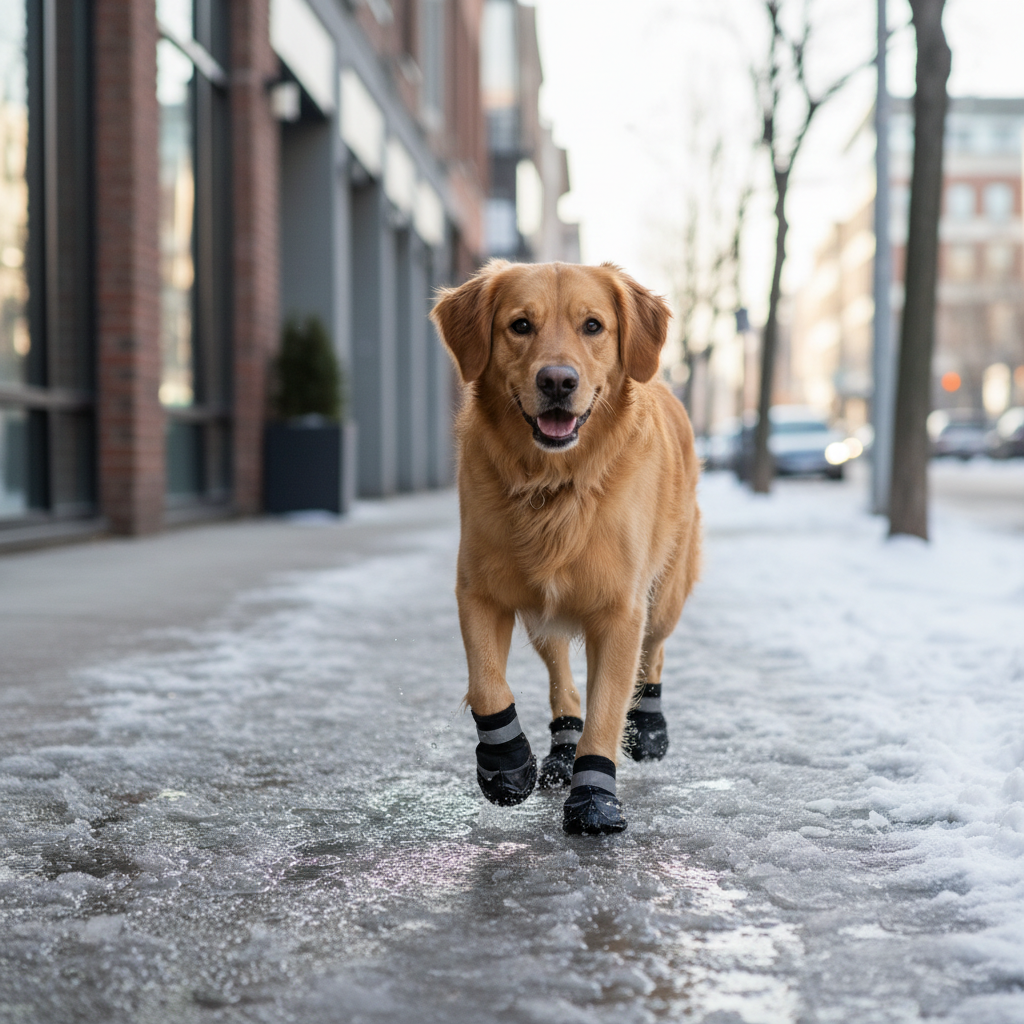
One more thing people miss: winter paw problems aren’t only about cold. Road salt and de-icers can sting, and packed snow can form painful “ice balls” between toes, especially on long-haired paws. Boots won’t solve every issue, but they usually make winter routines simpler.
Why winter snow and ice are tough on paws
Winter surfaces create a mix of hazards, and they stack up fast during a typical neighborhood walk. Even dogs that “never needed boots” may struggle when conditions change.
- De-icing salts and chemicals: can irritate skin, cause redness, and trigger obsessive paw licking. According to the ASPCA... deicing products can be irritating to paws and gastrointestinal tracts if licked off. If you suspect chemical exposure, it’s smart to call your veterinarian.
- Ice and polished snow: low traction increases slipping risk, especially for seniors or dogs with orthopedic issues.
- Wet + cold: repeated cycles of wet paws, then freezing air can dry and crack paw pads.
- Snow packing: snow clumps between toes can pull at hair and skin, making dogs stop and “three-leg” it home.
What “winter-ready” dog rain boots really need
Lots of products get marketed as winter boots, but the performance comes down to a few practical features. If you’re shopping for dog rain boots for winter snow ice, prioritize the parts that fail first.
Outsole traction (the non-negotiable)
Look for a textured rubber outsole with a defined tread pattern. Smooth rubber can be waterproof and still slip on icy concrete. If traction details are vague in the listing, assume it’s not great.
Cold-flexible materials
Some rubbers and plastics stiffen in low temperatures. When the upper gets rigid, dogs tend to high-step, boots rub more, and straps loosen.
Waterproofing vs. warmth
“Rain boot” usually means water protection, not insulation. Many dogs do fine with waterproof boots plus short winter walks, but if you do long outings or live in very cold regions, you may want room for a thin liner sock.
Secure closure (and the right height)
Most boots fail because they slip off. Two straps generally hold better than one, and a slightly taller shaft helps keep slush out. But too tall can chafe the dewclaw area on some dogs, so fit matters more than height alone.
Quick fit check: measure, size, and “stay on” test
Fit is where most returns happen, and it’s also where dogs decide whether they’ll tolerate boots. Do this before you commit to keeping them.
- Measure width first: place your dog’s paw on paper, mark the widest points, then measure. Many dogs need a wider boot than you’d guess.
- Trim nail length: long nails change paw splay and can push the boot forward, increasing slip-off risk.
- Do an indoor “carpet test”: put on two boots first, let your dog walk 2–3 minutes. Check twisting, heel lift, and toe bunching.
- Then a wet test: a short slushy walk reveals if water wicks in at the top or if straps loosen when wet.
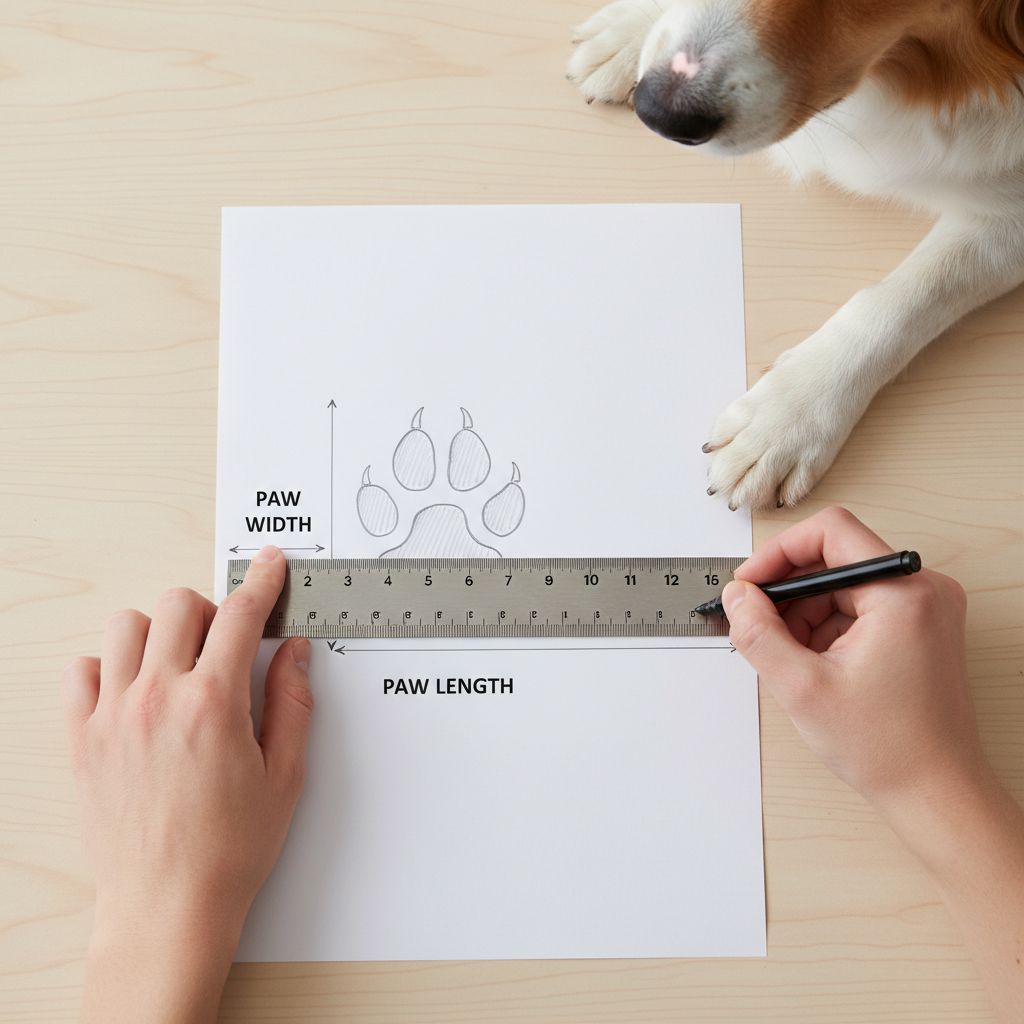
If you’re between sizes, many dogs do better with the slightly larger boot only if the straps can truly cinch and the toe doesn’t collapse. A boot that’s too tight can rub quickly, especially when wet.
Choosing the right type by your winter routine (with comparison table)
Not every dog needs the same setup. Your neighborhood, walk length, and your dog’s gait all change what “best” looks like.
| Scenario | What to prioritize | What often goes wrong |
|---|---|---|
| Short city walks on salted sidewalks | Waterproof + chemical barrier, easy on/off, good tread | Straps loosen when wet, salt sneaks in at the cuff |
| Suburban slush + icy driveways | Traction, cold-flexible outsole, higher shaft | Smooth soles slide, boots twist on turns |
| Trail snow and packed ice | Durability, reinforced toe, aggressive tread | Thin uppers tear, snow packs in low-cut boots |
| Senior dog or rehab walk | Stability, secure fit, lightweight design | Heavy boots change gait, causing fatigue |
If you’re mainly trying to block salt and slush, dog rain boots for winter snow ice can be enough without heavy insulation. For longer outdoor time, consider a boot that accepts a liner sock, but keep breathability in mind so paws don’t stay damp.
How to get your dog comfortable in boots (without the drama)
This is where many people give up too early. The “goofy walk” is normal at first because boots change paw feedback and traction. Usually it improves once the dog learns the new sensation.
A simple 4-step training plan
- Step 1: Let the boots exist. Leave them near the leash, reward curiosity, no forcing.
- Step 2: One paw at a time. Boot on, treat, boot off. Keep it short.
- Step 3: Two boots, then four. Walk across a rug, reward calm movement.
- Step 4: Go outside briefly. A 3–5 minute loop beats a long “let’s tough it out” walk.
If your dog freezes or panics, slow down. For anxious dogs, pairing boots with a high-value reward and very short sessions tends to work better than trying to “normalize” it through long exposure.
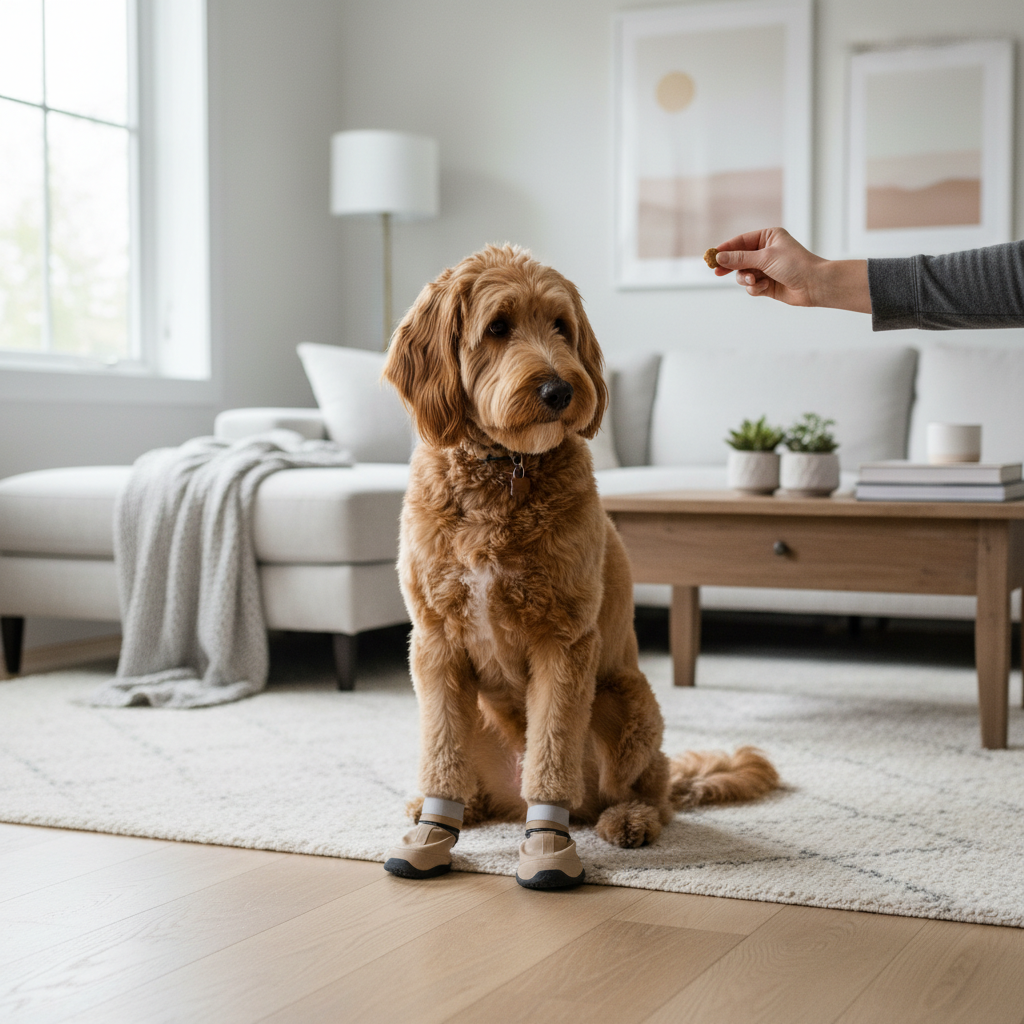
Key takeaway: don’t judge fit on minute one. Judge it after a short walk when straps settle and your dog stops overthinking their feet.
Real-world troubleshooting: slipping, rubbing, and “boots keep falling off”
Most issues have a fix, but the fix depends on why it’s happening.
- Boots twist sideways: often too wide or straps sit too low. Try tightening the upper strap first, and make sure the boot shape matches your dog’s paw.
- Boots fall off in snow: cuff too low or snow pulls them off. A taller shaft and two-strap closure usually helps.
- Redness at the top line: likely rubbing. Check for dewclaw contact, consider a softer cuff or a thin sock, and shorten sessions.
- Dog still slips: traction pattern may be too shallow for ice. Some dogs need a more aggressive tread; for high-risk situations, consult your vet about safety gear and activity limits.
Also worth saying out loud: if your dog’s gait looks strange after boots come off, stop using that pair. Persistent limping, swelling, or bleeding warrants a call to your veterinarian.
Winter boot care and safety habits that actually help
Boots work better when you treat them like winter gear, not a “set and forget” accessory.
- Rinse after salted walks: salt residue can stiffen materials and irritate skin next time.
- Dry thoroughly: damp boots can cause rubbing and odors. Air-dry away from high heat so materials don’t warp.
- Check straps and stitching weekly: winter grit acts like sandpaper.
- Backup plan: keep paw wipes and a towel by the door in case a boot fails mid-walk.
According to the American Kennel Club (AKC)... winter paw protection often includes wiping paws after walks and watching for ice melt irritation. Boots are part of that routine, not the entire routine.
Conclusion: a practical way to pick and use winter rain boots
Dog rain boots for winter snow ice make the most sense when you deal with road salt, slush, or frequent freeze-thaw cycles, and you want fewer paw wipe-down battles at the door. The “right” pair is the one that fits securely, stays flexible in cold weather, and gives your dog confident traction.
If you want a simple next step, do two things: measure paw width carefully, then commit to a short, low-pressure training week. Most dogs adapt faster than people expect, as long as the boots don’t rub and don’t fall off.
FAQ
Are rain boots enough for snow, or do dogs need insulated boots?
For many dogs, waterproof boots are enough for typical neighborhood walks, mainly because they block salt and wet slush. If your dog spends longer time outside or seems sensitive to cold, insulation or a liner sock may help, but watch for dampness and rubbing.
How do I know if my dog’s boots are too tight?
Look for toe compression, reluctance to bear weight, or redness when you remove them. A snug boot should feel secure without pinching, and your dog should walk normally after a brief adjustment period.
Why does my dog walk funny in boots?
It’s usually the change in sensation and balance. If the boots fit well and your dog relaxes within a few minutes, that’s normal. If the odd gait persists or your dog seems uncomfortable, reassess size and boot shape.
What’s the best way to keep boots from falling off in deep snow?
A higher cuff, two secure straps, and the correct width are the big three. Deep snow can tug at low-cut boots, so a taller design often wins even if it takes a bit longer to put on.
Can dog boots prevent salt burns on paws?
They can reduce direct contact with salt and ice melt, which often helps. You still want to wipe paws afterward because chemicals can get on fur and be licked, and some irritation can happen above the boot line.
Should dogs wear socks under winter boots?
Socks can help with rubbing and warmth, but they can also make boots fit tighter and may hold moisture. If you try socks, keep walks shorter at first and re-check fit.
When should I skip boots and call a vet?
If you see bleeding, open sores, significant swelling, or persistent limping, it’s safer to pause boot use and call your veterinarian. Chemical exposure concerns or sudden pain after a winter walk also justify professional advice.
If you’re trying to find a pair that stays on during slush season and doesn’t turn your walk into constant readjusting, it can help to narrow options by your route first, then buy based on tread, closure, and paw width instead of marketing terms.