
cat flea home spray natural safe solutions can work well, but only if you treat the right places, repeat on the right schedule, and keep your cat’s exposure low while the product dries.
If you’ve ever thought “I treated my cat, why are fleas still in my house,” you’re not alone, fleas are a home problem as much as a pet problem. Eggs fall off, larvae hide in fabrics, and you end up seeing “new” fleas even after a good topical treatment.
This guide breaks down what “natural and pet safe” actually means in the real world, how to choose a spray that fits your home, and a practical routine that targets the flea life cycle without turning your living room into a chemistry lab.
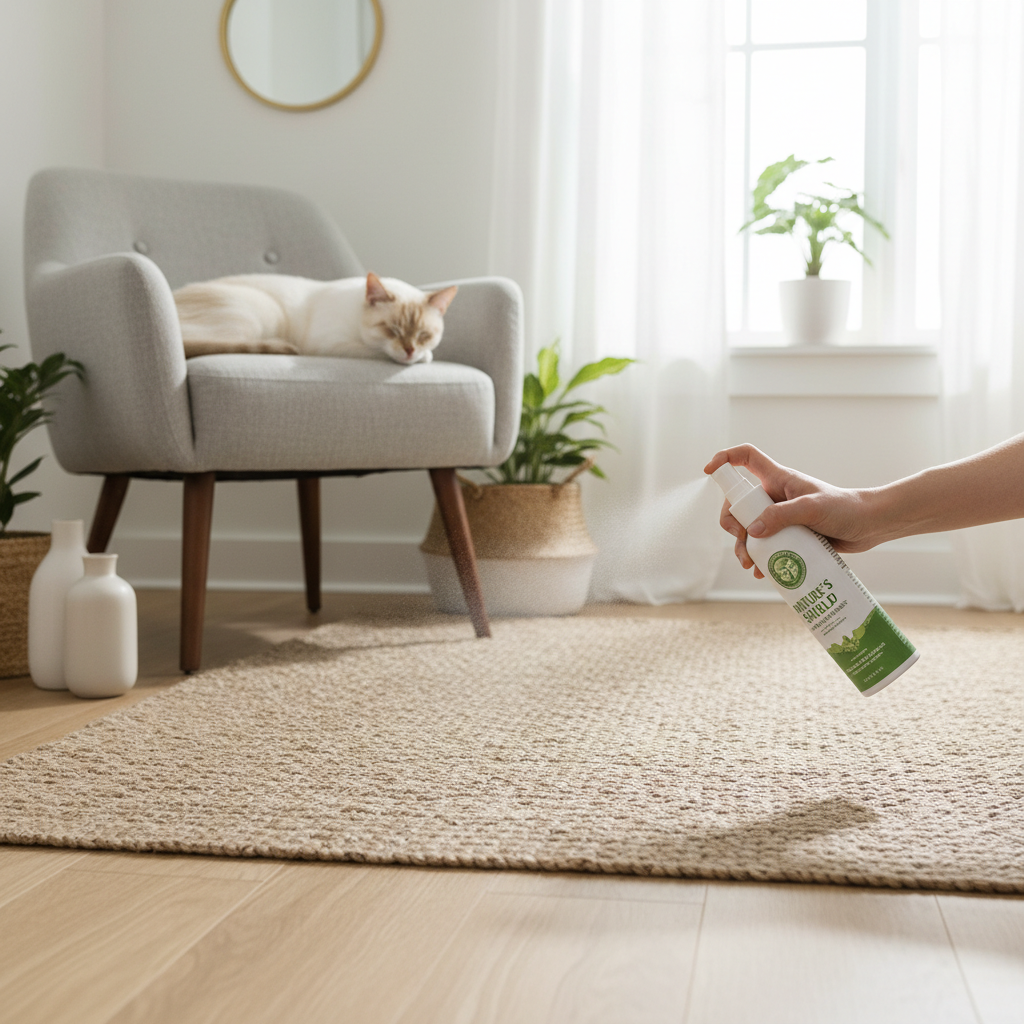
What “natural” and “pet safe” usually means (and what it doesn’t)
In flea control, “natural” often refers to plant-based actives or minerals, not “harmless.” A product can be naturally derived and still irritate a cat’s airway or skin, especially if you over-spray or use it in a small room.
Also, “pet safe” typically means safe when used as directed, not safe to breathe wet mist, lick off paws, or spray directly on a cat. Many home sprays are meant for surfaces, not for application on animals.
- Read the label for species wording: some products are dog-safe but not cat-safe.
- Look for clear directions on drying time, ventilation, and re-entry for pets.
- Skip DIY essential oil blends unless a veterinarian confirms safety for your specific cat.
According to the ASPCA Animal Poison Control Center, cats can be especially sensitive to certain essential oils, exposure can happen through skin contact, grooming, or inhalation, so caution matters even with “natural” ingredients.
Why fleas keep coming back indoors (the life-cycle problem)
The biggest frustration is timing, you kill adult fleas you can see, then a few days later you notice more. That doesn’t always mean the spray “failed,” it can mean eggs and pupae were already in the environment.
Most home infestations involve multiple stages at once:
- Eggs drop into bedding, sofa seams, carpet edges.
- Larvae avoid light, they sit deep in fibers and debris.
- Pupae can “wait” and then emerge when they sense movement or warmth.
- Adults jump onto pets and people, and the cycle restarts.
This is why any cat flea home spray natural safe approach usually needs repeated applications and good cleaning habits, not a one-and-done spray session.
Ingredient reality check: what tends to be used in natural home sprays
Not every “green” ingredient works the same way. Some aim to kill adults on contact, others aim to dehydrate insects, and many have limited residual effect, which can be fine if you pair them with vacuuming and repeat sprays.
Common options you’ll see
- Mineral powders (like diatomaceous earth): can help by drying insects, but dust can irritate lungs if applied loosely or kicked up.
- Plant-based oils (like cedarwood or clove components): may repel or knock down insects, but cats can be sensitive, label clarity matters.
- Soap-based sprays: can reduce surface tension and help with direct-contact killing on fabrics, usually limited residual.
- Insect growth regulators (IGRs): not “natural,” but many households choose them for lower mammal toxicity and strong life-cycle control.
If your priority is truly “natural,” you’re often trading some residual power for gentler chemistry, which means your plan needs stronger follow-through.

Quick self-check: do you need a home spray, a pet treatment, or both?
Before you buy anything, it helps to identify where the problem lives. Many people spray the house heavily when the missing piece is actually consistent pet protection, or they only treat the cat and ignore the bedding and floors.
- You likely need a home spray if fleas show up on humans, you see flea dirt in pet bedding, or you notice bites after vacuuming.
- You likely need stronger pet protection if you keep seeing fleas on your cat’s neck/back despite cleaning the home.
- You likely need both if the infestation has lasted more than 2–3 weeks or involves multiple rooms.
- You may be dealing with a different pest if bites are mostly at night and you don’t find flea dirt, consider asking a pest pro to confirm.
According to the CDC, fleas can also live on wildlife and rodents around a home, so recurring issues sometimes involve outdoor sources you don’t immediately notice.
How to use a natural, pet-safe home flea spray without stressing your cat
Most “pet safe” problems come from exposure timing. The goal is to treat surfaces thoroughly, then keep your cat away until everything is fully dry and the room is aired out.
A practical routine that usually works better than random spraying
- Step 1: Prep the rooms — pick up cat toys, food bowls, and water fountains, cover aquariums, open windows if possible.
- Step 2: Vacuum first — focus on rug edges, baseboards, under furniture, and upholstery seams, then empty the vacuum outside.
- Step 3: Spray targeted zones — pet bedding, couch cushions, carpet edges, cracks near pet hangouts, avoid misting the air.
- Step 4: Dry and ventilate — keep the cat in another room, drying time varies by product, but “dry to the touch” is a reasonable minimum.
- Step 5: Repeat on schedule — many natural sprays need repeat use every few days at first, then weekly, follow your label.
Key point: If you’re using a cat flea home spray natural safe product, under-application is common, people do a light pass and miss the places larvae actually hide. A focused spray plus vacuuming usually beats flooding the room.
A simple plan by infestation level (with a comparison table)
It helps to match your effort to your reality. A “light” issue can respond to cleaning plus a gentle spray, a heavier infestation often needs integrated steps and possibly veterinarian support.
| Situation | What you’ll notice | Home actions | Pet actions |
|---|---|---|---|
| Light | Occasional flea seen, mainly in one room | Vacuum daily for 7–10 days, spray bedding and edges, wash fabrics hot | Check with vet on prevention, comb daily |
| Moderate | Fleas weekly, multiple rooms, bites on people | Vacuum every other day, spray target zones 2x/week, declutter floors | Use vet-recommended flea control consistently |
| Heavy | Fleas seen daily, flea dirt, cat scratching a lot | Spray per label schedule, wash/rotate bedding, consider professional inspection | Vet visit advised, rule out skin infection or allergy flare |
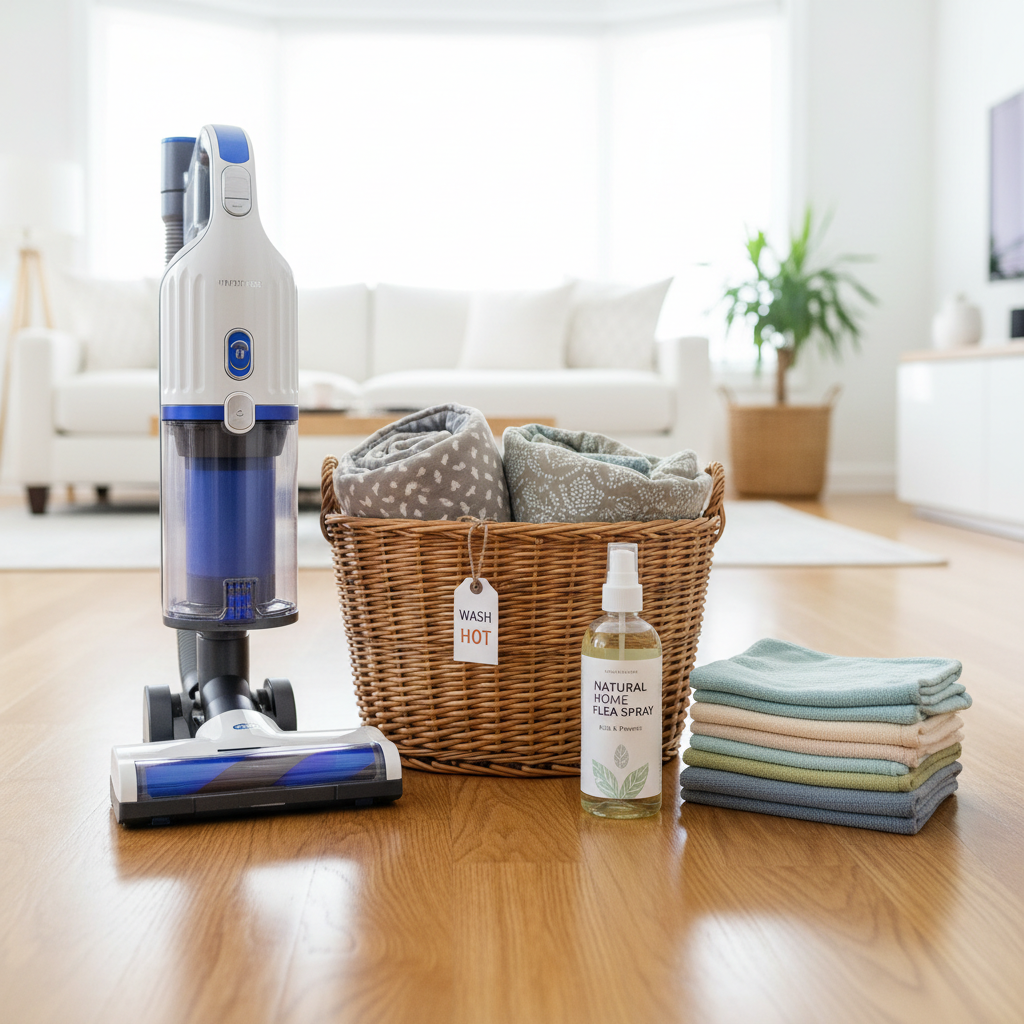
Common mistakes that make “natural sprays” feel useless
People blame the product, but the pattern is usually the issue. Fleas exploit small gaps in consistency, and natural formulas often leave less residual protection than conventional pesticides.
- Spraying the air instead of surfaces, you want fibers and seams, not a fog.
- Not repeating, one treatment rarely covers the emergence window.
- Skipping vacuuming, vacuuming is not “extra,” it removes debris larvae feed on and triggers pupae to emerge.
- Letting cats back in too soon, wet residue plus grooming is how “safe” becomes “risky.”
- Ignoring the pet’s prevention, your home can be spotless and still get re-seeded by an untreated cat.
According to the FDA, pet owners should follow labeled directions carefully for any flea and tick product and contact a veterinarian if adverse reactions happen, that guidance applies just as much to “natural” items.
When to get professional help (vet or pest control)
There’s a point where DIY becomes a loop: you clean, spray, see improvement, then it rebounds. If your cat seems unwell, or the infestation keeps escalating, getting outside help is not overreacting.
- Call a vet if your cat has hair loss, scabs, lethargy, pale gums, or intense itching, these can signal allergy dermatitis or other issues that need medical care.
- Consider pest control if you have a multi-unit building, recurring wildlife/rodent activity, or fleas showing up in rooms the cat never enters.
- Ask for product compatibility if you use topical/oral flea meds, you want to avoid ingredient stacking that increases irritation risk.
If you’re unsure whether a specific ingredient is cat-safe in your situation, it’s reasonable to bring the label (or a photo of it) to your veterinarian and ask directly.
Conclusion: a realistic way to win with natural home sprays
A cat flea home spray natural safe approach can be a solid choice when you treat the home like the source of the problem, focus on seams and fabrics, and stick to a repeat schedule long enough to outlast the life cycle.
If you want one next step that actually moves the needle, vacuum the main pet zones today, wash the bedding, then do a targeted spray and keep your cat out until fully dry. After that, set reminders for repeat treatments, consistency is the unglamorous part that usually works.
Key takeaways
- Natural does not automatically mean non-irritating, cats are sensitive, especially with oils and airborne mist.
- Life-cycle timing explains most “it came back” moments, repeat treatment matters.
- Combine steps: focused spray + vacuuming + washing fabrics beats heavy spraying alone.
- Know when to escalate: persistent infestations or sick/over-itchy cats deserve a vet call.
FAQ
What is the safest natural spray for fleas around cats?
It depends on your cat and the formula. In general, choose a product that clearly states it’s appropriate for homes with cats, provides ventilation and drying guidance, and avoids strong essential-oil content unless the label is explicit about cat safety.
Can I spray a natural flea spray directly on my cat?
Usually no. Many home sprays are for carpets, upholstery, and bedding, not for animal skin. If a label doesn’t clearly say it’s for cats, assume it’s not, and ask your veterinarian for a pet-specific option.
How often should I use a natural home flea spray?
Follow the label, but many households see better results when they repeat applications during the first couple weeks, then taper. The goal is to catch newly emerging fleas, not just the adults you see today.
Why do I still see fleas after spraying my house?
Many times you’re seeing newly emerged adults from pupae already in the environment. Keep vacuuming and repeat treatments on schedule, and make sure your cat is on consistent flea prevention so the cycle breaks.
Is diatomaceous earth safe to use in a home with cats?
Some people use it, but the dust can irritate lungs for humans and pets if it becomes airborne. If you consider it, use it carefully, avoid creating dust clouds, and keep cats away during application, when in doubt, ask a vet.
Do I need to treat my entire house or just the rooms my cat uses?
Start with the rooms your cat uses most and any soft surfaces nearby. If fleas have been present for weeks, expand to adjacent areas and entryways, fleas can spread on clothing, other pets, or through shared hallways.
When should I switch from “natural” to a stronger option?
If you’ve been consistent for a few weeks and still see daily fleas, or your cat’s skin looks inflamed, it may be time to talk with a veterinarian about a stronger integrated plan, sometimes an IGR-based home treatment plus vet-approved pet meds ends the cycle faster.
If you’re trying to balance “natural” with results and you want a more straightforward plan, it can help to pick one home spray you trust, pair it with a vet-approved prevention for your cat, and follow a simple calendar instead of chasing new products every weekend.