
Dog tug toy for interactive play can be one of the fastest ways to turn “wild energy” into a game with rules, but only if the toy fits your dog and you play it with clear structure.
If tug usually ends with sore hands, frayed fabric, or a dog that won’t let go, you’re not alone, most people don’t need a “stronger” toy as much as they need the right material, the right size, and a repeatable routine.
This guide breaks down why tug works for training, how to choose a toy that matches your dog’s style, plus practical cues like “take it,” “drop,” and “all done” so the game stays fun and safe.
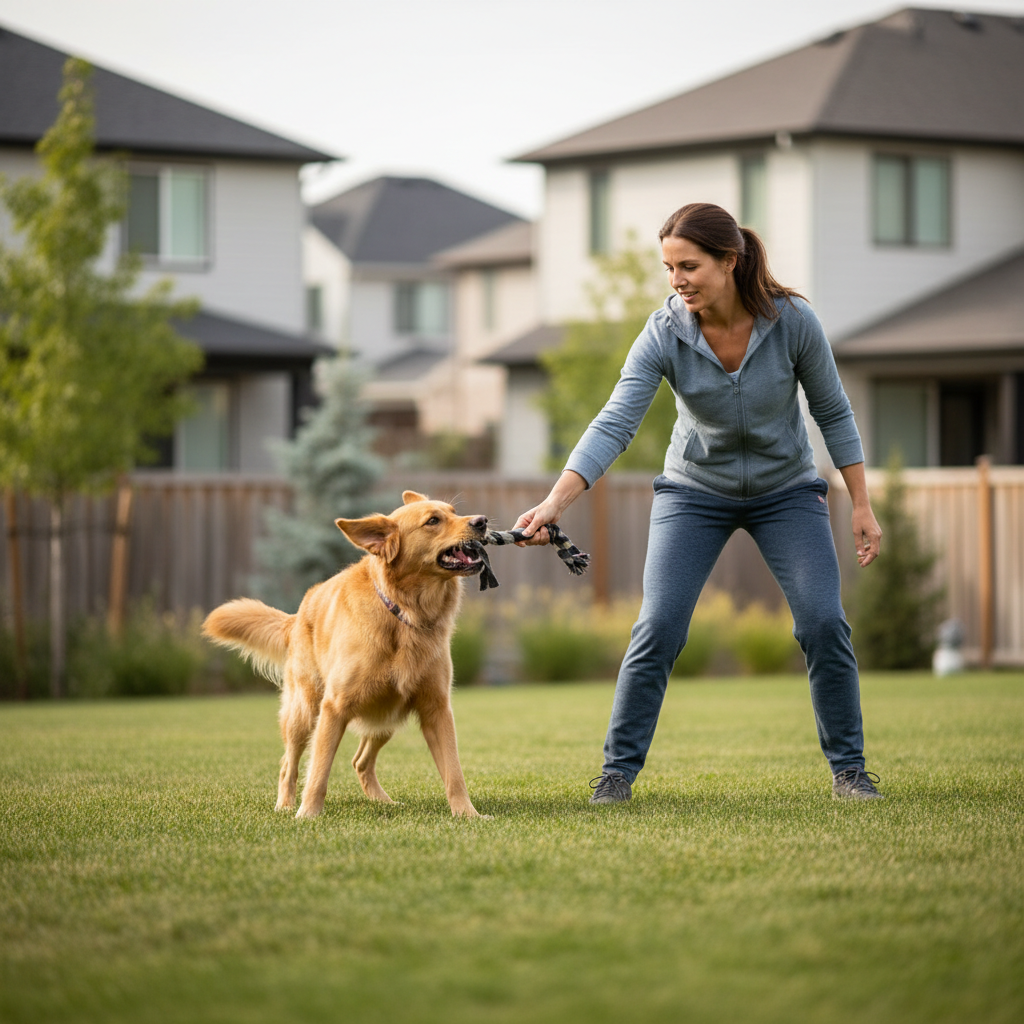
Why tug works for training (and when it backfires)
Tug is basically cooperative “predatory play,” chasing, grabbing, pulling, and winning, it’s rewarding in a way many dogs care about more than treats. That’s why a dog tug toy for interactive play often helps with motivation when your dog gets bored easily.
But tug can backfire when the dog stays over-threshold, meaning they’re so amped they stop thinking. In that state, you’ll see frantic re-gripping, jumping into you, ignoring “drop,” and sometimes redirecting to sleeves or hands.
According to the American Veterinary Society of Animal Behavior (AVSAB), reward-based training supports learning without relying on fear or pain, tug fits nicely in that lane when you keep it structured and stop before frustration spikes.
- Great for: building engagement, reinforcing recalls, teaching impulse control, burning energy in small spaces.
- Not ideal (at least at first): dogs with untreated pain, serious resource guarding, or dogs who become frantic and can’t disengage.
Picking the right tug toy: materials, shape, and safety
Most tug problems start with mismatch: a tiny toy for a big dog, abrasive rope for a dog with sensitive gums, or a flimsy seam that encourages chewing instead of pulling.
Material choices (real-world pros and cons)
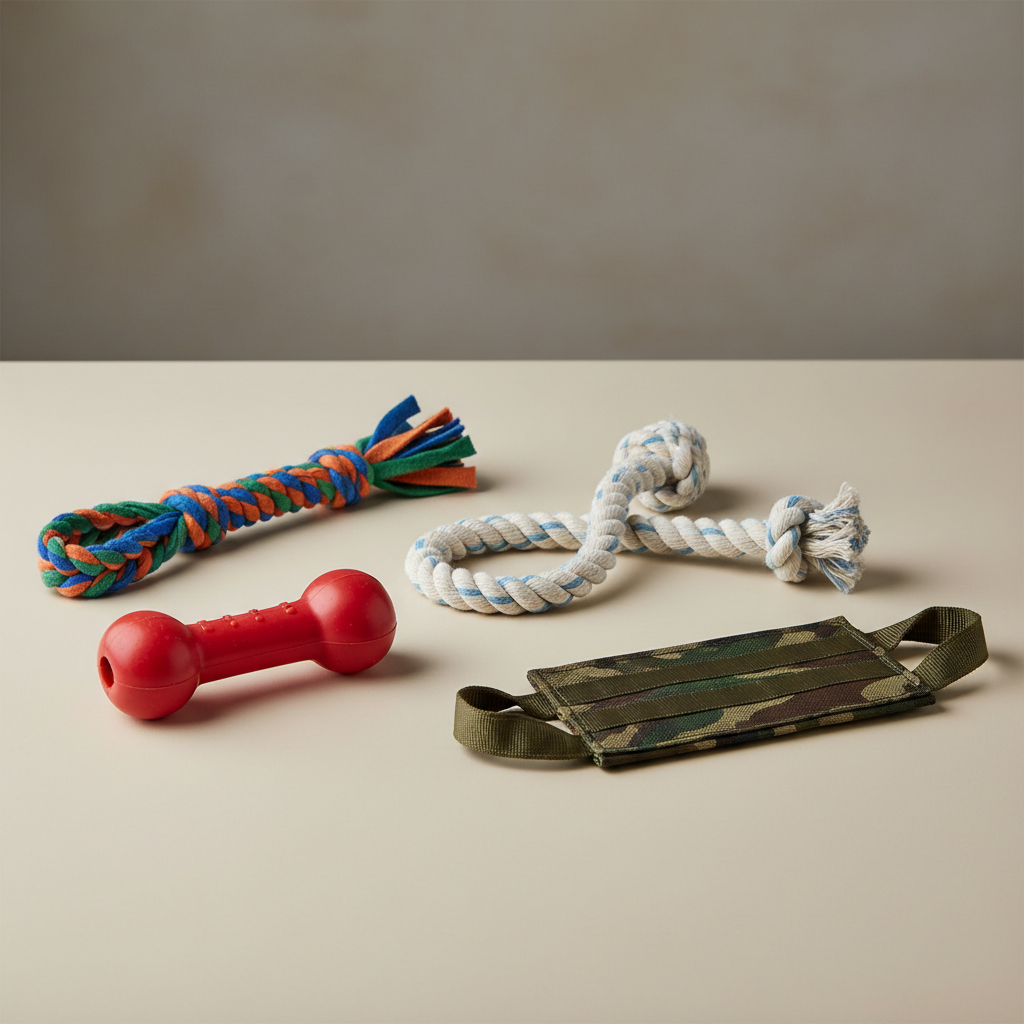
- Fleece or fire-hose style fabric: often gentler on mouths, good for many dogs, watch for shredding if your dog “saws” with back teeth.
- Rubber tug toys: easy to clean, good grip, nice for drooly dogs, but pick a size that doesn’t encourage clamping on fingers.
- Rope tugs: popular and cheap, but frayed strands can be swallowed, and harsh fibers may irritate some dogs, supervised use matters.
- Leather tugs: durable and grippy, but can be pricey, and still not meant for solo chewing.
Size and handle details that actually matter
- Choose a length that keeps your hand comfortably away from teeth, many people underestimate this.
- For strong pullers, a padded handle reduces hand strain and helps you stay consistent with rules.
- A wider bite area often helps dogs bite the toy instead of hunting for your wrist.
Safety note: tug toys are usually interactive tools, not “leave it on the floor all day” chew toys. If your dog tends to ingest pieces, supervise closely and swap to a safer format, and if you’re unsure, ask your veterinarian or a qualified trainer.
Quick self-check: is tug a good fit for your dog right now?
Before you buy a new dog tug toy for interactive play, it helps to sort out whether the issue is toy quality, training clarity, or arousal.
- Your dog can release toys for food or another toy, even if it’s not perfect yet.
- Your dog can pause for 1–2 seconds when you stop moving the toy.
- Mouthing happens “by accident” when they miss the target, not as a pattern of grabbing hands.
- They can recover after the game ends, meaning no pacing, barking, or pestering for 10 minutes straight.
If most of these are “no,” tug still might work, but you’ll likely need a calmer setup, shorter reps, and a clearer teaching plan for “drop.”
How to play tug with rules: a simple routine that holds up
The goal is not “win every time,” it’s “we can start, pause, and end the game on cue.” That’s what turns tug into training rather than chaos.
Step-by-step: the 60-second structured tug
- Start cue: show the toy, wait for a moment of calm, say “take it,” then begin movement.
- Game rules: tug stays low and horizontal, avoid big upward yanks that can stress necks, especially for smaller dogs.
- Micro-pauses: every few seconds, freeze the toy like a statue, when your dog softens or reorients, restart.
- End cue: say “drop,” trade for a treat or second toy, then say “all done,” and put the toy away.
Key point: the toy moving is the reward, your timing matters more than strength.
Teaching “Drop it” without turning it into a wrestling match
Many people get stuck here, they repeat “drop it” while pulling harder, the dog pulls harder too, and now the cue basically means “hang on tighter.”
A practical trade method
- Use a boring tug hold, stop motion, and place a treat at your dog’s nose.
- When they release, mark with a calm “yes,” give the treat, then restart the game as the bonus.
- After a few sessions, begin saying “drop” right before you present the treat, then fade the treat by rewarding with more tug.
According to the American Kennel Club (AKC), “drop it” is commonly taught with trading and reinforcement, not force, which is exactly why it holds up when your dog gets excited.
Common mistakes that make tug rough, unsafe, or ineffective
- Letting tug become chewing: if your dog lies down and grinds the toy, end the rep, tug rewards pulling, not shredding.
- Too-long sessions: 30–90 seconds per rep often works better than a single 10-minute battle.
- Hands too close: short handles invite accidental bites, especially with fast re-grips.
- Only playing in “maximum hype” mode: if your dog never practices calm tug, they won’t magically stay calm in real life.
- Using tug to test dominance myths: the “must always win” idea is outdated, what matters is your dog can release and re-engage politely.
Matching tug styles to goals: a quick comparison table
Different tug setups solve different problems, this table helps you choose what to practice next.
| Goal | Tug setup | What you reward | What to watch for |
|---|---|---|---|
| Better focus on walks | Short, calm tug before leash-up | Eye contact, quick “take it” | Over-arousal before leaving home |
| Stronger recall | Run away, then tug as jackpot | Fast return, collar grab tolerance | Dog grabs clothes on arrival |
| Impulse control | Frequent freeze-and-release pauses | Calm re-start after pause | Demand barking when toy stops |
| Confidence building | Gentle tug, easy wins, short reps | Choosing to engage | Intimidating pressure or loud play |
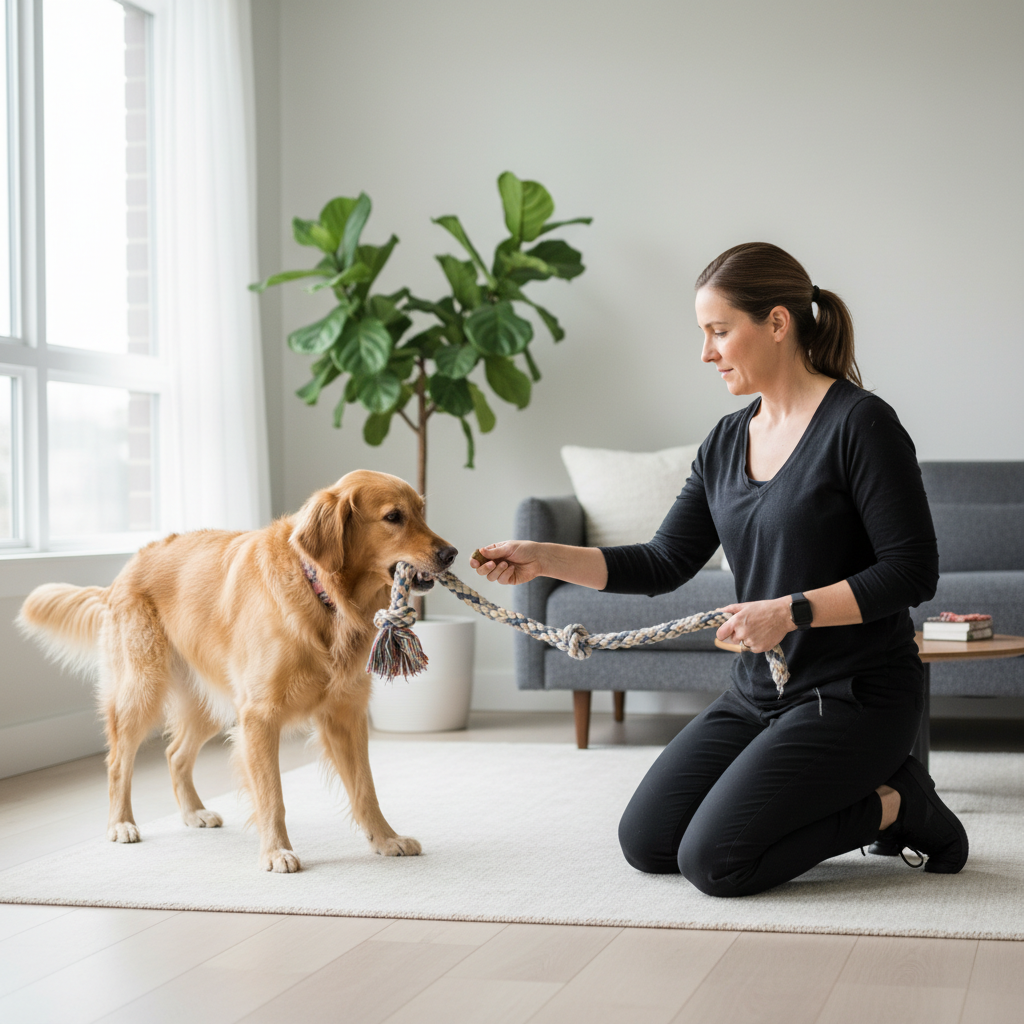
Practical play plans (5 minutes) for common households
You don’t need a huge yard or a high-drive sport dog, you need a repeatable plan that fits your evenings.
Plan A: after-work decompression (apartment-friendly)
- 3 rounds of 45-second tug
- Between rounds, ask for a simple behavior like “sit” or “touch”
- End with a sniff break, scatter a few treats on a mat
Plan B: kids in the house (extra structure)
- Adults control the tug rules, kids can do “treat toss” after “drop”
- Use a longer tug with a clear handle
- Stop immediately if teeth touch skin, restart only after 10 seconds of calm
Plan C: multi-dog homes
- Play one dog at a time behind a gate, most scuffles start from crowding
- Keep a second identical tug toy for clean trades
- Practice “all done” and toy put-away so the other dog doesn’t ambush
When to get help from a pro
If tug triggers stiff body language, hard staring, growling over possession, or the dog guards the toy from people, it can be more than “normal excitement.” In many cases, a qualified trainer can tell you whether this is arousal, guarding, pain, or a handling issue.
According to the American Veterinary Medical Association (AVMA), behavior concerns and potential pain issues can overlap, so if you notice sudden changes in play style or sensitivity around the neck, mouth, or shoulders, checking with a veterinarian is a sensible step.
Key takeaways
- Choose a tug toy that fits the mouth and protects your hands, size and handle length matter more than hype.
- Build structure with start, pause, and end cues, the calm moments are where learning sticks.
- Teach “drop” as a trade, avoid turning it into a strength contest.
- Keep sessions short, multiple clean reps beat one long messy one.
Conclusion: make tug a teamwork game, not a battle
A dog tug toy for interactive play can be a training tool that feels like a break for both of you, but it works best when you treat it like a skill, not a free-for-all. Pick a toy that matches your dog’s body and bite style, build a clear “take” and “drop” routine, and stop while the game still feels easy.
If you want one next step, run the 60-second structured tug today, then write down what went wrong, hands too close, dog too hyped, no clean drop, and adjust just one variable tomorrow.
FAQ
Is tug of war bad for dogs?
Usually no, when played with rules and appropriate intensity. Problems tend to come from rough handling, neck stress from upward yanks, or a dog that can’t disengage, if any of that shows up, scale the game down and consider professional guidance.
How do I stop my dog from biting my hands during tug?
Use a longer tug with a clear handle, keep the game low, and freeze the toy when your dog misses the target. If teeth touch skin, calmly end the rep, wait for calm, then restart so the dog learns accuracy keeps the game going.
What’s the best material for a strong chewer who also loves tug?
Many strong chewers do better with durable fabric tugs or thick rubber tugs during supervised play, but no tug is truly “chew-proof.” If your dog tends to shred and swallow pieces, choose safer chew items for solo time and reserve tugs for interactive sessions.
Can tug help with recall training?
Yes, for dogs who find tug highly rewarding, it can become a powerful “jackpot” for coming back fast. Keep it clean by rewarding the return, then tug, and practice a quick “drop” so the dog doesn’t bolt off to keep the toy.
Should I let my dog win at tug?
Letting your dog “win” sometimes can keep motivation high, but the real goal is a dog who can release on cue and re-engage politely. If winning makes your dog guard the toy or sprint away, use a leash or play in a small space and focus on trades.
My dog won’t drop the tug toy, what should I do?
Stop pulling, hold the toy still, and trade for a treat, then restart as the bigger reward. Repeating “drop” while wrestling usually teaches the opposite, if it’s been a long-standing issue, a trainer can help you rebuild the cue cleanly.
Is tug safe for puppies?
Often yes with gentle, low, controlled tug and short sessions, but puppies vary, and their mouths and bodies are still developing. If you notice discomfort, avoidance, or intense over-arousal, keep it lighter and ask your veterinarian what’s appropriate for your puppy’s age and build.
If you’re trying to find a tug toy that feels good in your hand, fits your dog’s bite, and supports cleaner “drop” reps, it can help to choose an interactive tug designed for training routines rather than a random chew toy, that small difference often saves time and frustration.