
Dog booties reflective options can make night walks feel less stressful because they add visibility and help protect paws from cold pavement, salt, and surprise debris.
If you’ve ever lost sight of your dog for a second near a driveway, or noticed them tip-toeing over gritty sidewalks, you already understand the two big night-walk problems: visibility and traction. Reflective gear solves part of it, but paws still take the hit.
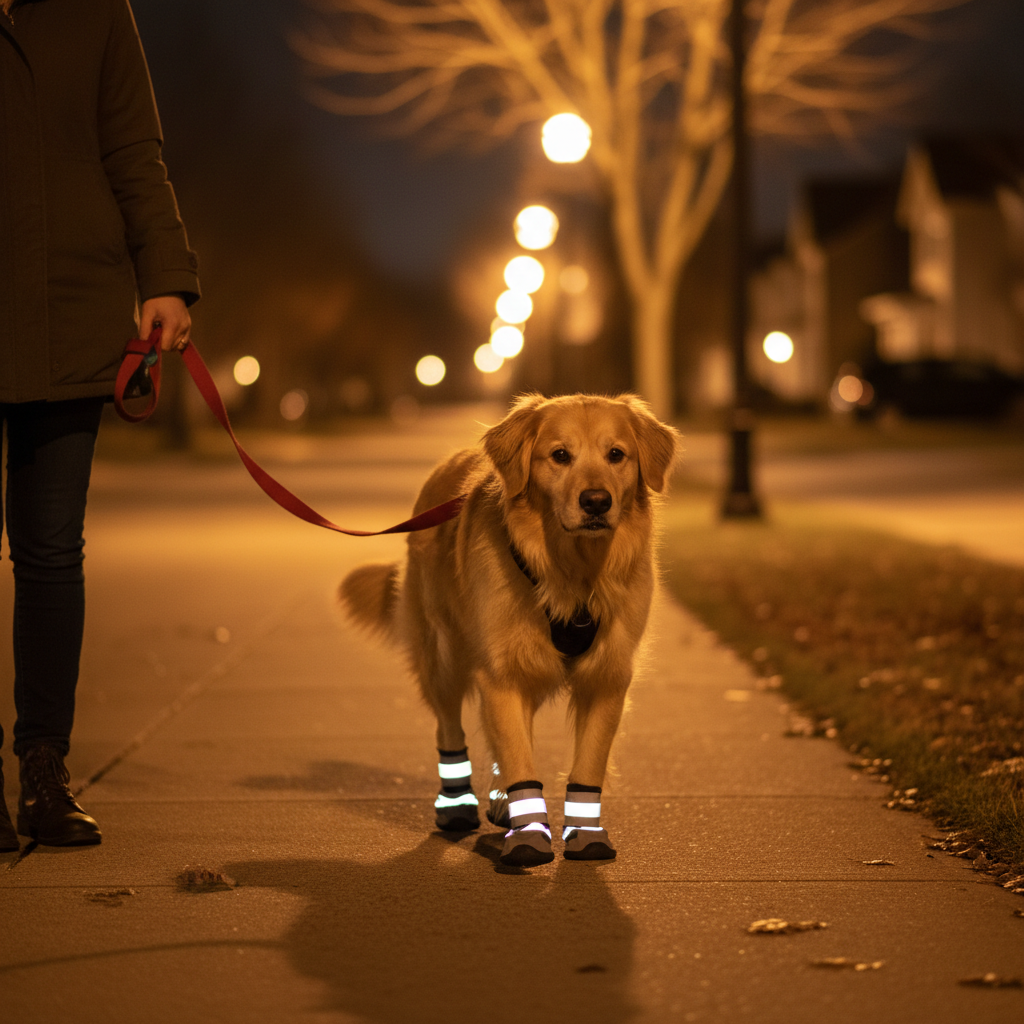
This guide breaks down what reflective boots actually help with, what they don’t, and how to pick a pair your dog won’t immediately kick off. You’ll also get a quick fit checklist, a comparison table, and a short training plan for dogs who “hate booties.”
What reflective dog booties really do on night walks
Reflective boots combine two functions: paw protection and visibility. The visibility piece is easy to overestimate, so it helps to be specific about where it works.
- Visibility to drivers: reflective trim can flash when headlights hit it, which can help a driver notice movement near the ground.
- Visibility to you: it’s simpler to track paw placement at dusk, which matters if your dog is reactive, elderly, or recovering.
- Paw protection: boots can reduce contact with salt, ice melt, hot or cold pavement, sharp gravel, and broken glass.
- Traction support: many boots add a rubber outsole that may help on wet sidewalks or packed snow, though grip varies a lot by tread.
According to the American Kennel Club (AKC)... reflective gear can improve visibility on low-light walks, but it’s still smart to use layered safety like lighting, leash control, and route choice.
Common reasons dogs slip, refuse, or “walk funny” in boots
Most boot problems aren’t attitude, they’re mechanics. If a dog looks dramatic in boots, something about the feel or fit usually clashes with how they balance.
Fit issues that cause kick-offs
- Too long: toes can’t flex naturally, so your dog does the high-step walk.
- Too wide: boots twist, then fly off mid-block.
- Strap position: if the strap sits over the wrong spot, it can rub or cut circulation.
Material issues that cause slipping
- Smooth soles: some “cute” boots look reflective but have minimal tread.
- Wet fabric: waterlogged uppers can sag and rotate.
- Thin outsole: little insulation means your dog still feels cold and pulls back.
There’s also the sensory side. Many dogs dislike the noise of stiff soles on concrete, or the pressure around the wrist/ankle area.
Quick self-check: do you actually need reflective boots?
Some dogs do great with wax + paw wipes, others really benefit from boots. Use this to decide before you buy.
- Sidewalks are salted or gritty where you live in winter.
- Your dog licks paws after walks (possible irritation, worth monitoring).
- You walk near traffic or cross multiple driveways in low light.
- Your dog slides on wet pavement or packed snow.
- Short-coated or senior dog seems reluctant on cold ground.
If none of these feel familiar, reflective accessories like a leash, collar, or harness may be enough, and boots can be optional.
How to choose dog booties reflective enough for safety (without sacrificing comfort)
When people search dog booties reflective, they often focus on the shiny strip, but the “boring” specs determine whether you’ll actually use them.
Key features that matter most
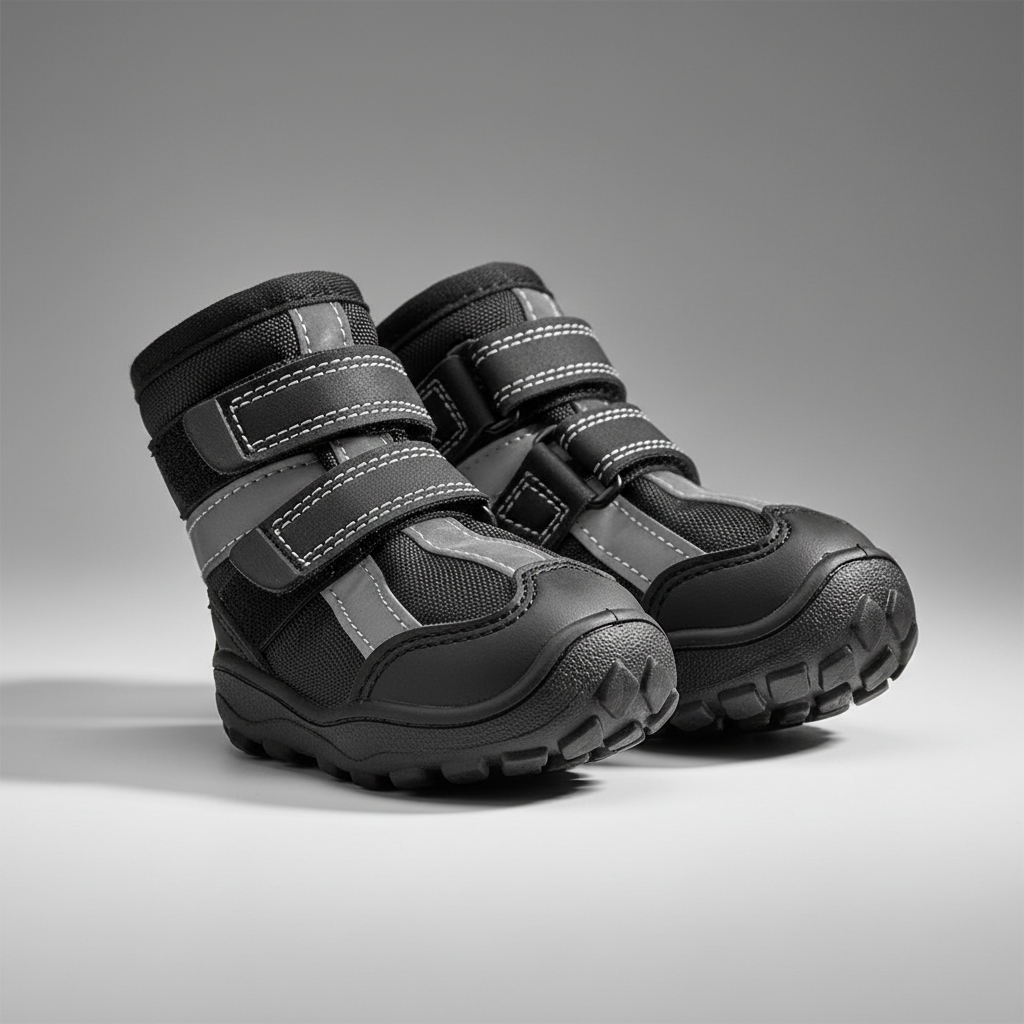
- Reflective coverage placement: look for trim that wraps around, not a tiny logo patch.
- Outsole tread: deeper lugs typically grip better on wet sidewalks; flatter soles may do fine indoors but slide outside.
- Two-point closure: double straps often hold better than one, especially for narrow ankles.
- Water resistance: “water-resistant” helps for puddles, but fully waterproof boots can trap heat and moisture.
- Flex zone: some designs allow a more natural toe bend, which reduces the “robot walk.”
Comparison table: picking the right boot type for your route
| Walking condition | What to prioritize | What to avoid |
|---|---|---|
| Neighborhood streets with cars | Wraparound reflective trim + secure straps | Single loose strap, tiny reflective logo only |
| Wet sidewalks, light rain | Grippy rubber outsole + water-resistant upper | Smooth soles, fabric that soaks through fast |
| Snow + road salt | Higher cuff + insulation + easy-to-rinse materials | Thin uppers, seams that trap salt crystals |
| Short quick potty breaks | Fast on/off + decent traction | Overbuilt boots that take minutes to put on |
| Trail at dusk | Toe protection + tread + reflective accents | Fashion boots with soft soles |
Fit and measuring: the part that decides everything
A great pair fails if sizing is off by even a little. Most brands size by paw width, sometimes length, measured while your dog stands and puts weight on the paw.
- Measure after a trim: long nails can change paw spread and affect length.
- Trace the paw: standing weight, pencil straight up and down, then measure widest point.
- Check the dewclaw area: if your dog has dewclaws, a higher cuff or careful strap placement reduces rubbing.
- Do a “twist test”: once on, gently rotate the boot, if it spins easily, it’s too wide or the strap can’t lock.
According to the American Veterinary Medical Association (AVMA)... paw and nail care affects comfort and gait, so if your dog seems sore, it may be worth asking a veterinarian or groomer to check nails and paw pads.
Getting your dog comfortable in boots: a realistic 7-day plan
Boot training usually goes better when you stop trying to “win” on day one. Aim for calm acceptance, not perfection.
Day 1–2: make boots boring
- Let your dog sniff the boots, reward, then put them away.
- Touch a boot to the paw briefly, reward, done.
Day 3–4: short indoor wear
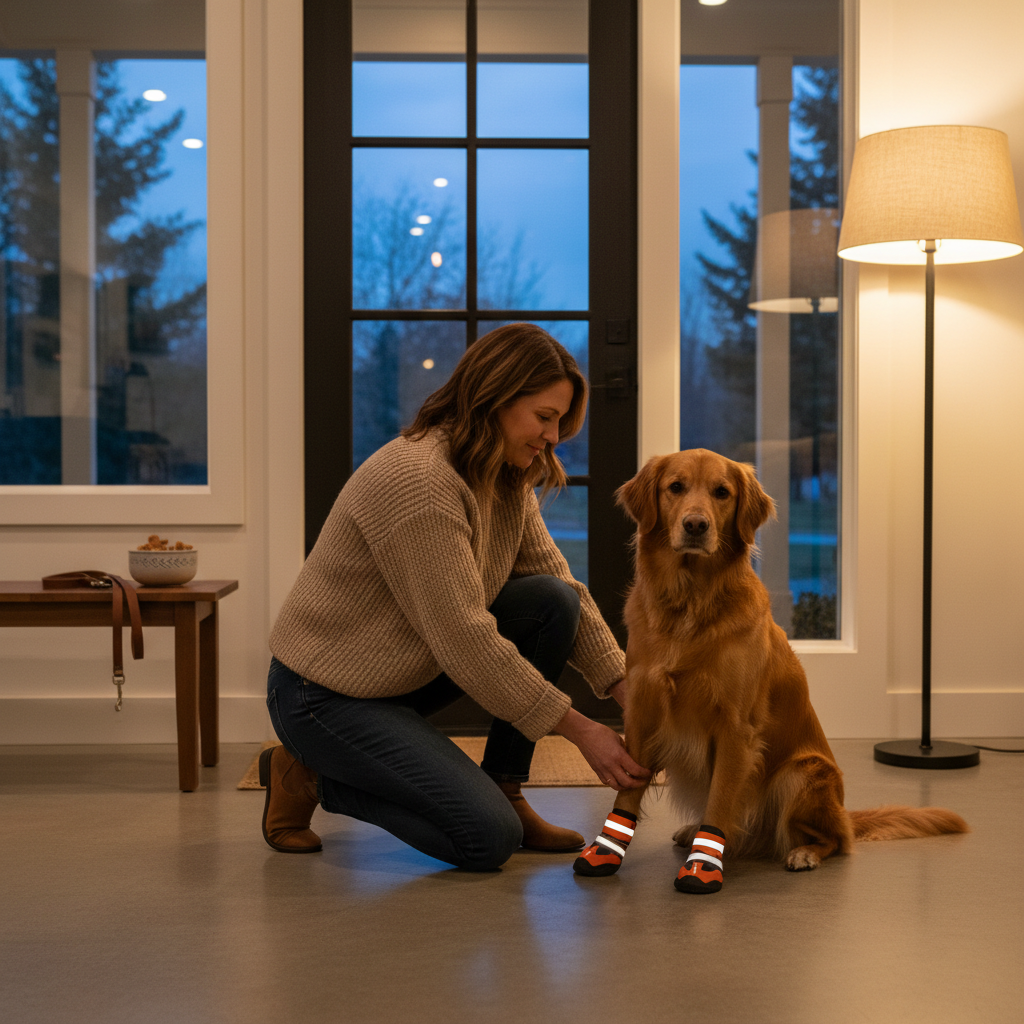
- Put on two boots (front paws first for many dogs), reward, remove after 30–60 seconds.
- Keep the floor non-slip, rugs help.
Day 5–7: add movement and the door threshold
- Walk to the treat, then to the leash, then to the door, keeping sessions short.
- Do one quick night-walk lap, then stop before frustration hits.
Key point: if your dog freezes, don’t drag them. Reset to an easier step, adjust fit, and try again later.
Night-walk safety: boots help, but don’t make you “visible enough” by themselves
Reflective paw gear is a strong add-on, but the safest setup stacks multiple signals because visibility changes with angle, weather, and car speed.
- Add an active light: a small LED on the harness or leash creates constant visibility, not just headlight flashes.
- Pick routes with lighting: even reflective trim needs light to bounce back.
- Use a shorter leash near roads: this reduces sudden lane-edge wandering.
- Watch for overheating: some dogs run warm in boots, especially if you combine boots + coat.
According to the Centers for Disease Control and Prevention (CDC)... reflective materials can help people be seen at night, and the same visibility logic applies when you’re walking a dog near traffic.
Common mistakes (and what to do instead)
- Mistake: buying based on looks only. Do instead: prioritize tread and closure, then pick reflective coverage.
- Mistake: strapping too tight to “prevent loss.” Do instead: secure snugly, then check toes for warmth and normal color.
- Mistake: skipping acclimation. Do instead: treat it like a new harness, short sessions, plenty of rewards.
- Mistake: using wet boots repeatedly. Do instead: dry fully to reduce rubbing and odor.
If you notice limping, raw spots, or persistent paw licking after boot use, stopping and checking with a veterinarian is a reasonable next step, especially for dogs with allergies or orthopedic issues.
Practical takeaways for your next night walk
Reflective boots can be a meaningful upgrade when your route includes traffic, wet pavement, or winter salt, but the win comes from fit, traction, and a slow introduction.
- Measure carefully and expect one exchange if you’re between sizes.
- Choose traction first, then look for wraparound reflective trim.
- Pair boots with an active light for more consistent night visibility.
If you want to act today, start by measuring your dog’s paws and checking your usual route for the real hazards: slick spots, salt buildup, and driveways where visibility drops.
FAQ
Are reflective dog booties enough to keep my dog safe near cars at night?
They help, but they’re not a complete solution. Reflective trim depends on light hitting it at the right angle, so pairing boots with an LED light and a reflective harness usually creates a more reliable signal.
How tight should the straps be on dog booties reflective designs?
Snug enough that the boot doesn’t twist, but not so tight that toes feel cold or look pale. After a short walk, remove the boot and check for red marks or swelling around the strap line.
My dog walks like a cartoon in boots—does that mean they’re painful?
Not always. Many dogs high-step because the sole feels strange or the boot is too long. If the gait stays odd after a few short sessions, re-check sizing and flexibility, and consider a softer design.
Do I need four boots or just the front two?
It depends on where your dog struggles. Front paws often take more impact and contact, but dogs can still pick up salt and ice on the back paws. If your dog slips behind, four boots tend to feel more balanced.
What’s better for winter: waterproof boots or water-resistant boots?
Waterproof can be useful in slush, but it may trap heat and moisture on longer walks. Water-resistant boots often breathe better and still block light snow, so they’re a common choice for everyday neighborhood walks.
Can reflective boots replace paw wax or paw balm?
Sometimes they reduce the need, but not always. Wax can still help with minor dryness, and it’s a backup on days your dog refuses boots. If paws crack or bleed, it’s smart to ask a veterinarian what’s appropriate.
How do I stop boots from falling off in deep snow?
Look for a higher cuff, stronger closures, and the correct width so the boot can’t rotate. Keeping fur trimmed around the ankle area can also help straps grip without sliding.
Are dog booties reflective enough for off-leash hikes at dusk?
They can help you spot movement, but brush and terrain can still hide paws. For dusk hikes, adding a light-up collar and keeping your dog within sight line is usually a safer plan.
If you’re already comparing dog booties reflective styles and you want a simpler decision, make your shortlist based on tread + closure first, then pick the model with the most visible wraparound reflective trim for your usual routes and weather.