
Rabbit hay rack wooden options are popular because they can cut down the “hay everywhere” problem while keeping your rabbit’s main food cleaner and easier to reach.
If you’ve ever bought a big bag of timothy hay and watched half of it end up in the litter box (or on the floor), you already know why a “no waste” rack sounds appealing. The tricky part is that not every wooden rack is truly low-waste, and a few designs create safety or cleaning headaches.
This guide breaks down what actually reduces waste, how to choose a rack that fits your rabbit and enclosure, and how to set it up so it stays practical week after week.
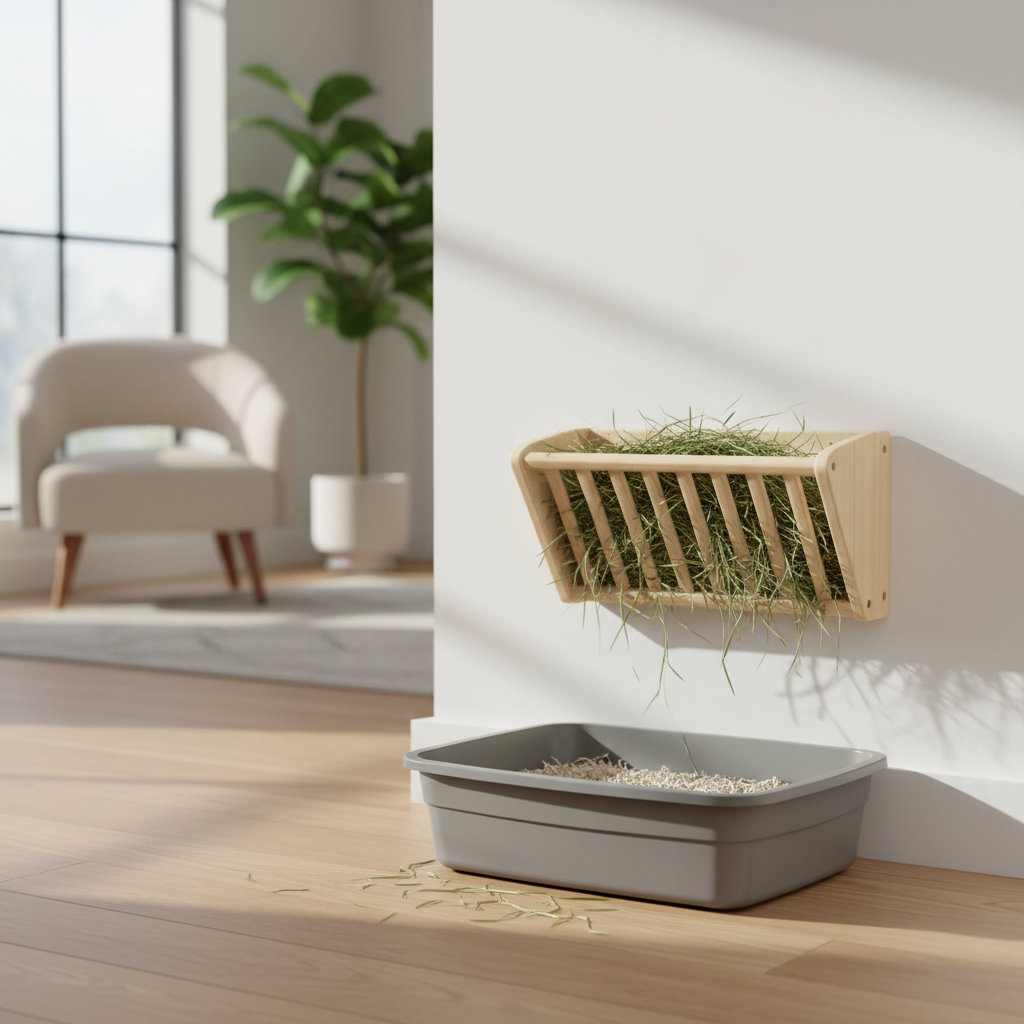
Why “no-waste” hay racks work (and why some don’t)
A rack reduces waste when it controls how hay gets pulled, where the loose strands fall, and how often hay gets contaminated by urine or droppings. “No waste” is usually more like “less waste,” but the difference can be meaningful.
- Controlled pull: Narrow, smooth slats or openings encourage rabbits to take smaller mouthfuls instead of yanking out a whole clump.
- Gravity matters: A rack placed above or directly beside the litter box lets stray strands fall where you want them.
- Clean storage: Keeping hay elevated and off the floor reduces the chance it turns into bedding.
- Right capacity: Too small means constant refilling and more “digging.” Too large can mean old hay sits and becomes less appealing.
Where people get disappointed: racks with very wide gaps, racks mounted too low, or racks that force the rabbit to pull hay at an awkward angle. Rabbits are persistent, they’ll “rearrange” anything that feels wrong.
What to look for in a rabbit hay rack wooden design
Wood can be a solid choice for pet enclosures, but for rabbits it has to handle chewing, humidity, and frequent spot-cleaning. You’re not just shopping for “cute,” you’re shopping for a daily tool.
Material and finish (chew safety)
Many rabbits chew wood, even if the rack is “not for chewing.” That means material choices matter more than marketing.
- Safer wood types are usually unfinished kiln-dried pine, poplar, or birch, but availability varies by maker.
- Skip strong chemical odors, unknown stains, or glossy coatings that can flake.
- If the product doesn’t clearly state materials/finish, treat that as a yellow flag.
According to the ASPCA, many common household wood treatments and finishes can be problematic for pets if ingested, so it’s worth being picky and asking the seller directly when details are missing.
Openings: big enough for hay, not so big it dumps
Good openings let hay slide and let your rabbit pull strands without grabbing an entire bundle. If you can fit multiple fingers through the slats easily, expect more waste.
Mounting style that stays put
Rabbits bump, lean, and sometimes climb. Look for hardware that prevents wobble, ideally with two mounting points. If it swings, hay will shake out.
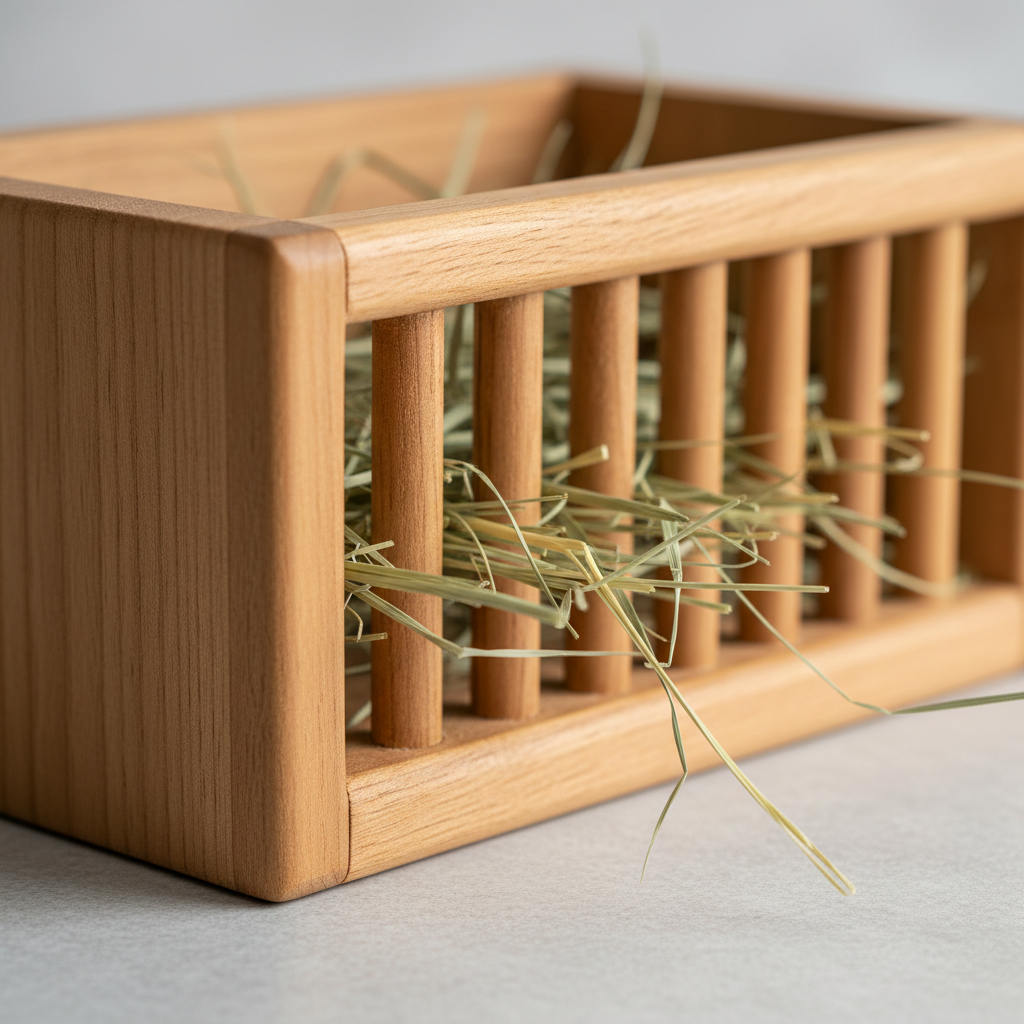
Quick self-check: is your current setup wasting hay?
Before swapping gear, it helps to pin down why the mess happens. This checklist takes two minutes and usually points to the fix.
- More than a handful of hay ends up outside the litter box each day
- Your rabbit sits inside the hay pile and uses it like bedding
- Hay looks damp or smells off before it’s eaten
- You refill often because the rabbit “digs” hay out to find preferred pieces
- The rack is low enough that the rabbit can scoop hay out with paws
If you checked two or more, a rabbit hay rack wooden model can help, but placement and pairing with a litter box usually make the bigger difference than the rack alone.
Choosing the right size: a simple table that helps
Capacity is a balancing act. You want enough hay to support constant grazing, but not so much that it compacts and goes stale. (Rabbits often prefer fresh, fluffy hay.)
| Rabbit / Home Situation | Rack Capacity Goal | What to prioritize |
|---|---|---|
| One rabbit, you’re home daily | Smaller, easy-refill | Fast cleaning, tight openings |
| One rabbit, long workdays | Medium, holds a day’s supply | Stable mount, dust control |
| Two rabbits sharing hay area | Larger or dual-access | Two-sided access, stronger mounting |
| Messy “hay flinger” personality | Medium (not oversized) | Very narrow pull area, litter box alignment |
Most households do best with a rack that holds enough for a refill morning and evening, rather than a giant bin packed tight. That’s where “no waste” stays realistic.
Setup that actually reduces waste (step-by-step)
The most effective setup is simple: hay access right where your rabbit already wants to use the bathroom. That sounds odd until you’ve owned rabbits for a while.
- Step 1: Place the litter box in the rabbit’s preferred bathroom corner.
- Step 2: Mount the rack so the pull opening sits just above the litter box edge, not centered in open space.
- Step 3: Test height by watching one feeding session, your rabbit should reach without stretching the neck awkwardly.
- Step 4: Add a “catch zone,” a litter box with higher sides or a hay guard can keep stray strands contained.
- Step 5: Fill loosely, don’t compress hay, packed hay encourages aggressive yanking.
If your rabbit tends to pull and drop, you can purposely let some hay fall into the litter box. It still counts as low-waste if it stays clean and gets eaten later.
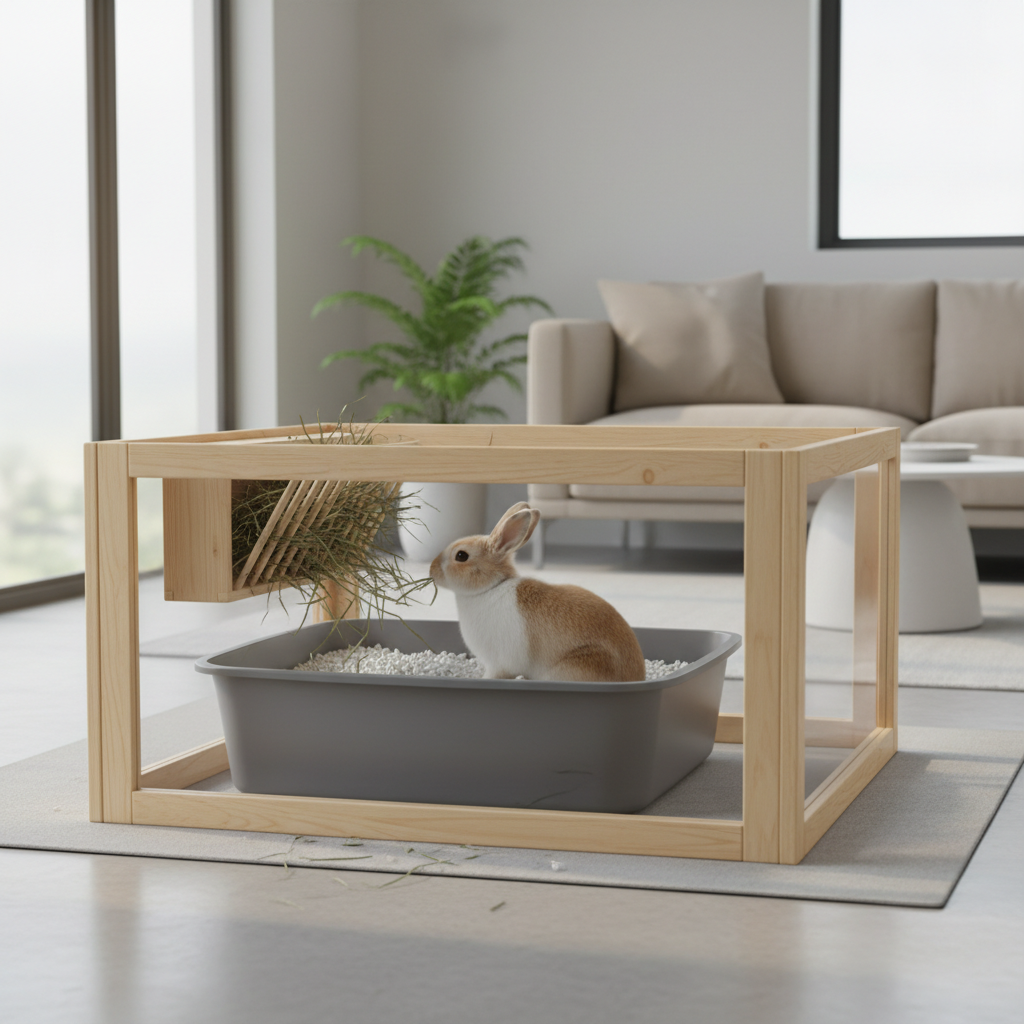
Cleaning, durability, and safety notes (the stuff buyers regret later)
A wooden rack can stay nice for a long time, but only if you accept one reality: rabbits create moisture and wood doesn’t love moisture.
- Spot-clean rhythm: brush out dust and small bits every couple of days, it keeps hay smelling fresh.
- Avoid soaking wood: use a lightly damp cloth, then dry, repeated soaking can warp boards.
- Watch for rough edges: chewing can create splinters, sand or replace when the surface gets jagged.
- Hardware checks: tighten screws and inspect hooks, wobble leads to dumping and can pinch toes.
Health note: moldy hay can be a respiratory irritant. According to the AVMA, good hygiene and clean housing play a role in keeping pets healthy, so it’s smart to remove damp or musty hay early. If your rabbit has sneezing, eye discharge, or breathing changes, it’s safer to consult a rabbit-savvy veterinarian.
Common mistakes that make “no waste” impossible
- Putting the rack far from the litter box: many rabbits will carry hay around, then sit and drop it.
- Overfilling: hay gets compacted, your rabbit starts pulling hard, and the floor gets a “hay shower.”
- Choosing style over function: cute wide-lattice fronts often waste more than they save.
- Ignoring chewing behavior: if your rabbit chews the rack aggressively, wood may not be your best material choice.
- Skipping a backup feeding option: some rabbits do better with a rack plus a small “floor pile” inside the litter box.
Key takeaway: the best rabbit hay rack wooden setup is usually the one your rabbit uses calmly, not the one with the biggest capacity or most elaborate design.
When to ask a professional (or rethink the setup)
If waste is paired with appetite changes, fewer droppings, tooth grinding, or sudden refusal of hay, don’t treat it as a “rack problem.” Those can be signs of pain or GI trouble and should be discussed with a veterinarian.
Also consider expert help if your rabbit persistently chews and swallows wood or keeps finding ways to get stuck. A rabbit-savvy vet or an experienced rescue may help you adjust enclosure layout and feeding method for your specific animal.
Conclusion: a realistic “no-waste” goal
A rabbit hay rack wooden feeder can meaningfully reduce mess, but the win usually comes from the whole system, rack opening design, stable mounting, and a litter box placement that matches rabbit habits.
If you want one practical next step, start by fixing placement: mount the rack so stray hay falls into the litter box, then adjust fill level for calmer pulling. Once that feels consistent, upgrade the rack if you still see daily waste.
FAQ
- What makes a wooden hay rack “no waste” compared to a basket?
It’s mostly the pull control. Narrower access reduces the chance your rabbit drags out large clumps, and wall-mounting helps keep hay off the floor. - Is a rabbit hay rack wooden product safe if my rabbit chews it?
Many rabbits chew wood, so safety depends on the wood type and finish. If the materials aren’t clearly disclosed or the surface splinters, it’s worth switching to a different design and checking with a vet if you suspect ingestion. - Where should I mount the hay rack in a rabbit enclosure?
Most setups work best when the opening sits just above or beside the litter box, so dropped strands land somewhere clean and “acceptable” to your rabbit. - Should hay be packed tightly in the rack?
Usually no. Loose filling keeps hay fluffy and easier to pull without yanking, which is one of the most common causes of hay raining onto the floor. - How do I stop my rabbit from pulling hay out and ignoring it?
Try smaller refills more often and keep older hay from sitting too long. Some rabbits also prefer a mix of rack-feeding and a small pile in the litter box. - Can two rabbits share one wooden hay rack?
Sometimes, but crowding can cause pushing and extra dumping. Two access points or a wider front often reduces scuffles and waste. - Why does my rabbit eat less hay after I switched racks?
It can be rack height, opening size, or preference for easier access. If reduced hay intake lasts more than a day or comes with behavior changes, it’s safer to consult a rabbit-savvy veterinarian.
If you’re trying to pick a rabbit hay rack wooden model that stays cleaner with less daily sweeping, it helps to share your enclosure size, litter box style, and whether your rabbit is a “pull-and-fling” type, a few small details often determine which design works without constant frustration.