
Rabbit hay feeder for cage setups are one of the simplest ways to cut down the daily “hay explosion” that ends up in litter, water bowls, and every corner of the enclosure. If you’re sweeping up more hay than your rabbit actually eats, your feeder choice and placement usually matter more than buying “better hay.”
The reason this topic deserves attention is practical: hay should be most of a rabbit’s diet, so you can’t just offer less. The real win is keeping hay clean enough to eat, while keeping the cage easy enough to clean that you don’t dread maintenance.
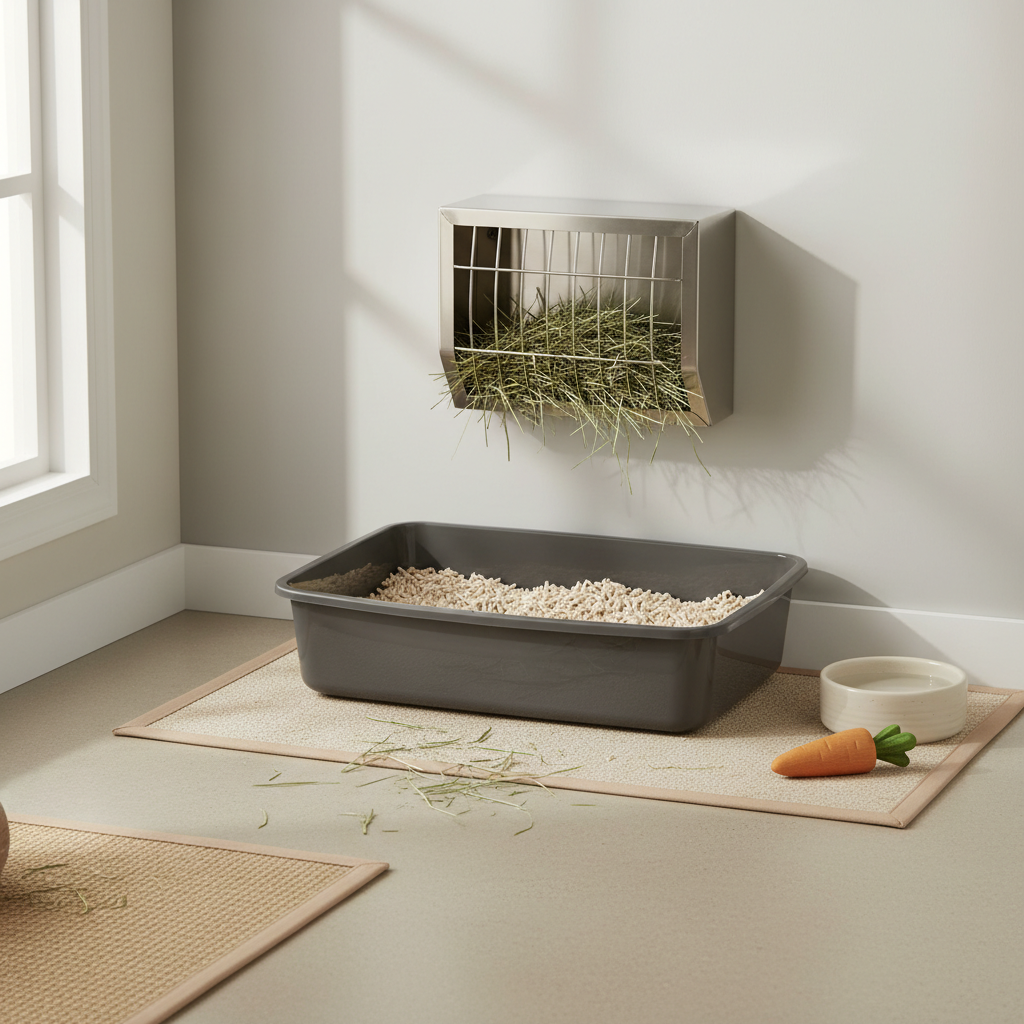
In this guide, I’ll break down why hay mess happens, how to quickly tell what’s going wrong in your enclosure, and what feeder styles work best for different cages and rabbit habits. I’ll also call out common “fixes” that look tidy but can create safety or hygiene issues.
Why hay turns into a cage-cleaning problem (even with good habits)
Most hay mess isn’t because a rabbit is “being naughty,” it’s because hay is lightweight and rabbits naturally pull, sort, and toss while eating. If the setup doesn’t guide that behavior, the floor becomes the feeder.
- Open piles invite digging and sorting, which pushes hay into bedding and corners.
- Feeder placed too far from the litter box encourages rabbits to drag hay around, then snack wherever they land.
- Feeder openings are too large, so rabbits yank out big clumps that fall immediately.
- Hay gets contaminated by urine/water splashes, then you throw more away than you feed.
- Wrong material for your environment: cardboard can get soggy, fabric can hold odors, and some plastics scratch and trap grime.
According to American Veterinary Medical Association (AVMA)... rabbits need constant access to high-fiber foods, so the practical goal is not “less hay,” it’s “cleaner access and less waste.” If you’re unsure about diet balance for your rabbit’s age or health, it’s worth checking with a rabbit-savvy veterinarian.
Quick self-check: what kind of hay mess do you actually have?
Before you buy a new feeder, do a fast diagnosis. Different mess patterns point to different fixes, and it saves you from buying three products that all miss the real issue.
Look for these clues
- Hay mostly in the litter box: feeder is too low, too open, or directly over the box with no guard.
- Hay spread everywhere: rabbit is carrying mouthfuls away, feeder may be far from the litter area or too hard to access.
- Hay looks damp or clumped: water bowl/bottle splashes, or urine is reaching the hay supply.
- Rabbit stops eating the “available” hay: hay may be getting soiled quickly, or the feeder opening pinches whiskers and discourages use.
- Lots of hay under the feeder: gravity drop from pulling is the issue, add a catch tray or switch to a tighter-grid design.
If your rabbit has mobility issues, dental concerns, or you see reduced appetite, don’t “engineer around” it forever. Those cases can look like a feeder problem but can be health-related, and a vet can help you rule that out.
Choosing the right rabbit hay feeder for cage setups (what matters in real life)
A good feeder doesn’t just hold hay, it controls how hay exits. For most homes, you’re balancing three things: cleanliness, ease of refilling, and safety.
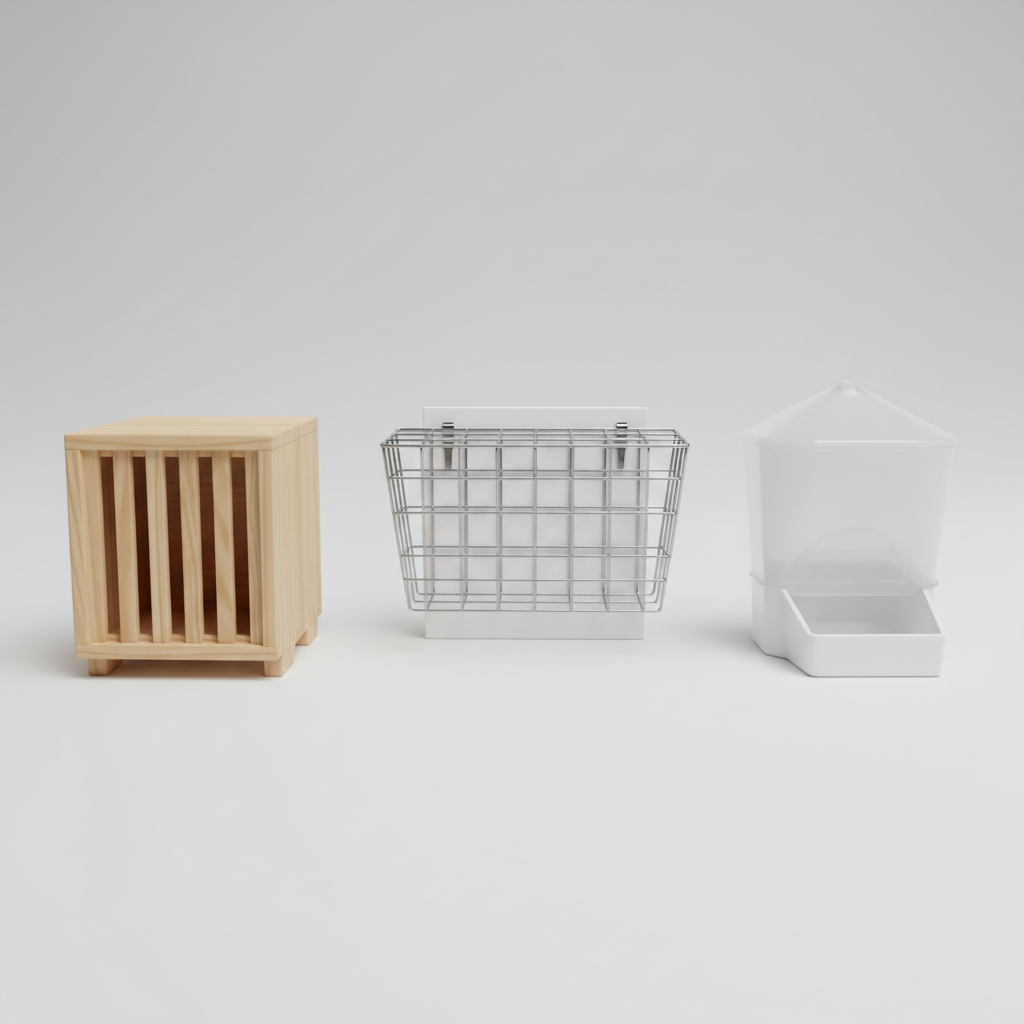
Feeder styles you’ll see most
- Wall-mounted metal rack (grid style): good airflow, easy to clean, usually lowest odor retention. Watch for sharp edges or wide bars that let rabbits yank huge clumps.
- Box feeder with slats: cleaner-looking, can reduce pull-out, often great for “hay throwers.” Needs inspection for chew wear and trapped dust.
- Hay bag (fabric): can reduce scatter, but fabric holds moisture and smell, and some rabbits chew it. Many households skip this style for hygiene reasons.
- Hay hopper/covered bin: keeps hay visually tidy, but poor airflow can make hay stale in humid rooms, and cleaning corners can be annoying.
Materials: the boring details that change cleaning time
- Powder-coated metal tends to wipe down fast and resists odor.
- Sealed wood can work, but if urine mist reaches it, smells can linger.
- Plastic is easy at first, yet scratches can trap residue over time.
For many cage owners, a metal rack paired with a simple “catch” area (like a tray edge or a guarded litter box) is the most consistent low-mess combo.
Placement matters more than people expect (especially for litter training)
If you want a rabbit hay feeder for cage cleanliness, placement is the lever. Rabbits like to eat and poop at the same time, so you can use that instinct instead of fighting it.
Practical placement rules
- Place the feeder next to or slightly above the litter box so the rabbit stays “parked” while eating.
- Keep it away from water sources to reduce damp hay and mold risk.
- Mount at head height: too low becomes a digging toy, too high becomes a struggle.
- Use a stable mount so it doesn’t rattle; nervous rabbits may avoid a noisy feeder.
According to House Rabbit Society... hay access supports healthy digestion and helps keep rabbits busy. In practice, “easy access” should still mean “controlled access,” where hay doesn’t instantly become bedding.
A simple comparison table (so you can choose fast)
There’s no perfect feeder for every rabbit, but you can match the design to your main pain point.
| Goal | Feeder type that often fits | What to watch for |
|---|---|---|
| Less scatter on the floor | Box feeder with narrower slats | Chew wear, dust buildup inside corners |
| Fast cleaning, low odor | Powder-coated metal wall rack | Bar spacing, edge safety, secure mounting |
| Budget, quick upgrade | Basic rack + litter box guard | Make sure hay can’t fall straight into urine spots |
| Small cage footprint | Vertical corner-mounted rack | Refill access, stability if rabbit bumps it |
| Rabbit pulls huge clumps | Tighter-grid rack or slatted box | Openings must still allow comfortable eating |
Setup steps: reduce mess in 20 minutes (no renovation required)
This is the part most people skip: you can keep your current cage and still get noticeably cleaner results by adjusting the “hay path.” Aim to control where hay falls, and where your rabbit eats.
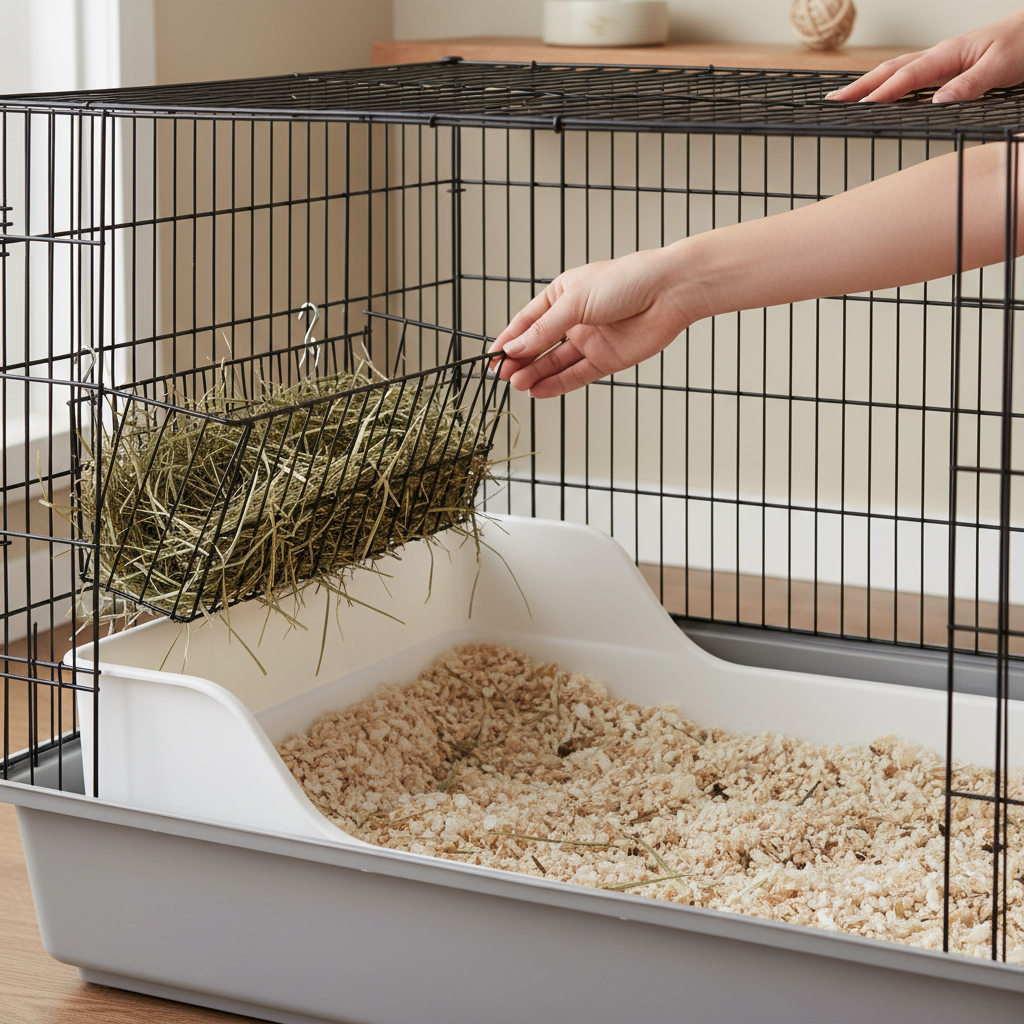
Step-by-step
- Empty the current hay area, then clean any urine-soaked spots so you start neutral.
- Position the litter box first, ideally in the corner your rabbit already prefers.
- Mount the feeder so the “pull zone” sits over the litter box edge, not over the center where urine collects.
- Add a small catch surface (a guard, tray lip, or mat) under the feeder to capture stray strands.
- Fill with a modest amount for day one so you can watch how your rabbit interacts and adjust height.
- Observe one meal window, then tweak: if hay drops constantly, tighten access; if your rabbit struggles, widen access.
Key takeaways (printable mindset)
- Hay belongs near the litter box, because rabbits already want to pair them.
- Dry hay is edible hay, water placement matters.
- Less waste often comes from smaller openings, not bigger storage.
- Easy to wipe beats cute, especially for daily maintenance.
Cleaning routine that keeps odor and waste from creeping back
Even the best rabbit hay feeder for cage use won’t fix a routine that lets damp hay sit for days. The goal is short, repeatable, and realistic.
- Daily (2–3 minutes): shake loose hay back into the “clean” side, remove damp clumps, wipe obvious mess near the mount.
- Every litter change: wipe the feeder with pet-safe cleaner or mild soap and hot water, then dry completely.
- Weekly: check mounting points, look for rust, sharp spots, cracked plastic, or chew damage on wood.
If you notice persistent odor even after cleaning, the issue may be litter type, ventilation, or urine reaching porous surfaces. That’s when changing one variable at a time beats buying another accessory.
Mistakes that keep cages messy (and sometimes create risk)
A tidy-looking hack can backfire. These are the common ones I’d be cautious about.
- Using small openings that snag fur or whiskers: rabbits should eat comfortably, not “fight” the feeder.
- Letting hay sit damp: mold risk depends on climate and airflow, so when in doubt, toss questionable hay.
- Unstable hooks or zip ties placed poorly: anything that drops can spook a rabbit, and sharp edges can injure.
- Overfilling to avoid refills: deep packed hay often turns into “stale hay” on the bottom, then you waste more.
- Choosing fabric just for aesthetics: many cages smell worse when fabric holds moisture and urine mist.
If your rabbit chews metal, plastic, or wood aggressively, it’s smart to rethink materials and check with a professional if you worry about ingestion or tooth issues.
Conclusion: the cleanest cages usually do one thing consistently
The cleanest setups usually put hay access exactly where the rabbit already wants to spend time, right by the litter box, and they choose a feeder that controls how hay comes out. Once you dial in placement and opening size, cleaning becomes a quick reset instead of a full rebuild.
If you only do two things this week, mount the feeder so stray hay lands in a controlled zone, then move water away so hay stays dry and worth eating.
If you need a more hands-off approach, look for a feeder that wipes down fast and mounts securely, then pair it with a litter box guard or catch tray so daily cleanup stays predictable.