
how to trim dog nails at home is mostly about two things: controlling your dog’s comfort level and avoiding the quick, the sensitive blood vessel inside the nail.
If you’ve ever heard that sharp “click” on hardwood floors, noticed nails snagging on rugs, or felt your dog pull away the second you touch a paw, you already know why this matters. Overgrown nails can change how your dog stands and walks, and trimming too much can cause bleeding and make future trims harder.
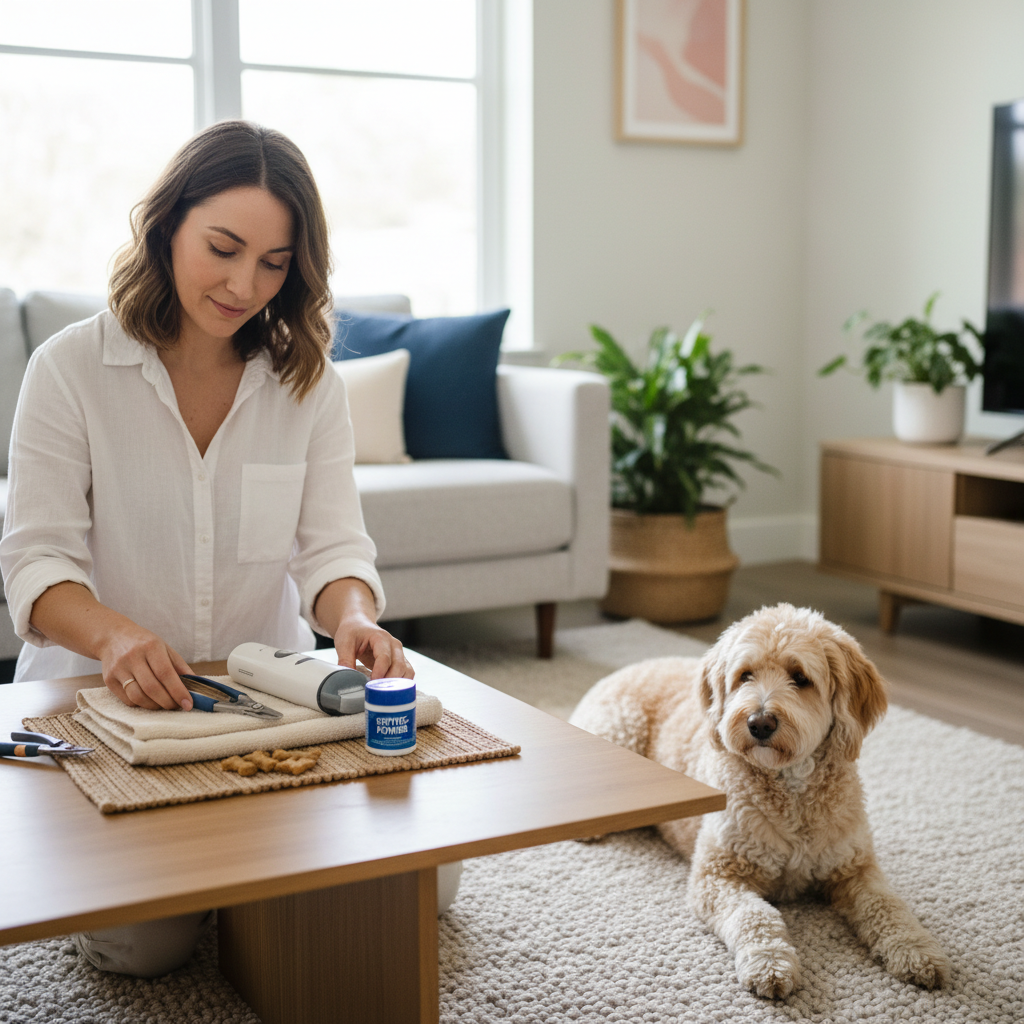
This guide focuses on the practical part: which tools actually help, how to read the nail before you cut, and what to do if your dog gets wiggly or you nick the quick. You’ll also see a simple decision checklist so you can tell when a home trim is reasonable and when a groomer or vet might be the safer call.
Why nail trims go wrong (and what’s usually happening)
Most “bad” nail trims aren’t about technique, they’re about timing, setup, and pushing past a dog’s threshold. A few common patterns show up again and again.
- The nail is overgrown, so the quick has extended farther than you expect. That makes a “normal” cut too deep.
- The dog is bracing or pulling, which changes paw angle at the last second. Even a careful cut can land wrong.
- Tools are dull or mismatched. Small clippers on thick nails can crush the nail, and that pinch makes dogs yelp even if you didn’t cut too far.
- Stress is already high. If your dog only sees clippers during a struggle, the sight of the tool becomes the trigger.
According to the American Veterinary Medical Association (AVMA), routine grooming is part of preventive care, and handling that keeps pets comfortable can support overall wellbeing. In real life, that usually means you’re better off doing smaller, calmer sessions than trying to “finish it all” in one go.
Tools that make trimming safer (and what each one is for)
You can trim nails with more than one approach. The safest setup is the one you can control consistently, without rushing.
Quick tool comparison
| Tool | Best for | Pros | Watch-outs |
|---|---|---|---|
| Scissor-style clippers | Small dogs, thin nails | Easy to handle, quick cuts | Can be inaccurate on thick nails |
| Guillotine clippers | Some medium dogs | Clean slice when sharp | Blade dulls, can crush if misaligned |
| Heavy-duty clippers | Large dogs, thick nails | More leverage, less squeezing | Can take off too much if you rush |
| Nail grinder (Dremel-style) | Most dogs, especially dark nails | Small increments, smooth edges | Noise/heat, needs short breaks |
What I’d consider “non-negotiable” for home sessions: styptic powder (or another pet-safe clotting product), good lighting, and treats your dog actually cares about.
If you’re deciding between clippers and a grinder, a lot of households end up using both: clip to remove length, grind to round and fine-tune. That combo can make how to trim dog nails at home feel much less like a high-stakes moment.
Before you cut: a quick self-check to see if home trimming makes sense
This is the part people skip, then wonder why it went sideways. Take 30 seconds and be honest about what you’re working with.
- My dog tolerates paw handling for at least 10–20 seconds per paw without escalating.
- I can see the nail clearly (good light, dog isn’t thrashing, I’m not guessing).
- I have a plan for stopping bleeding and I know where the supplies are.
- The nails are not severely overgrown (curling under, forcing toes sideways, or touching pads).
- My dog is not showing intense fear such as snapping, screaming, or panicking at the tool.
If you’re missing two or more items, it usually goes better to book a groomer or ask your vet team for a demo. According to the American Animal Hospital Association (AAHA), cooperative care and low-stress handling can make routine procedures easier over time, and a short training plan may be safer than a forced trim.
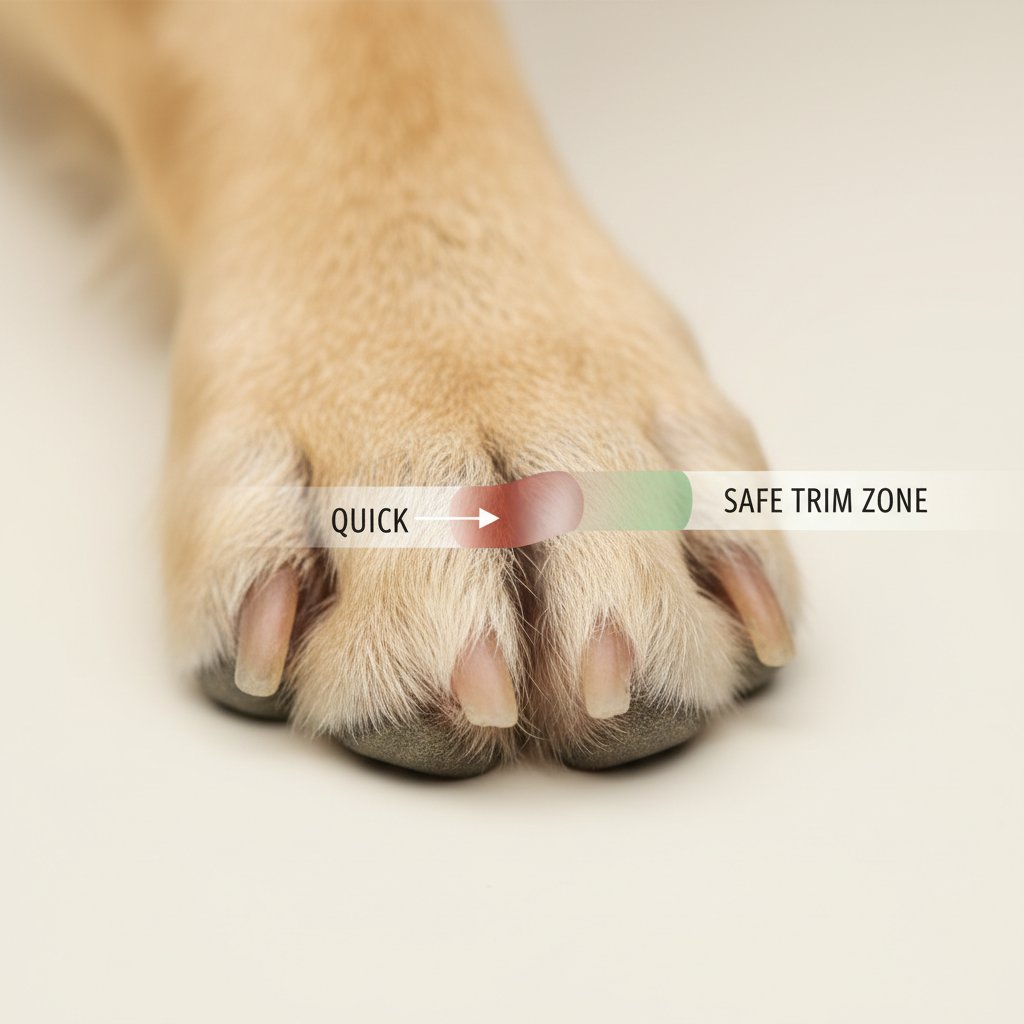
Key point: if nails are very long, the quick often grows longer too. That means the “one big cut” strategy is exactly how you get bleeding and a dog who won’t let you try again.
How to identify the quick (clear nails vs. dark nails)
Knowing what you’re looking at reduces most of the anxiety.
Clear or light-colored nails
- The quick often looks like a pinkish tube inside the nail.
- A safe approach is trimming small slices and stopping when you see the center of the cut surface start to look more opaque or closer to pink.
Dark nails
Dark nails hide the quick, so you rely on small increments and the look of the cut end.
- Trim a tiny amount and check the cross-section.
- As you get close to the quick, you may see a darker, softer-looking center. That’s your “slow down” sign.
- If you’re unsure, use a grinder for micro-adjustments instead of taking another clip.
In many cases, how to trim dog nails at home safely comes down to being willing to stop early. You can always come back in a few days.
Step-by-step: a calm, safe home nail trim routine
This routine aims to keep your dog under threshold and keep your cuts conservative. You’re not trying to win a wrestling match, you’re trying to build a repeatable habit.
1) Set up the environment
- Choose a non-slip surface: yoga mat, bath mat, or towel.
- Use bright light aimed at the paw, not your eyes.
- Place clippers/grinder, treats, and styptic powder within arm’s reach.
2) Position your dog in the least stressful way
- Many dogs do better sitting or standing, not flipped on their back.
- If your dog leans into you, use your body as a gentle “wall” rather than gripping the leg tightly.
3) Trim in tiny increments
- Hold the paw steady, then cut a thin sliver off the tip.
- Aim to follow the natural angle of the nail, not straight across.
- Check the nail end after each cut, especially on black nails.
4) Smooth edges (optional but helpful)
- If you clipped, a few seconds of grinding can remove sharp corners.
- Use short touches to avoid heat, pause every couple seconds.
5) End early on a good note
If your dog starts getting tense, stop at one paw or even one nail, reward, and try again later. That decision feels “unfinished,” but it often prevents the next five trims from becoming a fight.
If you cut the quick: what to do immediately
Even careful people nick the quick sometimes, especially with dark nails. The goal is to stay calm and control bleeding.
- Apply styptic powder with gentle pressure for 30–60 seconds. Avoid repeatedly checking every few seconds because it can restart bleeding.
- If you don’t have styptic powder, some owners use cornstarch as a temporary option, but pet-safe clotting products are more reliable.
- Limit activity for a bit and keep the paw clean, especially outdoors.
Bleeding usually stops quickly, but if bleeding seems heavy, doesn’t slow after several minutes of steady pressure, or your dog seems unusually painful, contacting your veterinarian is a sensible next step.
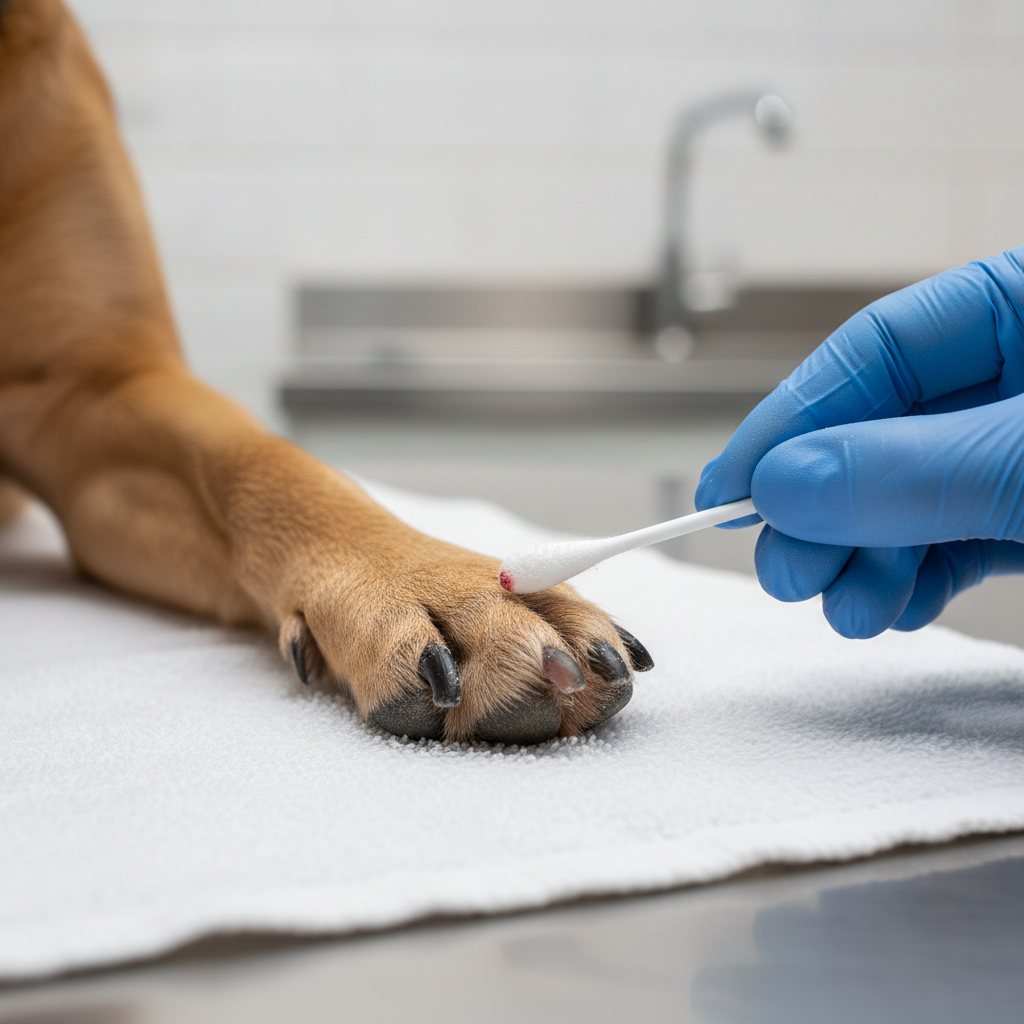
Important: If your dog has a known bleeding disorder or takes medications that may affect clotting, home nail trims can be riskier. In that situation, it’s worth asking your vet for personalized guidance.
Common mistakes that make nail trimming harder than it needs to be
- Trying to “get them short” in one session. For long nails, gradual trims every 3–7 days often work better.
- Skipping cooperative care practice. Touch paw, treat. Tap nail with clipper, treat. Turn grinder on nearby, treat. Boring training pays off.
- Cutting at a weird angle. Too flat can expose sensitive tissue; too steep can leave sharp hooks.
- Only trimming when nails are already clicking. Maintenance is easier than rescue missions.
- Ignoring dewclaws. Those can curl and overgrow because they don’t always wear down naturally.
Many owners searching how to trim dog nails at home are actually stuck on fear of making a mistake. A slower plan with smaller cuts is usually the thing that breaks the cycle.
When it’s smarter to get a groomer or vet involved
Home care is great, until it isn’t. These situations often justify extra help.
- Your dog panics, snaps, or you can’t handle paws safely.
- Nails are curling into pads, cracked badly, or bleeding before you touch them.
- Your dog has significant arthritis, hip pain, or other mobility issues where positioning causes discomfort.
- You suspect infection around the nail bed, swelling, discharge, or persistent licking.
A professional groomer may be able to trim quickly with less fuss, and a veterinary team can assess pain, anxiety, or medical issues that make nail care more complicated. If sedation ever comes up, that’s a vet-only decision and should be discussed carefully.
Key takeaways for safer at-home nail trims
- Small trims beat big trims. You’re aiming for repeatability, not perfection.
- Use the right tool for the nail. Dull clippers cause crushing and fear.
- Dark nails call for patience. Micro-cuts and checking the cross-section reduces risk.
- Have a bleeding plan. Styptic powder within reach changes everything.
- Stop while it’s still going well. That’s how dogs learn the routine is safe.
If you want a simple next step, pick one calm time this week, trim just 1–2 nails, reward generously, and stop. That single low-drama session often does more for long-term success than forcing a full set.
FAQ
How often should I trim my dog’s nails?
It varies by dog, flooring, and activity. Many dogs do well with trims every 2–4 weeks, but if nails grow fast or don’t wear down on walks, shorter intervals can be easier than waiting until they click.
How do I know if my dog’s nails are too long?
If you hear nails clicking on hard floors, see nails touching the ground when your dog stands, or notice toes splaying, length may be affecting comfort. Dewclaws also tend to overgrow quietly.
Is a nail grinder safer than clippers?
A grinder can be easier to control because it removes small amounts, which helps when you’re learning how to trim dog nails at home. Some dogs dislike the sound or vibration, so the “safer” tool is the one your dog tolerates calmly.
What angle should I cut a dog’s nails?
In many cases, following the natural curve and taking small slices works better than trying to copy a single perfect angle. If you’re unsure, trim less and smooth with a grinder.
My dog won’t let me touch their paws—what can I do?
Start away from the nail trim: brief paw touches paired with high-value treats, then build up to holding the paw, then introducing the tool. If fear is intense, a trainer or vet behavior professional may help you make progress without forcing it.
What should I do if my dog yelps but there’s no blood?
Sometimes dogs react to nail pressure, pinching from dull clippers, or a sudden movement rather than a quick cut. Pause, check the nail, reassess tool sharpness, and consider switching to a grinder for more control.
Can I use human nail clippers on my dog?
For most dogs, human clippers are awkward and may crush the nail. Pet-specific clippers or a grinder usually provide better control and a cleaner result, especially for thicker nails.
How can I shorten the quick over time?
If nails are overgrown, trimming a tiny amount more frequently may encourage the quick to recede gradually. This takes time, and pushing too far tends to backfire, so conservative, repeatable sessions matter.
If you’re trying to make home trims calmer, a groomer can sometimes show you a safe hold and the right cut size for your dog’s nails, and your veterinarian can advise if pain, anxiety, or medical factors might be getting in the way.