
Finding a dog outdoor toy for aggressive chewer use is less about “indestructible” marketing and more about picking the right material, size, and play style for your dog.
If your dog shreds balls in minutes, snaps squeakers, or comes back from the yard with a toy turned into confetti, you’re not alone. Outdoor play adds extra wear from grit, heat, water, and higher-arousal chewing, so the toy that survives indoors may fail fast outside.
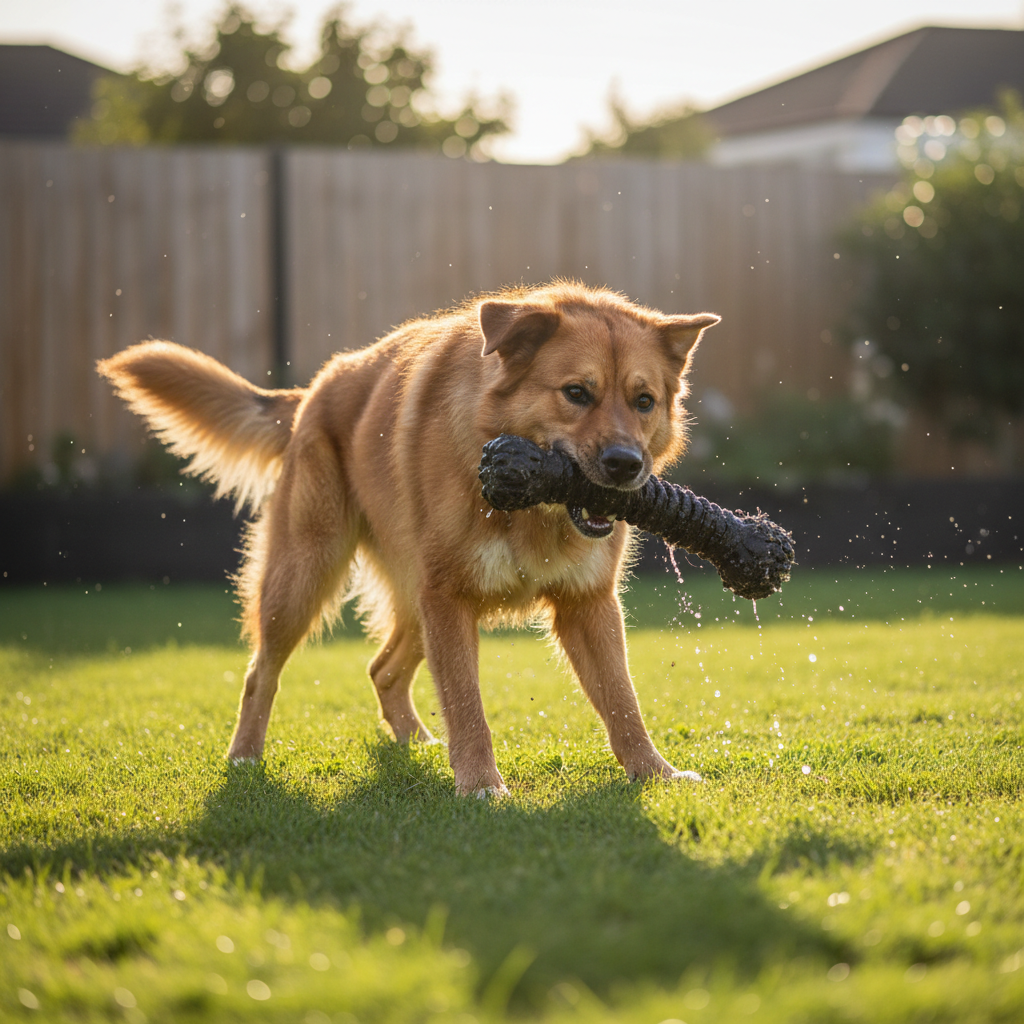
This guide breaks down why “tough” toys fail, how to choose safer options for heavy chewers, and what to do when your dog destroys everything anyway. You’ll also get a quick comparison table and a simple test checklist before you buy.
Why aggressive chewers destroy outdoor toys so fast
Aggressive chewing usually comes from a mix of jaw strength, persistence, and excitement. Outdoors, those factors get amplified, and the toy takes a beating in ways the packaging rarely mentions.
- Abrasion from dirt and sand: grit works like sandpaper, especially on softer rubber and tennis-ball felt.
- Temperature swings: cold can make some plastics brittle, heat can soften lower-grade rubber, both change how a toy fails.
- “Possession” chewing: many dogs clamp down harder in the yard because the space feels high-value or distracting.
- Fetch damage: repeated impacts on concrete, rocks, fences, or tree roots create micro-cracks that turn into splits.
- Water exposure: ponds, sprinklers, or wet grass can speed up breakdown and can trap bacteria in porous materials.
According to the American Veterinary Medical Association (AVMA), pet owners should choose toys appropriate to the animal’s size and chewing habits, and replace damaged toys to reduce choking and intestinal obstruction risk.
What “durable” really means: materials that hold up outdoors
“Durable” isn’t a single category. The best match depends on whether your dog gnaws slowly, crushes with molars, or tries to rip and tear.
Common outdoor-toy materials (and what to expect)
- Natural rubber: usually the best all-around for heavy chewers; look for thick walls and simple shapes that resist tearing.
- TPR (thermoplastic rubber): can be okay, but quality varies a lot; some blends shred when dogs get a purchase point.
- Nylon (hard chews): long-lasting for steady gnawers, but can be too hard for some dogs; if your dog leaves blood on a chew, stop and consider softer options.
- Ballistic fabric: good for supervised tug/fetch, not great for solo chewing if your dog targets seams.
- Foam/plush: typically short-lived outdoors for aggressive chewers, and can become messy and risky once torn open.
Real talk: the more “fun features” a toy has, the more failure points it introduces. Seams, glued layers, squeakers, and thin handles are exactly where powerful chewers start.
Quick comparison table: picking the right outdoor toy by play style
If you’re trying to buy one toy that does everything, it usually disappoints. Match the toy to what you actually do outside.
| Outdoor use | Best toy type | Why it works | Watch-outs |
|---|---|---|---|
| Fetch on grass | Thick rubber ball | Bounce + chew resistance | Avoid felt-covered “tennis” balls for heavy chewers |
| Fetch near rocks/concrete | Dense rubber ball, minimal texture | Fewer crack points | Inspect for splits after impact sessions |
| Solo yard chewing | Rubber chew + treat-dispensing design | Longer engagement, less frantic shredding | Choose large size; remove when damaged |
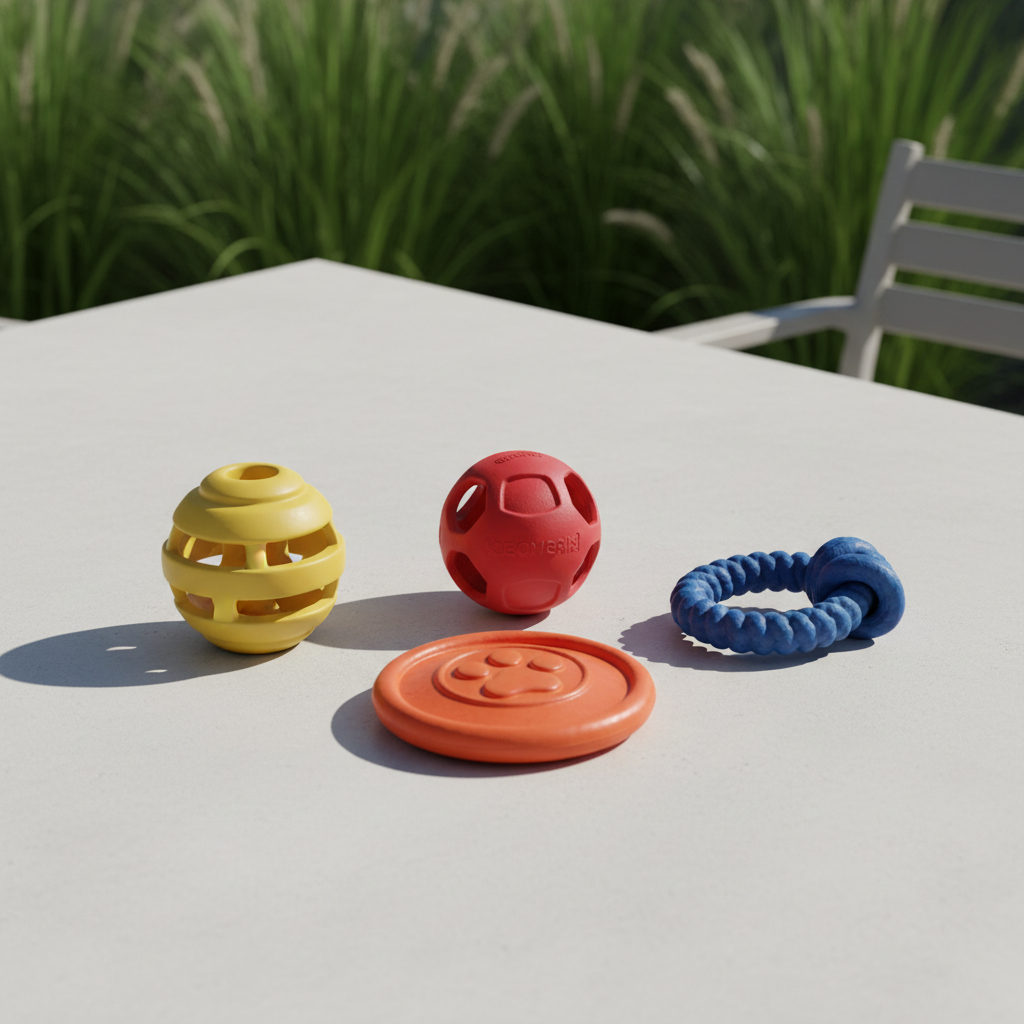
| Tug games | Rubber tug or rope designed for dogs | Gives a legal outlet for pulling | Rope can fray; supervise and trim loose strands |
| Water play | Floating rubber toy | Easier retrieval, better visibility | Porous toys can hold funk; rinse and dry |
Self-check: is your dog an “aggressive chewer,” or just bored?
Before you spend more money, it helps to label the problem correctly. A true power chewer can destroy even well-made rubber. A bored chewer destroys toys because the toy is the only job available.
- Speed test: does your dog remove chunks in under 10 minutes? That’s more than casual chewing.
- Chew style: ripping seams and peeling layers points to “tear behavior,” not just jaw strength.
- Targeting: does your dog obsess over squeakers, knots, or handles first? That signals predictable weak-point hunting.
- After-exercise chewing: if destruction spikes after intense fetch, your dog may be over-aroused and using chewing to come down.
- Household pattern: if shoes, sticks, and furniture are also targets, toy choice matters, but daily routine matters more.
If you’re unsure whether the chewing is anxiety-related, compulsive, or just a teenage phase, it’s reasonable to ask your veterinarian or a qualified trainer. According to the American Kennel Club (AKC), chewing is normal dog behavior, but management and appropriate outlets help prevent destructive habits.
How to choose a dog outdoor toy for aggressive chewer households
Here’s the buying mindset that tends to save money: reduce failure points, size up, and pick designs that work with your dog’s chewing mechanics.
1) Size up more than you think
For a dog outdoor toy for aggressive chewer needs, the “right” size is often one step larger than the weight chart suggests, especially for dogs that try to get the toy sideways in the back molars. Too small is both a durability and safety issue.
2) Prefer one-piece, thick-walled shapes
- Thick rubber balls (no seams, no felt)
- Solid rings or donuts (less edge-lift than flat discs)
- Simple treat-dispensing chews (few openings, reinforced ends)
3) Treat dispensing can reduce “rage chewing”
It sounds counterintuitive, but adding a small food puzzle element can slow the bite-and-rip cycle. For outdoor use, choose designs that are easy to rinse and that don’t trap mush.
4) Skip the obvious weak spots
Squeakers, stitched handles, layered fabric, and glued-on parts can be fun, but they’re basically an invitation for the dog to start a demolition project.
Practical outdoor play plan: make toys last longer (without killing the fun)
Even the right toy won’t last if it lives outside 24/7 and your dog has unlimited access. Rotation and supervision feel boring to humans, but they work.
- Rotate, don’t dump: offer 1–2 outdoor toys at a time, swap every few days so novelty stays high.
- Set “toy time”: 10–20 minutes of focused play, then the toy goes away, this reduces constant grinding.
- Rinse and inspect: quick rinse removes grit; check for cracks, sharp edges, or long strings before the next session.
- Match arousal level: after intense fetch, switch to sniffing games or a calmer chew, many dogs destroy toys when they’re too amped.
- Use the yard, not the driveway: hard surfaces chew through toys faster, and the impact damage is real.

Key point: if the toy starts shedding rice-sized bits, it’s time to remove it. Small pieces can be swallowed, and while many pass, some can cause trouble depending on your dog and the material.
Safety notes and common mistakes (what experienced owners watch for)
Durability is only half the decision. Outdoor toys get lost, get dirty, and break in uglier ways.
- “Indestructible” claims: treat them as marketing, not a guarantee. Most brands still recommend supervised use for power chewers.
- Tennis balls for heavy chewers: the felt can act abrasive on teeth, and the ball can be shredded quickly. If you use balls, choose rubber balls made for dogs.
- Sticks and antlers: some dogs do fine, others crack teeth or get splinters. If your dog bites down like a vice, talk with your veterinarian about safer chew options.
- Rope fray: swallowing long strings can be dangerous. Supervise tug and retire ropes once they shed threads easily.
- Leaving toys outside: UV and weathering shorten lifespan, plus outdoor toys can become gross fast.
According to the ASPCA, choking and intestinal blockage are real risks with damaged toys, so it’s smart to choose appropriate sizes and discard toys that break into pieces.
Conclusion: a realistic way to win the outdoor-toy battle
A dog outdoor toy for aggressive chewer situations is usually a combination of a thick, simple rubber toy plus a smarter routine, not a magic product. Buy for the way your dog actually bites, size up, and protect the toy from constant access.
If you want a clean next step, pick one durable rubber ball for fetch and one thick rubber chew for solo time, then rotate them and inspect weekly. You’ll still replace toys eventually, but it tends to become an occasional expense instead of a weekly one.
FAQ
What is the best outdoor toy type for a dog that destroys everything?
Many heavy chewers do best with thick natural rubber toys in simple shapes, like solid balls or reinforced treat-dispensing chews. They don’t have seams or fabric edges that invite tearing.
Are “indestructible” dog toys safe for aggressive chewers?
They can be, but “indestructible” often means “more durable,” not unbreakable. Inspect regularly and supervise, especially if your dog can bite off chunks or create sharp edges.
How do I know if an outdoor toy is too small?
If your dog can fit the toy fully between the back molars or can compress it into a shape that might slip toward the throat, size up. When in doubt, choose the larger option for your dog’s weight and head size.
Can aggressive chewers use rope toys outside?
Often yes for supervised tug, but rope isn’t ideal for unsupervised chewing. If strands start pulling free easily, retire the rope to reduce the chance of swallowing long strings.
Why does my dog shred toys faster outside than inside?
Outdoor excitement, grit abrasion, and high-impact fetch all speed up wear. Dogs also tend to chew harder when they’re stimulated by smells, sounds, and movement in the yard.
Is it okay if my dog swallows small rubber pieces?
It’s common for dogs to ingest tiny bits when toys degrade, but it’s not something to ignore. If pieces are coming off, remove the toy; if your dog shows vomiting, lethargy, or trouble stooling, contact a veterinarian promptly.
How many outdoor toys should I keep out at once?
Usually one or two is plenty. Rotation helps the toy feel “new,” and it prevents nonstop chewing that turns even durable options into scraps.
If you’re trying to stop burning through toys and want a more predictable setup, consider building a small “outdoor rotation” with one heavy-duty rubber fetch toy and one chew-focused option, then adjust based on what your dog actually destroys, not what the label promises.