
Best pet grooming gloves make at-home de-shedding feel less like a chore, but only if you pick the right material, fit, and surface texture for your pet’s coat and temperament. If your glove keeps sliding off, barely collects hair, or leaves your dog or cat annoyed, the “best” option for you is probably a different style than whatever is trending.
This guide is built for real-life U.S. households: mixed breeds, seasonal blowouts, short baths, and pets who tolerate grooming for about three minutes before they’re done. We’ll sort glove types, call out what matters for different coats, and give you a quick decision path you can use before you buy.
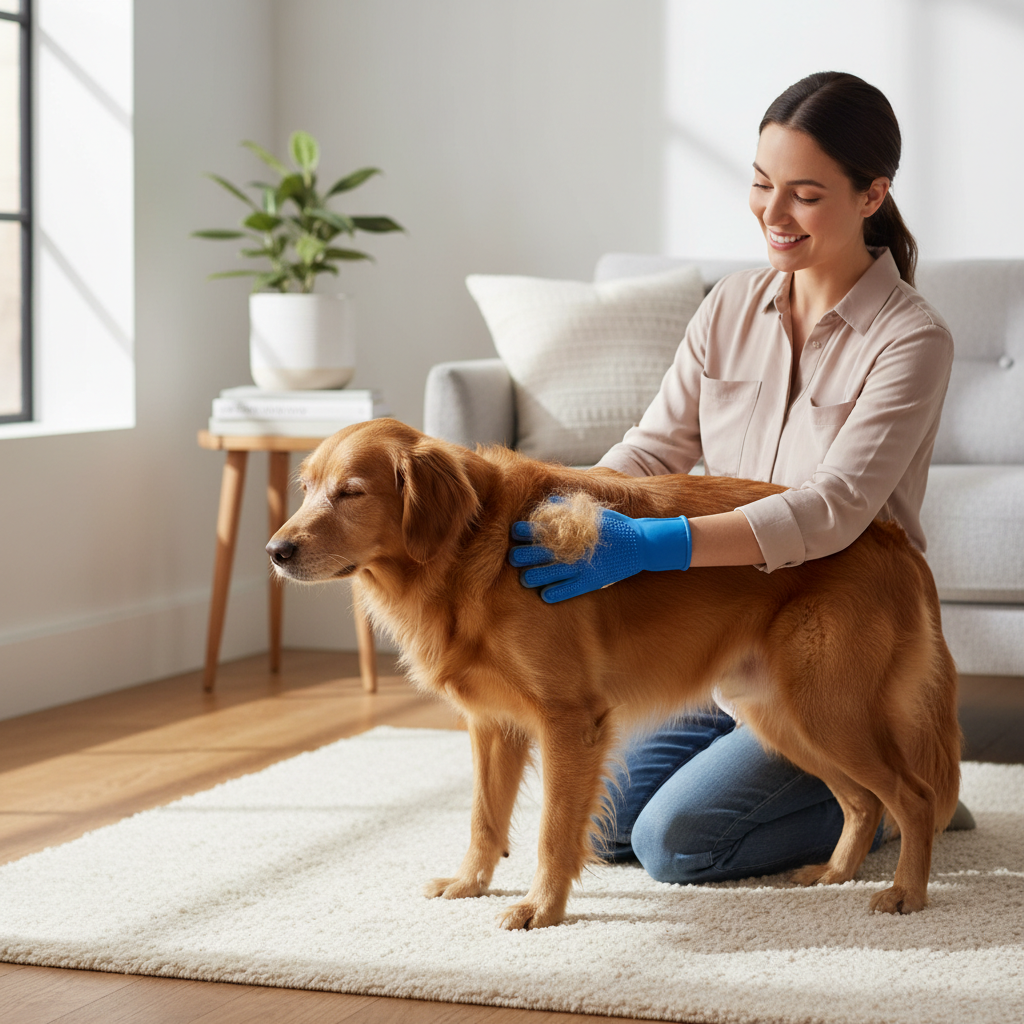
One quick note before we get into picks and criteria: grooming gloves are usually “maintenance tools,” not miracle tools. Many households still pair them with a brush or comb for deeper undercoat work, especially during heavy shedding weeks.
What “best” really means for grooming gloves in 2026
Most buying mistakes happen because people shop by star rating instead of matching the glove to the job. In 2026, the core designs look familiar, but small details matter more than the marketing: silicone thickness, fingertip flexibility, the direction of the nubs, and whether the wrist closure actually holds.
Here’s a practical way to define “best pet grooming gloves” for your home:
- Comfort for the pet: soft tips, no sharp seams, and a touch that doesn’t snag.
- Collection efficiency: fur gathers into a peelable sheet instead of sticking everywhere.
- Control: glove stays secure when you reach under legs, chest, or tail base.
- Clean-up speed: hair releases easily, glove rinses fast, dries without funky odor.
- Durability: seams don’t split and silicone nubs don’t tear after a few weeks.
According to the American Veterinary Medical Association (AVMA), regular grooming supports skin and coat health and helps you notice issues early, like lumps, parasites, or irritation. A glove can be a gentle entry point, especially for pets who dislike brushes.
Quick comparison table: glove styles and who they fit best
Most “best pet grooming gloves” fall into a few buckets. This table helps you narrow down fast.
| Glove type | Best for | What it does well | Common downside |
|---|---|---|---|
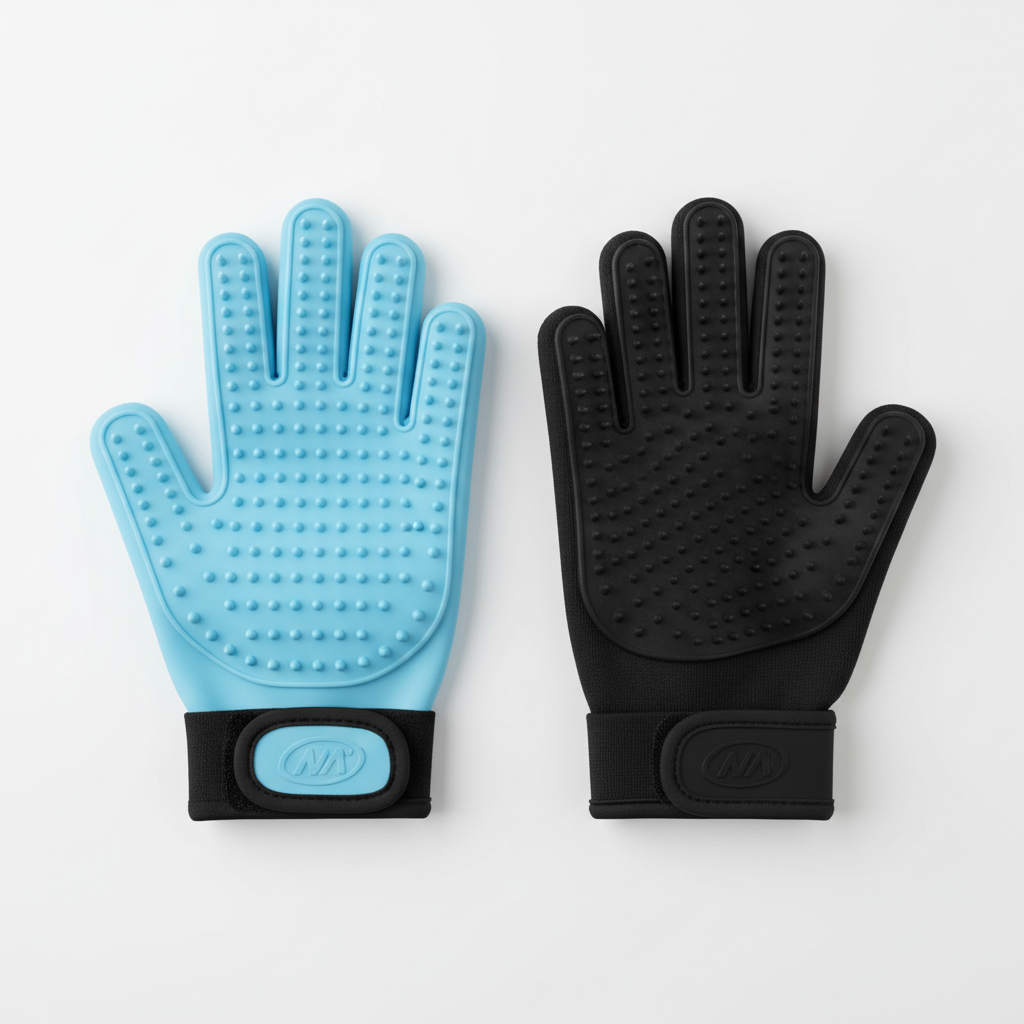
| Silicone/rubber nub gloves | Short to medium coats, light shedding, nervous pets | Gentle massage feel, easy daily use | Can underperform on thick undercoats |
| Deshedding “blade” gloves (integrated strip) | Dense coats, seasonal blowouts | Pulls more undercoat per pass | Higher risk of over-grooming if pressure is heavy |
| Dual-sided grooming + lint side | People who want one tool for pet + couch | Quick furniture cleanup | Often bulky, less precise on the pet |
| Bathing gloves (textured scrub) | Bath time, shampoo distribution | Helps work shampoo through coat | Not great for dry de-shedding |
How to choose the right glove for your pet’s coat
If you want the best pet grooming gloves for your animal, start with coat structure, not brand. Coat type decides how much “grab” you need and how gentle you must be.
Short coat (Lab, Beagle, many mixed breeds)
- Look for soft, flexible silicone nubs that won’t scratch skin.
- Medium nub length usually collects more hair than very short nubs.
- A snug wrist strap matters, short-coat pets often shed “dusty” hair that goes everywhere if the glove slips.
Double coat (Husky, Shepherd, many “fluffy” mixes)
- Choose a glove with firmer nubs or a deshedding strip to reach undercoat.
- Expect to pair with an undercoat rake or slicker during peak season, a glove alone may feel too polite.
- Prioritize easy hair release, undercoat can mat into the glove surface.
Curly/wavy coat (Poodle mixes)
- Use gloves mainly for distributing conditioner and light debris removal.
- Avoid aggressive “blade” gloves unless a groomer recommends it, curls can tangle and hide small mats.
- If you feel snagging, stop and switch to a comb.
Long, silky coat (Yorkie, Afghan-type coats)
- Go gentle: soft nubs, smooth seams, minimal drag.
- Gloves can help with bonding and light grooming, but line-brushing still does the serious work.
Self-check: are grooming gloves the right tool for you?
Before you spend time hunting the best pet grooming gloves, it helps to confirm the glove solves your actual problem. This checklist takes a minute and saves a lot of “why is this not working” frustration.
- Your pet tolerates petting but resists brushes: gloves often work better because they feel like touch.
- You want quick daily maintenance (1–5 minutes): glove wins on convenience.
- Your main issue is furniture fur: pick a glove that releases hair in sheets, not one that traps it.
- Your pet has a heavy undercoat: plan for glove + rake combo.
- Your pet has sensitive skin or a history of irritation: choose softer silicone and keep sessions short.
If your goal is dematting or cutting down serious shedding on a double coat during a blowout, a glove can help, but it may not be the “primary tool.” That’s normal.
Using grooming gloves correctly (this is where results usually change)
Most people test a glove once, don’t see a dramatic hair pile, then assume it’s useless. Technique matters more than it should, especially on short coats where fur releases in small amounts.
Step-by-step for dry grooming
- Start with calm contact: a few slow strokes where your pet likes being touched.
- Go with the coat direction for the first minute, then add gentle circular strokes on thicker areas like shoulders.
- Use light pressure: if you’re pressing hard, you’re more likely to cause irritation and less likely to collect hair cleanly.
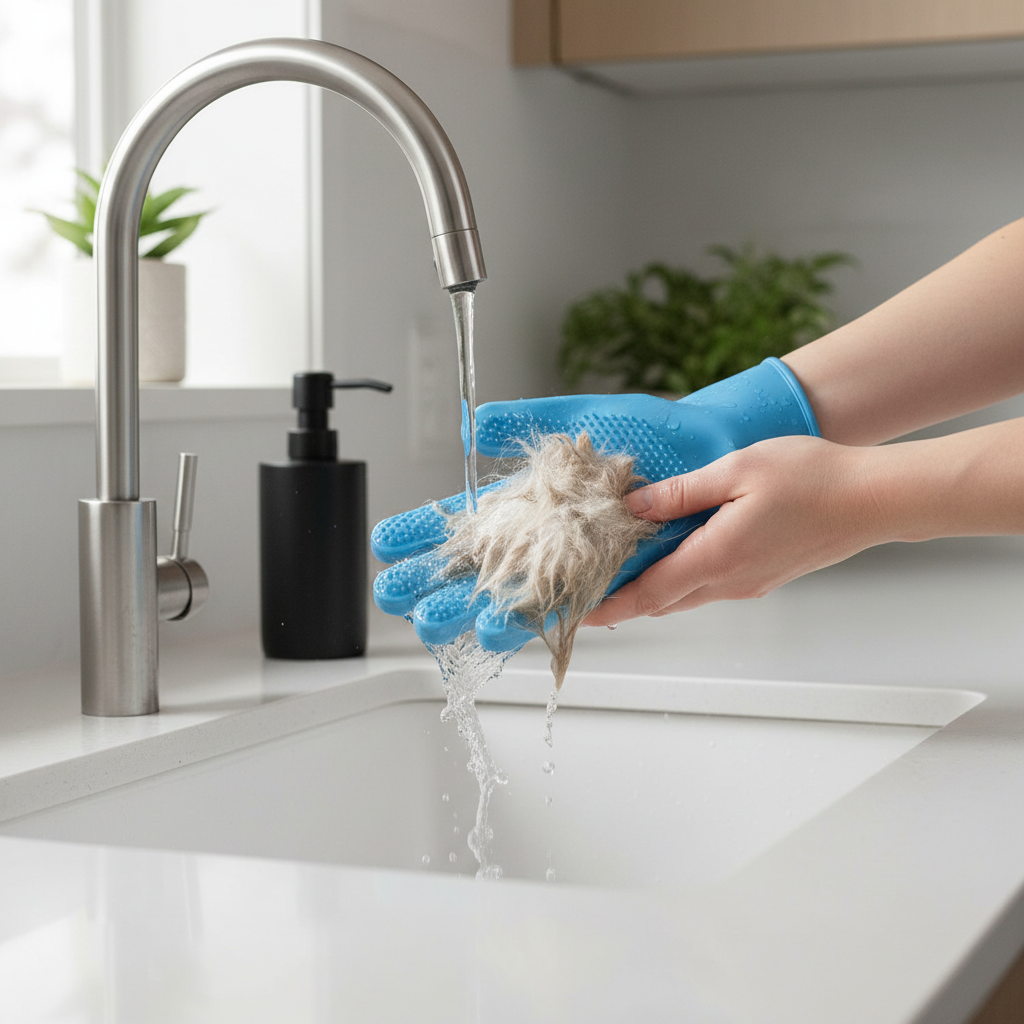
- Peel and discard the collected fur before it re-spreads, many gloves work best when you clear them often.
Step-by-step for bath time
- Wet coat fully, then apply shampoo to your hands first so you don’t over-pour on the pet.
- Use the glove to work shampoo through the coat, avoid rough scrubbing over bony areas.
- Rinse longer than you think, residue can cause itchiness for some pets.
According to the ASPCA, skin irritation and parasites can show up as excessive scratching or hair loss, so grooming time is also a good moment to notice changes. If you spot redness, scabs, or a strong odor, it’s safer to pause and ask a veterinarian.
What to look for when shopping (and what to ignore)
Product pages love buzzwords, but a few build features predict whether a glove becomes your go-to or ends up in a drawer.
Features worth paying attention to
- Fit range and wrist closure: Velcro that actually grips, plus sizing that matches your hand.
- Seam placement: seams should not rub between fingers, that’s where tearing often starts.
- Hair release behavior: look for surfaces that let fur lift off in sheets.
- Washability: dishwasher-safe claims vary, but easy rinse and quick dry matter in day-to-day use.
- Odor resistance: silicone usually holds less smell than fabric-backed gloves, but drying still matters.
Marketing claims to treat lightly
- “Works for all coat types” usually means “works okay for some.”
- “100% pain-free” is impossible to guarantee, pets have individual sensitivities.
- “Professional grade” is often vague unless tied to specific materials or construction.
Safety notes and common mistakes
Grooming should not feel like a wrestling match. If your pet shows stress signals, the safest move is usually to shorten sessions and lower intensity, not to “finish the job” in one go.
- Over-grooming: repeated aggressive passes can cause irritation, especially with deshedding-strip gloves.
- Using on inflamed skin: if you see hot spots, rashes, or broken skin, gloves can worsen it.
- Ignoring mats: gloves glide over mats and can tighten them, switch to a detangling approach.
- Wrong expectation: on heavy shedders, the glove is often the warm-up, not the whole routine.
If your pet has allergies, chronic dandruff, persistent odor, or sudden shedding changes, it may point to an underlying issue. In many cases it’s worth checking with a veterinarian or a certified groomer so you don’t waste time trial-and-erroring tools.
Key takeaways + a simple buying plan
If you want to land on the best pet grooming gloves without overthinking it, match the glove to coat type, buy for fit and clean-up, then test with a short routine for a week. Most households notice improvement when they groom briefly but consistently, instead of doing one long session every few weeks.
- Short coat: soft silicone nub glove, focus on easy hair release.
- Double coat: firmer nubs or deshedding strip, expect to pair with an undercoat tool.
- Sensitive pet: prioritize comfort and shorter sessions over maximum fur removal.
If you’re shopping today, put three items in your cart mentally before you pick: the glove, a simple comb for spot checks, and a plan for where the fur goes. That last part sounds silly, but it’s usually the difference between “easy routine” and “why is my house covered again.”
FAQ
What are the best pet grooming gloves for heavy shedding dogs?
Many heavy shedders do well with firmer silicone nubs or a glove that includes a deshedding strip, but results vary by coat density. For thick undercoats, you often get better results pairing a glove with an undercoat rake during peak shedding.
Do grooming gloves work on cats, or do they just annoy them?
They can work well on cats that like being petted, because the sensation feels familiar. Start with very light strokes and stop if the cat shows irritation, overstimulation happens quickly for some cats.
Can I use grooming gloves on a wet coat during baths?
Yes, as long as the glove is designed for wet use and you keep pressure gentle. Bath-time gloves help distribute shampoo evenly, but they’re not always great for pulling loose undercoat.
Why does fur stick to the glove and not peel off?
This usually comes down to surface texture and static, plus how dry the coat is. Clearing the glove more often, lightly misting the coat, or choosing a glove known for “sheet release” can reduce the mess.
How often should I use a grooming glove?
For many pets, 2–4 short sessions per week works better than one long session, but it depends on shedding level and skin sensitivity. If you notice redness or increased scratching, scale back and consider professional guidance.
Are grooming gloves safe for puppies?
Often yes for gentle, brief sessions, especially if you’re using a soft silicone glove and treating it like handling practice. If the puppy has skin issues or reacts strongly, a veterinarian or groomer can suggest a safer approach.
What’s the difference between grooming gloves and deshedding brushes?
Gloves trade power for comfort and control, they’re great for quick maintenance and anxious pets. Deshedding brushes and rakes reach deeper into undercoat, but they can irritate skin if used too aggressively.
If you’re trying to reduce shedding without turning grooming into a whole production, start with a glove that fits your hand snugly, then test it in 3-minute sessions for a week, your pet’s tolerance and the fur you collect will tell you quickly whether you chose the right style.