
Best cat scratchers cardboard options in 2026 look simple, but the “right” one depends on your cat’s scratch style, your space, and how much mess you can tolerate.
If your cat ignores a scratcher, it’s rarely stubbornness, it’s usually a mismatch: wrong angle, too small, wobbly base, or placed where the cat never feels safe enough to scratch. The good news is cardboard is forgiving, it’s affordable, lightweight, and most cats take to it quickly when the setup makes sense.
This guide breaks down what actually matters, gives you a quick self-check, and helps you choose a cardboard scratcher that protects furniture without turning your living room into a confetti zone.
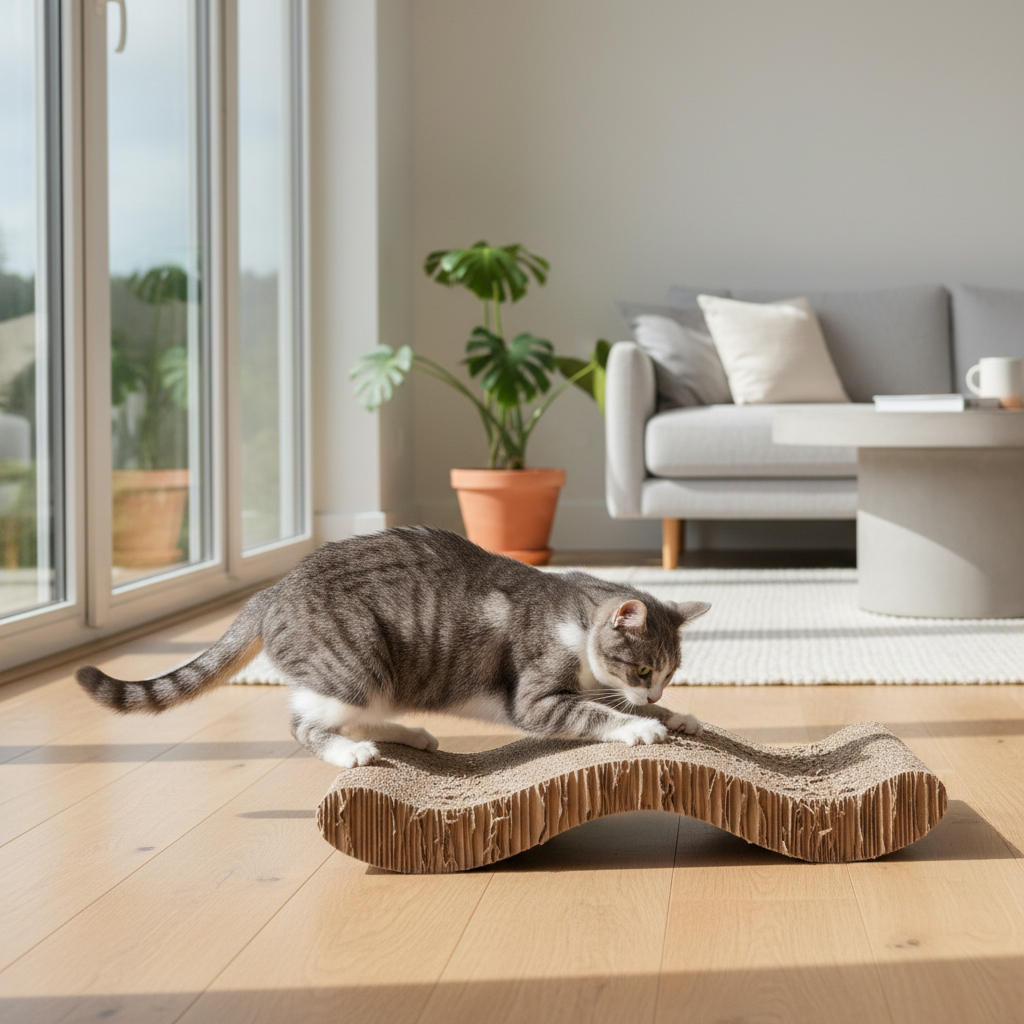
What makes a cardboard scratcher “the best” in real homes
Most product pages over-index on cute shapes and under-explain why one scratcher gets used daily and another becomes cat-furniture. I’d prioritize four things.
- Orientation that matches your cat: some cats are horizontal scratchers, others want a steep angle, a few need vertical height.
- Stability: if it slides or tips even once, many cats mentally blacklist it.
- Corrugation density: denser cardboard tends to last longer and shed less, though it can cost more.
- Placement-friendly shape: the best scratcher is the one that fits where your cat already scratches.
According to the American Veterinary Medical Association (AVMA)... providing appropriate outlets for normal behaviors like scratching can help reduce unwanted destruction in the home. Cardboard scratchers are often a practical way to do that without major training.
Quick self-check: which type your cat will likely use
Before buying anything, watch where and how your cat scratches for two days. It’s not overthinking, it’s saving money.
Scratch style clues
- Scratches rugs or carpet edges → try a flat lounger or wide horizontal board.
- Scratches couch arms → add a ramp or angled scratcher near that exact spot.
- Stretches tall on door frames → you may need a taller vertical scratcher (cardboard-wrapped post or wall panel), not just a floor pad.
- Scratches right after waking up → place a scratcher near sleeping areas.
Home constraints that matter more than people admit
- Small apartment or open-plan space → choose low-mess, heavier base models.
- Multiple cats → plan for at least two scratch zones, even if you buy one “main” scratcher.
- Cat that gets spooked easily → put scratchers in quiet paths, not the loud hallway by the HVAC closet.
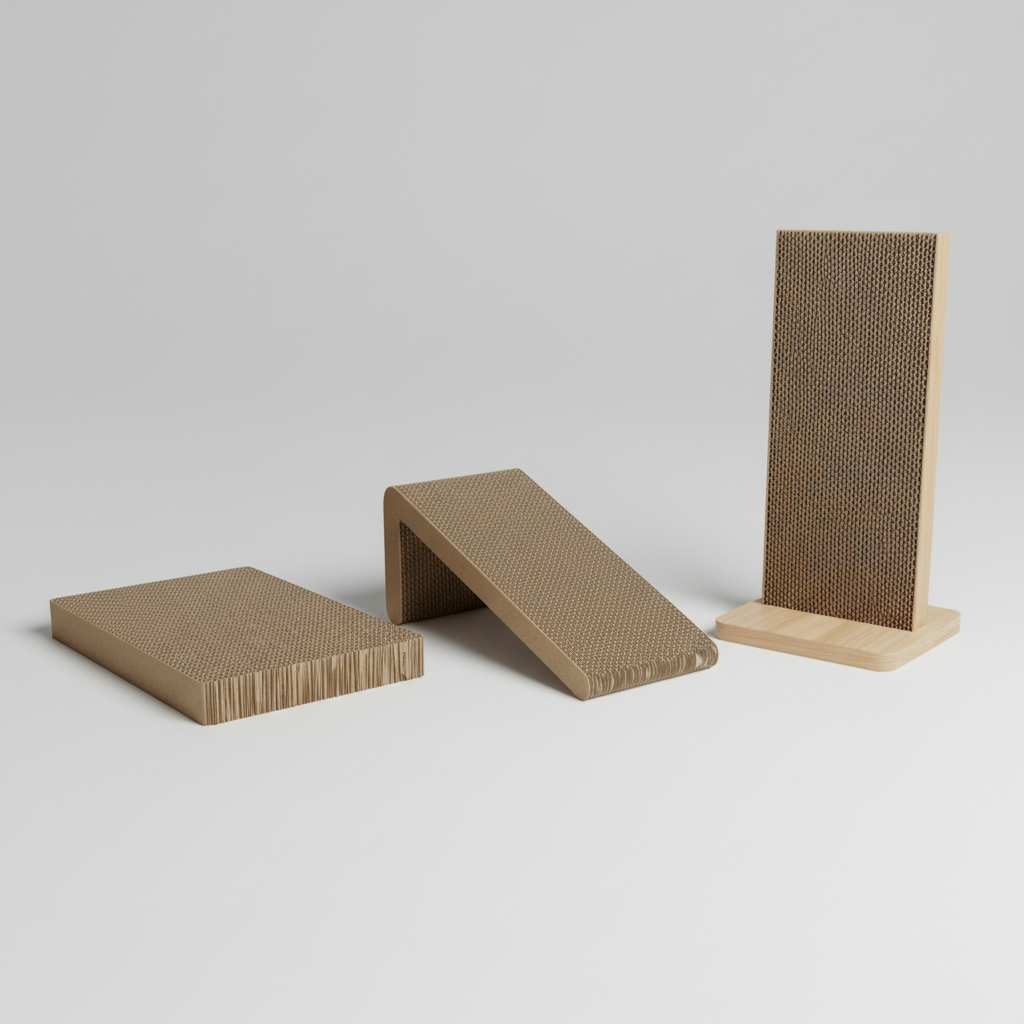
Cardboard scratcher types (and who they’re for)
“Cardboard” isn’t one product category, it’s a bunch of formats that behave differently in a cat’s brain.
Flat pads
Great for cats who scratch rugs, and for placing in high-traffic spots. Look for wide pads with a non-slip bottom, especially on hardwood.
Loungers (curved)
These double as nap zones, which can be a huge advantage, because cats return to the same spot and scratch again. They can shed more if the cardboard is soft.
Angled ramps
If your cat wants that “couch arm” feel, ramps are often the easiest win. They also let cats stretch shoulders without needing full vertical height.
Vertical panels and posts with cardboard surfaces
If your cat scratches vertically, don’t fight it. A tall option near the problem furniture usually beats trying to convert the cat to a flat scratcher.
Buying checklist: what to look for before you click “Add to cart”
This is the practical part. It’s also where most “best cat scratchers cardboard” lists get too vague, so here’s a clearer checklist you can use across brands.
- Size: your cat should fit with room to stretch. For bigger cats, narrow pads tend to get ignored.
- Weight and grip: heavier base or rubber feet help prevent sliding, especially on laminate or tile.
- Replaceable inserts: a frame with replaceable cardboard refills can be more cost-effective long-term.
- Reversible design: double-sided pads buy you time before replacement.
- Low-tox materials: avoid strong chemical odors. If you notice off-gassing smells, airing it out can help.
- Mess management: tighter corrugation and a surrounding frame usually reduce scatter.
According to ASPCA... scratching is a normal behavior tied to claw maintenance and marking, so the goal isn’t stopping scratching, it’s directing it to a surface your cat loves.
A simple comparison table (use this to decide fast)
If you want a quick pick without reading 40 reviews, match your situation to the column that sounds like your home.
| Need / Home reality | Best style | Why it works | Watch-outs |
|---|---|---|---|
| Cat scratches rugs | Flat pad | Same angle and resistance | Can slide without grip |
| Cat targets couch arms | Angled ramp | Similar posture to furniture scratching | Too steep can be ignored |
| Cat needs a “favorite spot” | Curved lounger | Nap + scratch habit loop | Some shed more crumbs |
| Cat scratches vertically | Vertical panel/post | Meets instinct to stretch tall | Must be very stable |
| Multiple cats | Two zones (mixed types) | Reduces competition and guarding | Budget and space planning |
How to get your cat to use it (without turning it into a battle)
The setup matters as much as the product. Many cats won’t cross the room for a scratcher, but they’ll happily use one placed right next to their “current” scratching spot.
Step-by-step placement plan
- Put the new scratcher within 1–2 feet of the furniture or area your cat scratches.
- Angle it to match the surface they’re targeting, flat near rugs, angled near couch arms.
- When you catch them scratching the right surface, reward immediately with a treat or calm praise.
- If the cat sniffs and walks away, don’t “demo” with their paws. Instead, sprinkle a tiny amount of catnip if your cat responds to it.
Key point most people miss
If you move the scratcher to a “nicer” corner too soon, the cat often goes right back to the couch. Keep the scratcher near the problem area for a week, then shift it gradually if needed.
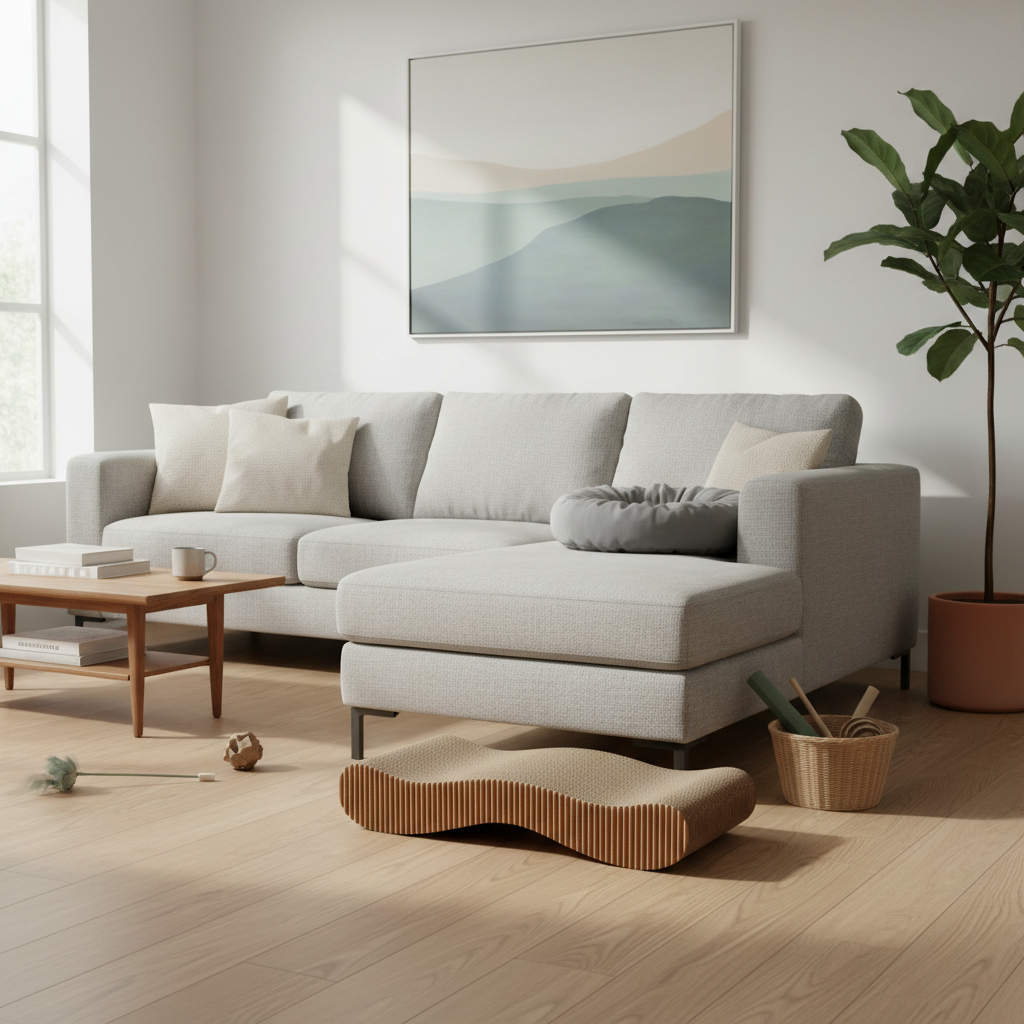
Common mistakes that make even good scratchers fail
- Too small: kittens adapt, adult cats often don’t, especially larger breeds.
- Unstable on hard floors: add a rug pad underneath or pick a heavier frame.
- Placing it where humans prefer: cats scratch where it feels relevant, near entrances, sleep spots, and “territory paths.”
- Expecting one scratcher to cover the whole home: many households need two, not because cats are picky, because territory has zones.
- Overusing sprays: some deterrents smell harsh and can create avoidance around the whole area. If you’re using behavior products, a vet or certified behavior consultant can give safer guidance.
For safety, if your cat starts chewing and swallowing cardboard pieces, that’s a different issue. It may be pica or stress-related behavior, and it’s worth discussing with a veterinarian, because ingesting non-food items can create medical risk.
Conclusion: a “best” pick is the one your cat returns to
The best cardboard scratcher is rarely the fanciest shape, it’s the one that matches posture, feels stable, and sits in the exact place your cat already wants to scratch. If you’re deciding today, pick the type that matches your cat’s current habit, buy the largest size you can reasonably fit, and prioritize stability over gimmicks.
If you want one action step that usually pays off, put a flat pad or angled ramp directly beside the furniture target, then reward the first few uses. That small routine often beats swapping products for weeks.
FAQ
What is the best cat scratchers cardboard style for a couch-scratching cat?
In many homes, an angled ramp placed right next to the couch arm works better than a flat pad, because it mimics the posture your cat already prefers.
How long do cardboard scratchers typically last?
It varies by cat size, how many cats you have, and cardboard density. A denser, heavier scratcher usually lasts longer, while softer cardboard sheds faster.
Do cardboard scratchers make a mess?
Most shed some crumbs, that’s normal wear. If mess is a big issue, look for a framed design, higher-density corrugation, and vacuum the area as part of a weekly routine.
Should I buy catnip scratchers or plain ones?
If your cat responds to catnip, a little can speed up adoption. If your cat ignores catnip, a stable scratcher in the right location matters far more than infused materials.
Where should I place a cardboard scratcher in a small apartment?
Place it where your cat already spends time: near sleeping spots, a favorite window, or beside the current scratching target. Quiet corners are fine, but only if your cat actually uses them.
Are cardboard scratchers safe for kittens?
They’re commonly used and usually fine, but supervise early on. If a kitten chews and swallows pieces, remove the scratcher and ask a veterinarian for advice.
How do I stop my cat from scratching furniture if they already have a scratcher?
Usually it’s placement and preference, not defiance. Move the scratcher beside the furniture, reward use, and make the furniture less appealing with a cover or temporary barrier while the new habit forms.
If you’re trying to choose between a flat pad, a lounger, and a ramp and you’d rather not guess, start by matching your cat’s current scratching angle and your home’s mess tolerance, then treat the first week like a “trial setup.” That small bit of intention tends to save time and money.