
best dog food containers airtight sounds like a simple shopping search, but it usually means you’re trying to solve a real problem: kibble going stale, a pantry that smells like dog food, or the unsettling feeling that bugs might find their way in.
Airtight storage is less about being fancy and more about protecting what you already paid for. When dry food sits exposed to air and humidity, it can lose aroma and crunch, and in some homes it can attract pantry pests. The right container also makes feeding easier, especially if you’re scooping twice a day and tired of wrestling a floppy bag.
This guide focuses on what actually matters when choosing an airtight container, how to match it to your dog’s food size and your routine, and the tradeoffs brands don’t always spell out.
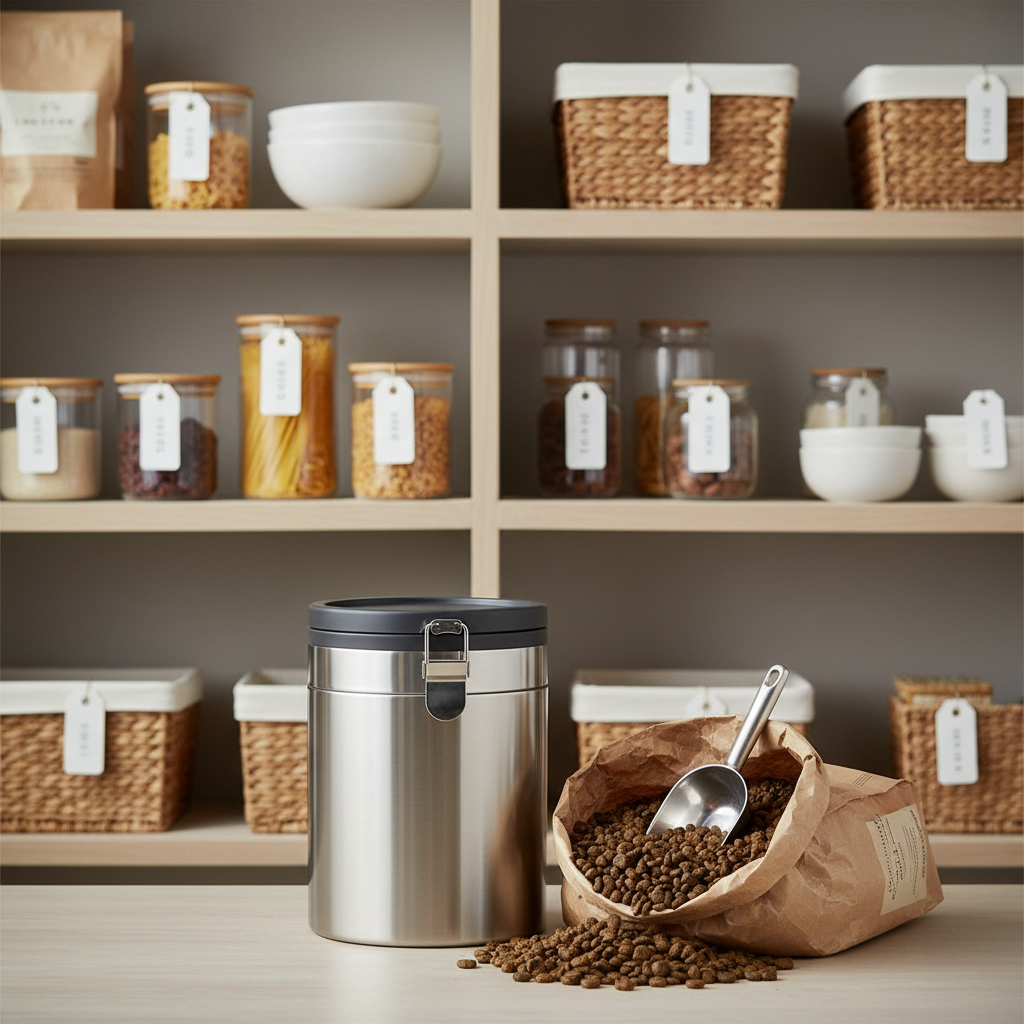
What “airtight” really means for dog food storage
An airtight container should slow air exchange enough that the food stays fresher between purchases. In practice, you’re looking for a lid that compresses a gasket or uses locking clamps to create consistent pressure all the way around.
Two quick reality checks: one, no container makes kibble “forever fresh”; two, airtight doesn’t automatically mean odor-proof, though good seals often reduce smell a lot.
- Gasket seal: Silicone or rubber ring that closes gaps between lid and body.
- Locking mechanism: Latches or twist-lock designs keep the gasket compressed.
- Rigid walls: Thin, flexible plastic can warp over time and weaken the seal.
- Moisture control: Airtight helps, but a damp scoop or wet hands can still introduce moisture.
According to the FDA, pet food should be stored in a cool, dry place and handled to avoid moisture and contamination. Airtight storage supports that, but it’s still smart to keep the feeding area clean and avoid letting crumbs build up.
Common reasons kibble goes stale (and what containers can’t fix)
People often blame the container when the real issue is the storage routine. Airtight bins help, but they won’t undo certain habits.
- Buying too large a bag for one dog: If a bag lasts months, even great storage may not keep peak freshness.
- Heat exposure: Storing near ovens, sunny windows, or garages in hot climates speeds quality loss.
- Humidity: Coastal areas and damp basements challenge any dry food.
- Cross-contamination: Using a dirty scoop or mixing old and new kibble can create off smells.
If your dog suddenly refuses food, don’t assume it’s “just stale.” Appetite changes can have many causes, and it may be worth asking your veterinarian, especially if you notice vomiting, diarrhea, or lethargy.
How to choose the right airtight dog food container (a quick checklist)
If you want to land on the best dog food containers airtight for your home, match the container to your bag size, your storage space, and how you feed. This avoids the classic mistake: buying a bin that’s either too small or annoyingly huge.
- Capacity: Look at pounds of kibble you buy and check the container’s stated capacity for dry food, not gallons alone.
- Footprint: Measure your pantry shelf or floor space, including lid clearance.
- Seal design: Prefer gasket + latches or a proven twist-lock system.
- Material: Food-grade plastic, stainless steel, or glass; avoid mystery plastics with strong odors.
- Ease of cleaning: Wide opening, smooth corners, fewer crevices.
- Scoop storage: Convenient, but only if it stays clean and dry.
- Mobility: Wheels help for large bags, but check if they make the bin wobble.
Material matters: plastic vs stainless vs glass
There isn’t one perfect material. Each one comes with a few tradeoffs that matter in everyday use.
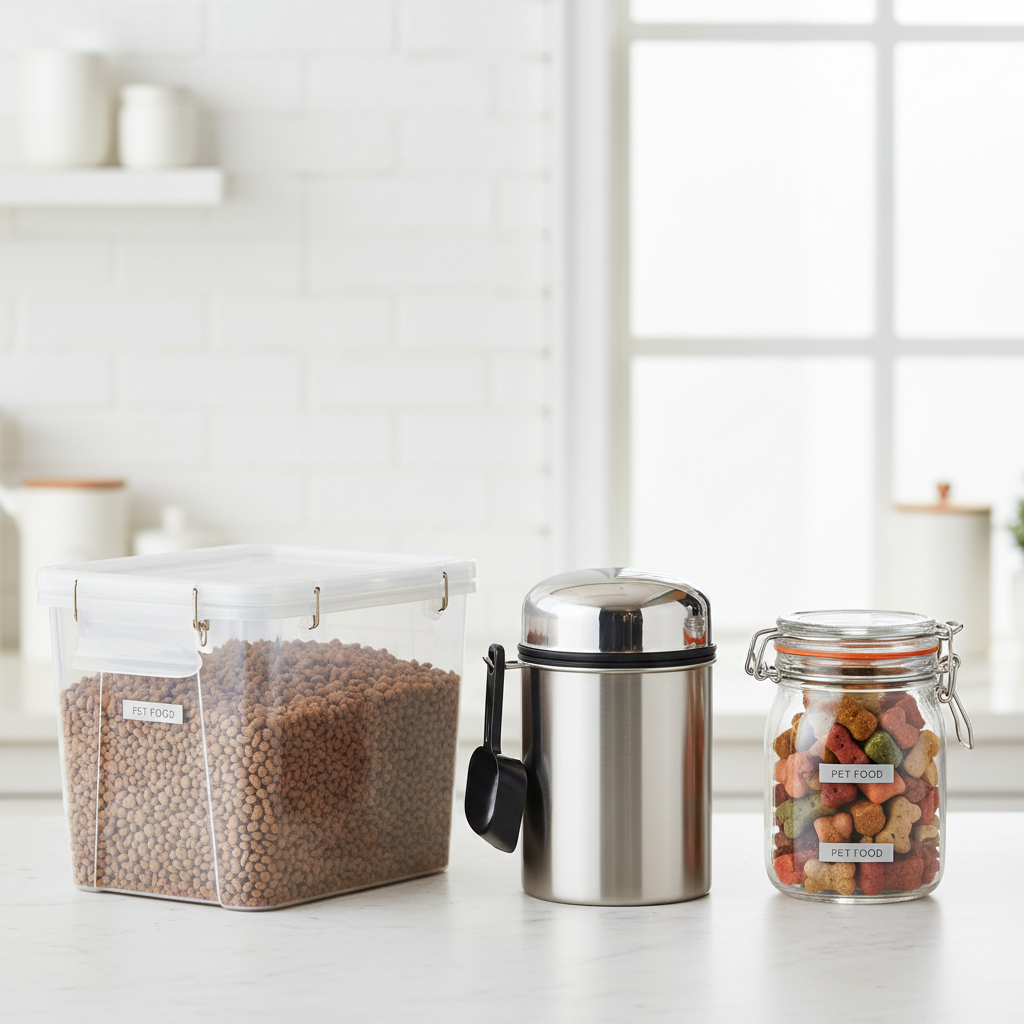
Plastic (most common)
Good plastic containers are practical and usually the most affordable. Clear walls also make it easy to see when you’re running low. The downside is odor absorption over time and occasional warping if the plastic is thin or exposed to heat.
Stainless steel
Steel is great for odor control and durability. Many households like it because it looks cleaner on the floor or counter. The common drawback: you can’t see the fill level unless there’s a window, and quality varies a lot in lid seals.
Glass (often for small volumes)
Glass containers with clamp lids can be genuinely airtight and don’t hold odors. They’re usually better for smaller daily-use portions rather than a full 25–30 lb bag, simply due to weight and break risk.
Recommended features by situation (not one-size-fits-all)
The best airtight storage choice depends on where you store food and how fast you go through it. Here are realistic matches that tend to work well.
- Apartment pantry, limited space: Tall, slim bin with locking lid; prioritize footprint over maximum capacity.
- Multiple dogs or large-breed feeding: Large bin with wheels and sturdy latches; wide opening for scooping.
- Hot/humid climate: Strong gasket seal, keep off the floor if your area gets damp; avoid garage storage when possible.
- Odor-sensitive household: Stainless steel body or high-quality plastic with a tight gasket; keep lid closed between scoops.
- Food rotation and freshness focus: Two-container setup: a bulk airtight bin plus a smaller daily dispenser.
If you’re comparing options in the “best dog food containers airtight” category, pay more attention to lid design and build quality than to marketing terms like “pet-proof.” Most “pet-proof” bins still lose to a determined dog if the container can slide or tip.
Quick comparison table: what to look for
This isn’t a brand ranking, but it helps you compare products fast when listings start to blur together.
| Type | Best for | Pros | Watch-outs |
|---|---|---|---|
| Locking-lid plastic bin | Most households | Affordable, easy to scoop, often stackable | Plastic can hold odors, latches can weaken |
| Wheeled bulk bin | 30–50 lb bags | Less lifting, big opening | Check stability, wheels add height |
| Stainless steel canister | Odor control, visible placement | Durable, looks tidy, less odor absorption | Can’t see level, seal quality varies |
| Glass clamp jar | Daily portions, treats | No odor absorption, truly tight seal possible | Heavy, breakable, limited capacity |
Practical setup: how to store kibble for freshness and safety
Even the best container gets better results with a simple routine. If you’re only going to adopt two habits, make them these: keep things dry, and keep the food identifiable.
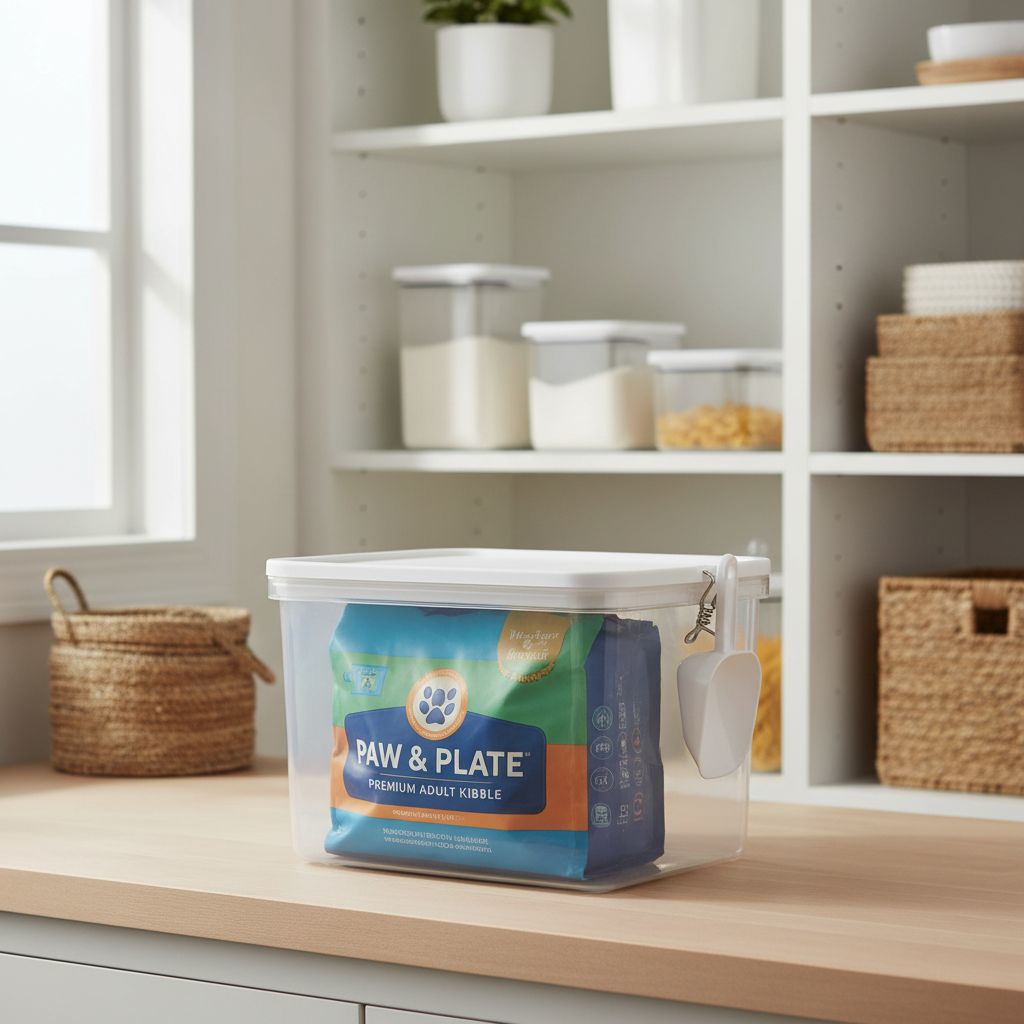
Step-by-step (simple, realistic)
- Keep the kibble in the original bag if possible: Place the whole bag inside the bin, then close the lid. Many owners do this to reduce oil contact with the container and keep the lot number and expiration info handy.
- If you pour kibble in: Wash and fully dry the container before refilling, then avoid topping off without cleaning. Old crumbs can make the new food smell off.
- Store cool and dry: A pantry beats a garage in many climates. If you only have a garage, keep it away from heat sources and consider smaller bag sizes.
- Use a dedicated scoop: Keep it clean and dry, and don’t leave it buried if your hands are wet from washing bowls.
According to the CDC, basic hand hygiene and clean storage practices help reduce contamination risks in homes with pets. You don’t need to treat kibble like raw meat, but you also don’t want old food dust spreading across your pantry.
Mistakes people make when buying airtight containers
This is where money gets wasted. A container can look perfect online and still be annoying day-to-day.
- Buying based on gallons only: Kibble density varies by formula and shape, so volume claims can mislead. If your bag is 30 lb, don’t assume any “30 lb” label fits all foods.
- Ignoring lid clearance: Some lids need vertical space to open fully, which matters on a shelf.
- Overvaluing “stackable”: If you never stack, you may be paying for a feature you won’t use.
- Skipping cleaning ergonomics: Narrow openings and sharp internal corners make cleanup unpleasant, so it doesn’t happen often.
- Assuming airtight means pest-proof: Airtight reduces odor and access, but pests can still chew some plastics or exploit damaged seals.
If pests are a recurring issue, consider pantry hygiene and entry points in addition to storage, and if needed, ask a local pest professional for advice that fits your home.
Key takeaways and a simple buying recommendation
If you want a clean, no-regrets purchase, aim for a rigid container with a gasket seal and reliable latches, sized so your usual bag fits without cramming. For many homes, that lands you in the “mid-size locking-lid bin” category, while heavy feeders do better with a wheeled bulk bin plus a smaller daily dispenser.
- Pick seal quality over gimmicks, because that’s what keeps food fresh day after day.
- Buy the size you’ll actually use, not the largest bin you can find.
- Build one small routine around dryness and occasional cleaning, and the container does its job.
If you’re still stuck between two options, choose the one with the better lid design and easier cleaning, those two details decide whether you’ll love it after week three.
FAQ
- Do airtight containers keep dog food fresh longer?
They usually help by reducing exposure to air and humidity, but freshness still depends on bag age, storage temperature, and how quickly you go through the food. - Is it better to store kibble in the original bag inside the container?
Many owners prefer it because it keeps the brand/lot info available and reduces oil residue on the bin, as long as the bag fits and you can seal the container well. - What size container do I need for a 30 lb bag?
It depends on kibble shape and density, so check product listings that mention pounds for dry pet food and read notes about capacity; when unsure, sizing up slightly avoids frustration. - Are gamma seal lids truly airtight for dog food?
Often they seal well when the threads and gasket stay clean, but performance varies by brand and wear. If you see crumbs in the gasket area, sealing can degrade. - Can plastic containers make kibble smell or taste different?
Some plastics can hold odors over time, especially with oily foods. A good wash routine helps, and stainless or glass may be better if you’re sensitive to smells. - Should I refrigerate or freeze dry dog food?
Usually not necessary for kibble and can introduce moisture if handled poorly. If you’re considering it due to heat, pests, or long storage times, it’s worth checking the manufacturer guidance and asking your veterinarian.
If you’re trying to pick from the crowded “best dog food containers airtight” options and want a short list tailored to your bag size, pantry space, and budget, it can be easier to describe your setup first, then narrow to two or three containers that realistically fit your routine.