
how to stop cat from jumping counters usually comes down to one thing, your cat is getting paid for the behavior, with food, attention, a warm spot, or a great view.
If this is making you feel a little defeated, you’re not alone, counters are basically a cat magnet, and many “quick fixes” backfire because they scare the cat without teaching an alternative.
This guide focuses on practical, low-drama changes you can do in a real home, what to remove, what to add, and how to train a better option so your cat still gets what it wants without turning your kitchen into a battleground.
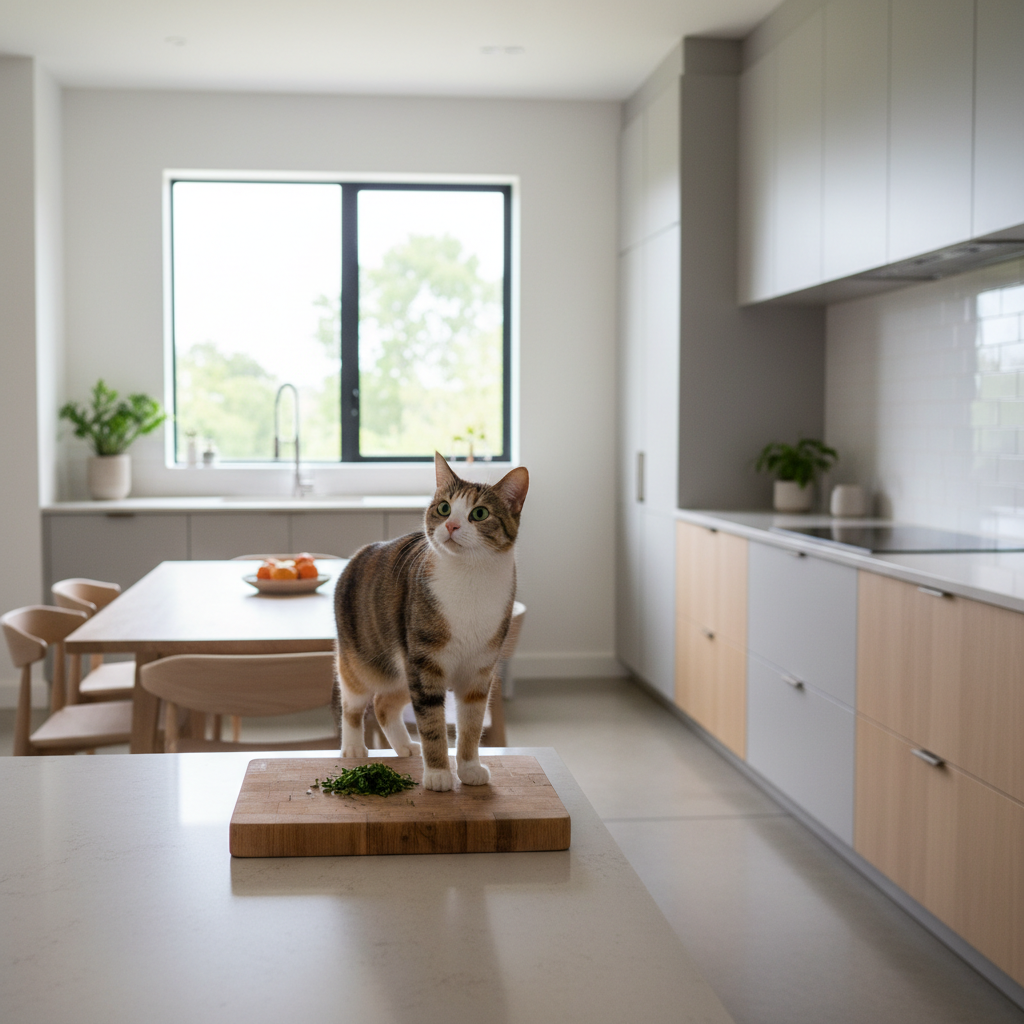
Why cats jump on counters (and why it’s hard to “just stop”)
Cats don’t jump up to be “bad,” they jump up because it works, height is safety, height is information, and kitchens offer smells and rewards.
- Food reinforcement: crumbs, dirty pans, butter on a plate, even a sink with tuna residue can teach “counter = jackpot.”
- Warmth and comfort: some counters sit above dishwasher heat or catch sun, cats notice.
- Views and routines: if your cat watches you prep meals there, that spot becomes part of the social pattern.
- Boredom: many indoor cats are under-stimulated, the counter becomes an activity.
Also, “punishment” tends to fail in this specific problem because you’re rarely there at the exact moment, so the cat learns “avoid counters when humans are watching,” not “avoid counters.” According to the American Veterinary Medical Association (AVMA), punishment-based approaches can increase fear and stress, which may create other behavior issues.
Quick self-check: what’s actually rewarding your cat?
Before you buy anything, figure out what your cat is chasing, this keeps you from doing a lot of work that doesn’t address the real payoff.
Use this short checklist
- Do you often leave food out, cooling pans, bread, pet treats, or dishes in the sink?
- Does your cat jump up most when you’re cooking or eating?
- Is there a window, upper cabinet, or fridge top that creates a “highway” to the counter?
- Does your cat jump up at night, when the house is quiet?
- Do you tend to shout, chase, or pick your cat up, and does it turn into a game?
What this tells you: if food is involved, you’ll win fastest by removing food access; if it’s attention or a view, you’ll win faster by adding a better perch nearby.
Reset the environment: make counters boring, not scary
If you want how to stop cat from jumping counters to stick, the counter has to stop being a “resource.” That’s mostly management, not willpower.
Kitchen rules that actually matter
- Clean like you’re training: wipe crumbs, rinse pans, and keep the sink empty of food residue when possible.
- Remove high-value items: bread, meat packaging, and butter should not sit out during training.
- Block the launch points: if your cat uses a barstool or small cart as a step, move it temporarily.
- Close off the room when you can: baby gates or a closed door during meal prep can reduce rehearsal.
This part feels unglamorous, but it’s the foundation, every successful jump during training slows progress.
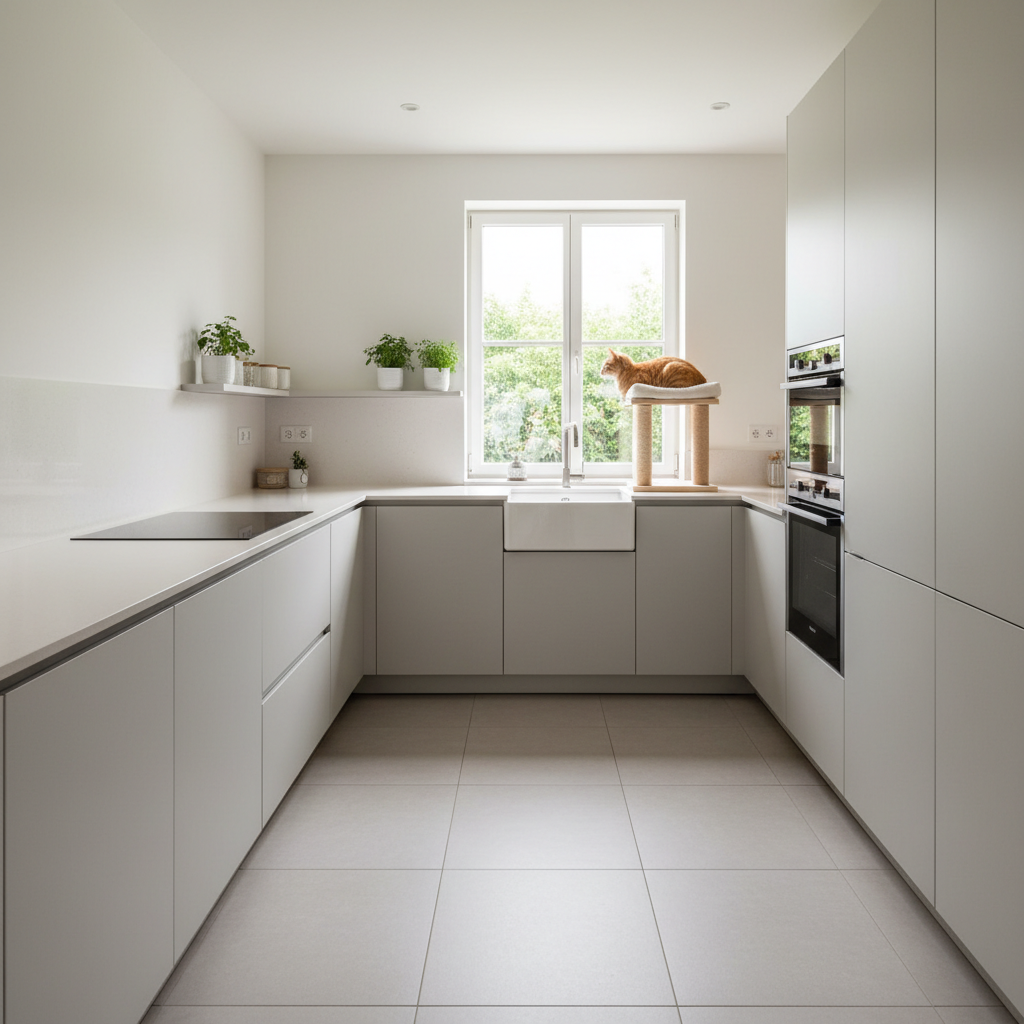
Teach an acceptable alternative: “go to your perch” beats “get down”
Telling a cat “no” is vague, giving a cat a job is clearer, the goal is a predictable routine where your cat chooses a legal spot that still meets its needs.
Pick the right alternative spot
- Choose something as high or higher than the counter if possible, a tall cat tree, wall shelves, or a sturdy perch.
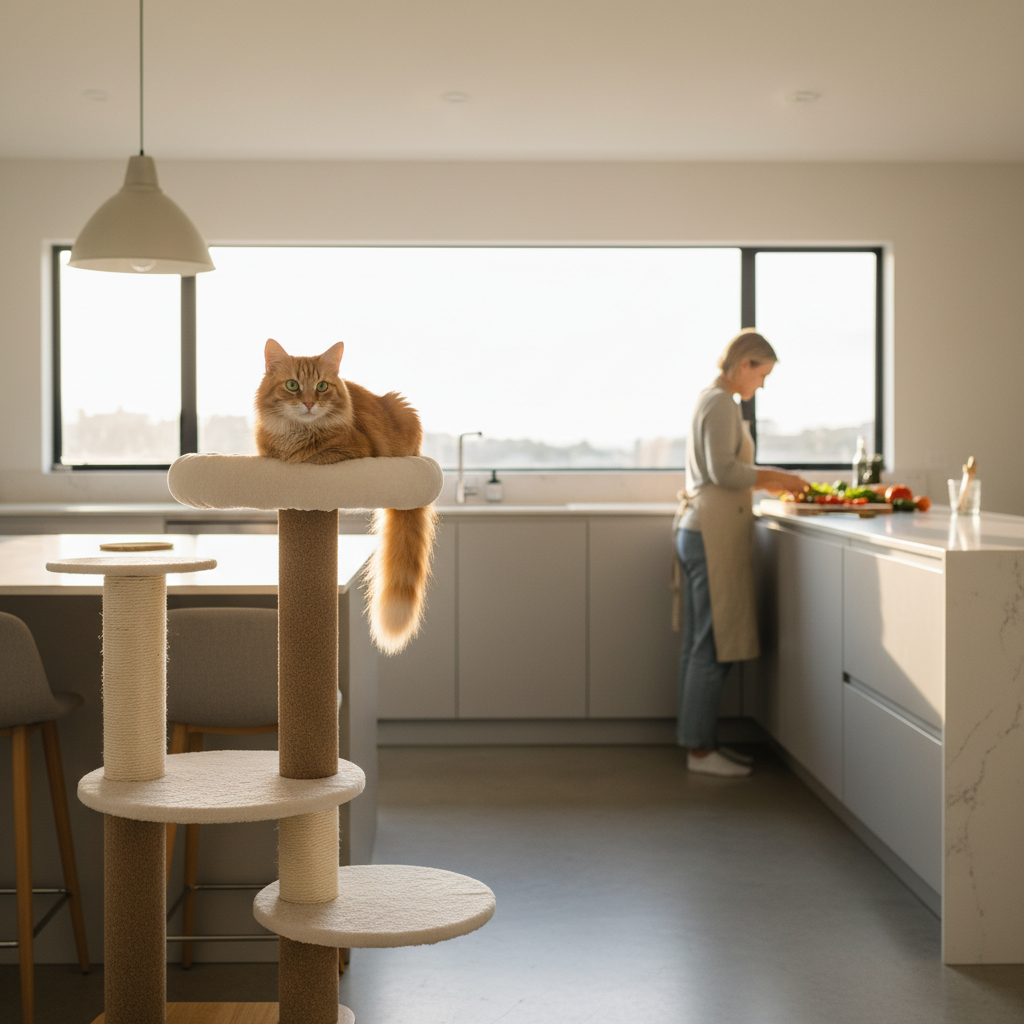
- Place it close enough to the kitchen action that your cat still feels included, many cats jump up because they want to supervise.
- Add traction and comfort, a non-slip mat and a washable blanket make it “sticky.”
Simple training steps (5 minutes, a few times a day)
- Stand near the perch with treats ready, ask for a cue like “perch” or “place.”
- When your cat steps onto the perch, mark and reward immediately, you can use a clicker or a consistent word like “yes.”
- Feed a few treats in a row while your cat stays there, then pause, reward calm.
- Practice when you’re not cooking first, then gradually practice during low-stakes food prep.
According to the American Association of Feline Practitioners (AAFP), positive reinforcement and providing appropriate outlets are core strategies for common feline behavior concerns, in plain terms, give the cat a better “yes” and you’ll hear less “no.”
Deterrents that can work (and which ones tend to cause drama)
Deterrents are tools, not the whole plan, they work best when the counter is unrewarding and the alternative perch is rewarding.
Common options, with realistic pros and cons
| Approach | What it does | When it helps | Watch-outs |
|---|---|---|---|
| Double-sided tape or sticky mats | Makes landing unpleasant | Short-term training to break habit | Dust sticks to it, some cats ignore it |
| Aluminum foil (temporary) | Changes texture and sound | Quick “pattern interrupter” | Not all cats care, can be messy |
| Motion-activated air puff devices | Startles without you present | Night jumping, when cat rehearses alone | Some cats get stressed, place carefully |
| Scat mats (low-level, pet-safe) | Creates an uncomfortable boundary | Persistent jumpers with strong habits | Follow product safety guidance, avoid panic |
| Citrus or strong scents | Tries to repel by smell | Occasionally helps on specific surfaces | Many cats adapt, avoid essential oils unless a veterinarian confirms safety |
Skip the high-conflict stuff: spraying water, yelling, and chasing often teaches your cat that you are unpredictable, not that the counter is off-limits, and if your cat startles and slips, you risk injury.
A practical 2-week plan to stop counter jumping
If you want a plan that feels doable, use this as a starting point, adjust based on your household schedule and your cat’s personality.
Days 1–3: stop the payoffs
- Zero food access on counters, wipe surfaces, keep the sink clear.
- Move “step” furniture away from the counter route.
- Set up the perch and feed a few treats on it even when nothing happens.
Days 4–10: train the alternative, don’t argue
- Do 2–3 short “perch” sessions daily, end before your cat gets bored.
- When your cat jumps up, avoid a chase, calmly lure to perch with a treat, reward the perch, then return to your task.
- If counter jumping happens mostly at night, add a deterrent when you go to bed and remove it in the morning.
Days 11–14: fade the management gradually
- Reduce treats to intermittent rewards, keep praise and occasional snacks.
- Test small challenges, prep a simple meal with the cat on the perch, reward calm staying.
- If your cat relapses, you didn’t fail, you just found a weak spot, tighten food management for a few days and continue.
Many homes see improvement in this window, but some cats need longer, especially if the behavior has been rewarded for months or years.
Common mistakes that keep the problem alive
- Only reacting after the jump: if the cat already enjoyed the counter, you’re late, prevention matters more.
- Inconsistent rules: “sometimes allowed” is basically training your cat to keep trying.
- Using the counter as punishment: putting the cat on the floor harshly, scruffing, or loud scolding can increase anxiety.
- No enrichment elsewhere: a bored cat will invent a hobby, and your kitchen is interesting.
If your household has multiple people, agree on a simple script, “quietly redirect to perch, reward perch,” and keep it boring.
When counter jumping may signal a bigger issue
Sometimes counter surfing ramps up because something changes, appetite, stress, new pets, a move, or a medical issue. You don’t need to assume the worst, but it’s worth being alert.
- Sudden increase in food-seeking or weight loss might justify a veterinary check, especially in older cats.
- Restlessness at night can be boredom, but it can also be discomfort or age-related changes.
- Aggression when removed may suggest fear, pain, or conflict around resources.
According to the American Animal Hospital Association (AAHA), behavior changes can be linked to health conditions, if the pattern changes quickly or comes with other symptoms, checking in with a veterinarian is a sensible step. If the issue is mostly training but feels stuck, a board-certified veterinary behaviorist or a qualified cat behavior consultant can tailor a plan to your home.
Key takeaways
- Make counters unrewarding by removing food and blocking easy routes.
- Offer a better “yes” with a nearby perch and short, consistent rewards.
- Use deterrents strategically when you’re not there, and avoid fear-based methods.
- Stay consistent for two weeks, then fade supports slowly to prevent relapse.
The most reliable answer to how to stop cat from jumping counters is a mix of management and training, not a single gadget, if you cut off the payoff and build a routine your cat enjoys, the kitchen usually gets calmer fast.
Pick one alternative perch today, clean the counter like training depends on it, then run three tiny sessions this week, it’s a small start that tends to snowball.
If you want a more hands-off option, consider pairing a motion-based deterrent at night with a daytime “perch” routine, many households find that combination reduces counter jumping without turning meals into a struggle.
FAQ
- How long does it take to stop a cat from jumping on counters?
Many cats improve within 1–3 weeks if counters stop paying off and a perch becomes rewarding, long-standing habits may take longer, especially if food access continues occasionally. - Is it okay to pick my cat up and put them down every time?
Sometimes it works, but it often becomes attention, and some cats start resisting, redirecting to a perch and rewarding that choice usually creates less conflict. - Do motion-activated air puff devices harm cats?
Used correctly they are typically designed to be safe, but some cats get very stressed, if your cat seems fearful or stops entering the kitchen entirely, stop and switch strategies, when in doubt, ask a veterinarian. - Will aluminum foil on counters work?
It can interrupt the habit for some cats, but it’s rarely a complete fix, it works better as a temporary tool while you train an alternative spot. - Why does my cat only jump up when I’m cooking?
Cooking is a high-reward moment, smells, attention, and dropped bits, treat it like training time, send your cat to the perch before you start, then reward calm staying. - How do I keep my cat off counters at night?
Clean up thoroughly, remove access points like stools, and consider a deterrent that works when you’re asleep, then add extra play and food puzzles during the day to reduce nighttime “patrolling.” - What if my cat jumps up to drink from the sink?
Many cats prefer running or fresh water, try adding a cat water fountain away from the counter and reward using it, then keep the sink dry when possible.