
How to stop dog from pulling leash usually comes down to two things: your dog has learned that pulling works, and your setup makes it easy to practice the habit. The good news is you can change both without turning every walk into a battle.
If you feel like you’re being dragged to every smell, squirrel, and front-yard “message board,” you’re not alone. Pulling is one of the most common reasons people stop enjoying walks, and it can become a safety problem, especially with kids, seniors, or strong dogs.
This guide stays practical: you’ll learn what typically causes leash pulling, how to tell which pattern your dog fits, and a training plan you can repeat in short sessions. I’ll also cover gear choices, because the wrong equipment often keeps you stuck even when you’re “doing the training.”
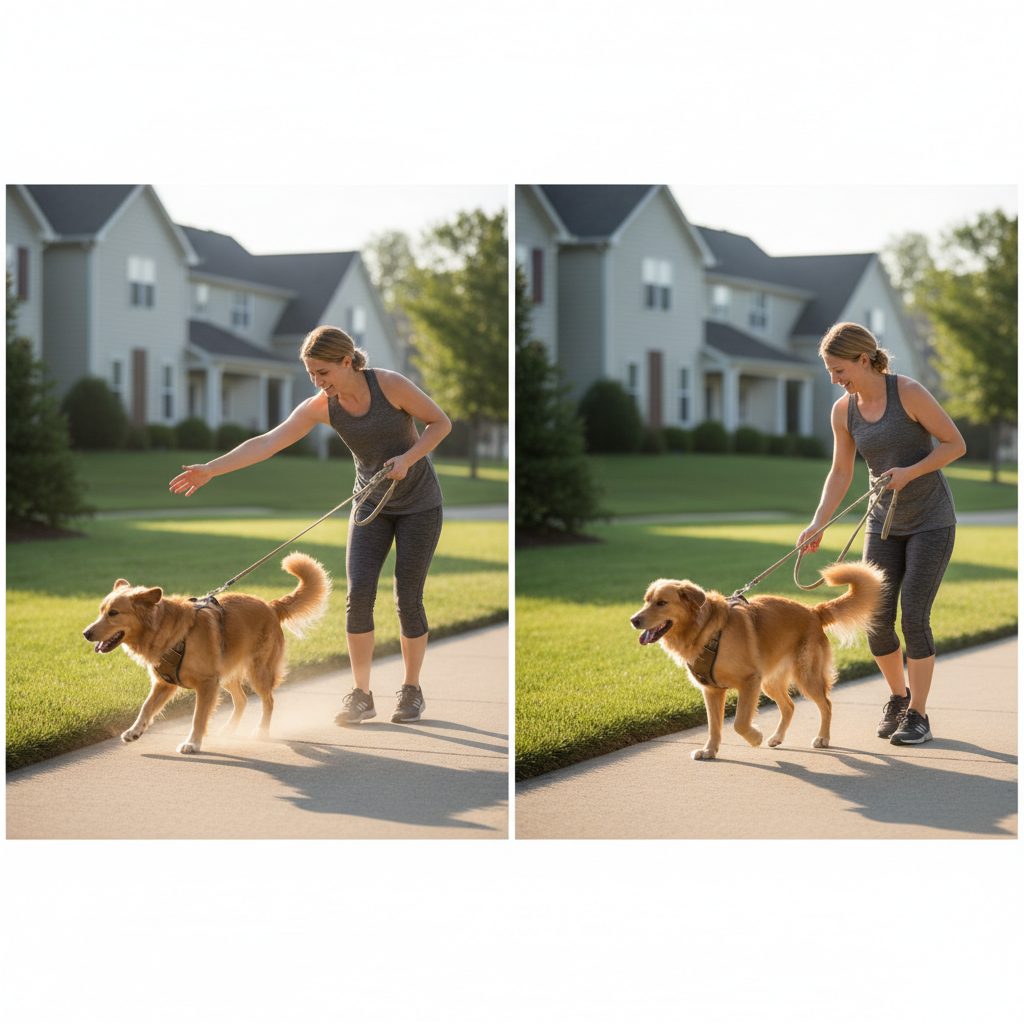
Why dogs pull on leash (it’s usually not “stubbornness”)
Leash pulling often starts as a simple reinforcement loop: the dog pulls, the dog reaches something interesting, and the dog’s brain logs “pulling works.” Over time, that habit becomes the default walking style.
- Speed mismatch: Many dogs naturally walk faster than humans, especially young, athletic, or working breeds.
- Over-arousal: The outdoors can be “too much” in a good way, and excitement spills into the leash.
- Competing rewards: Smells, people, and other dogs can be more rewarding than most treats at first.
- Accidental practice: Busy mornings, short breaks, or apartment hallways often force you to keep moving while the dog pulls.
- Equipment issues: A collar that causes discomfort can increase frantic pulling; a harness with the wrong attachment can make pulling easier.
According to the American Veterinary Society of Animal Behavior (AVSAB), reward-based training is recommended for behavior change, especially when emotions like fear or over-excitement are involved. That matters because punishment tends to increase stress, and stressed dogs rarely walk better.
Quick self-check: what “type” of puller is your dog?
Before you change anything, it helps to label the pattern. Different pullers need slightly different priorities, even if the core skills look similar.
- The “I must sniff everything” puller: pulls in bursts, nose down, zig-zagging.
- The “forward rocket” puller: constant pressure, focused on the horizon, doesn’t check in.
- The “trigger puller”: walks okay until a dog/person/bike appears, then lunges.
- The “anxious walker”: pulls away from things, scans, may startle easily.
If your dog is a trigger puller or anxious walker, you’ll still work on loose-leash skills, but you’ll also need a plan for distance and calmness around triggers. If you try to “out-stubborn” reactivity, you usually get more pulling, not less.
Gear that helps (and gear that quietly sabotages you)
When people ask how to stop dog from pulling leash, they often want a gear shortcut. Gear can help, but it’s not a replacement for training. Think of it as lowering the difficulty while you teach new habits.
Generally helpful options
- Front-clip harness: often reduces leverage and makes pulling less efficient.
- Back-clip harness (with training): comfortable, but many dogs can lean into it and pull harder.
- Standard 4–6 ft leash: gives structure; retractable leashes tend to teach constant tension.
- Treat pouch + high-value treats: boring treats rarely compete with outdoor smells.
Use extra caution
- Prong collars or harsh corrections: can suppress behavior short-term but may raise fear or frustration, especially around triggers. If you’re considering them, it’s worth consulting a qualified trainer.
- Head halters: can be effective but require careful conditioning; sudden lunges can risk neck strain.
According to the American Kennel Club (AKC), loose-leash walking relies on consistency and rewarding the position you want. In practice, the right harness and leash just make that consistency easier to deliver.
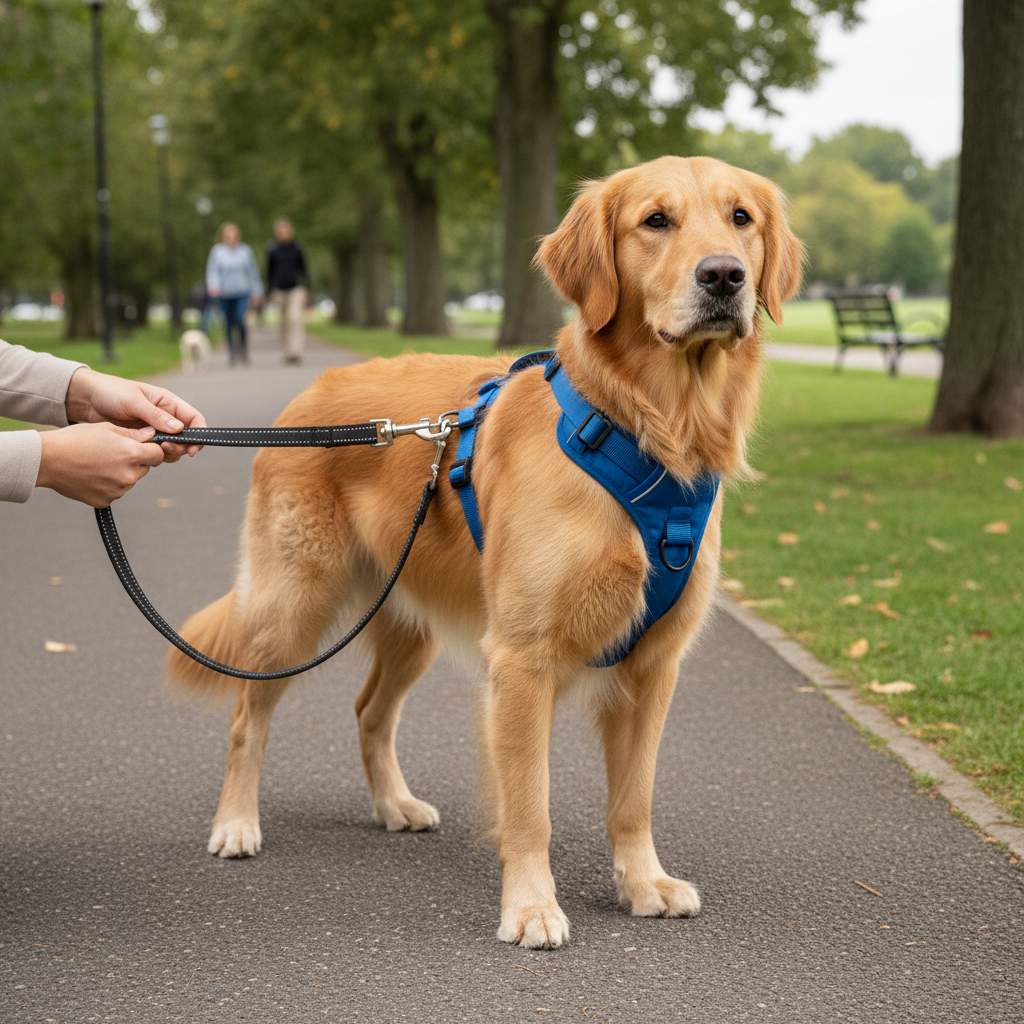
The core skill: teach “loose leash makes the walk happen”
Here’s the simple rule you’re teaching: pressure on the leash pauses progress, slack on the leash makes you move. Not as a punishment, just as clear feedback.
Step-by-step: the “be a tree, then reward” method
- Start in a low-distraction area, even your driveway or hallway.
- The moment you feel steady leash tension, stop moving. Don’t jerk back, don’t lecture.
- Wait for a micro-change: your dog turns back, steps toward you, or the leash softens.
- Mark and reward: say “yes” (or click), then give a treat near your leg.
- Take 1–3 steps forward while the leash stays loose, then reward again.
This looks almost too basic, but it works because your dog stops getting paid for pulling and starts getting paid for slack. If you’re consistent for a week, many dogs show a noticeable drop in constant tension, even if they still need work around distractions.
Make it easier than you think it should be
- Short sessions: 3–8 minutes beats a 45-minute struggle walk.
- Higher treat rate early: reward every few steps at first, then space it out.
- Pick your battles: if you’re late for work, do a “management walk” and train later.
Add an “attention cue” and a default walking position
Loose leash is partly mechanics, partly communication. Teaching a simple check-in makes it easier to keep your dog’s brain with you, not only their body.
Teach “look” (or name response) indoors
- Say your dog’s name once.
- When they look at you, mark and treat.
- Repeat until the response is automatic, then practice in the yard, then the sidewalk.
On real walks, you’re not asking for a long stare. You’re building a quick, reliable “I heard you” moment you can pay, then move on.
Pick a realistic walking goal
- Casual loose-leash walk: dog can sniff, but leash stays slack most of the time.
- Structured heel (short bursts): dog stays close for crossings, crowds, or tight spaces.
Many people burn out because they try to demand a perfect heel for 30 minutes. A better approach is to rotate: sniff time, then 20–60 seconds of structure, then sniff time again.
Real-world fixes for sniffing, lunging, and “selective hearing”
This is where most plans fall apart, because your dog can do it on the driveway, then the neighborhood happens. Adjusting your strategy based on the situation is often the difference between progress and repeating the same frustrating walk.
If your dog pulls to sniff
- Put sniffing on cue: say “go sniff,” walk to the spot with a loose leash, then release to sniff.
- End sniffing cleanly: say “let’s go,” take a step, then reward when the leash stays soft.
- Use sniffing as the reward: in many cases it beats food, and it’s already there.
If your dog lunges at dogs/people/bikes
- Create distance early: cross the street or step into a driveway before the leash goes tight.
- Feed for calm noticing: treat when your dog sees the trigger and stays under threshold.
- Don’t wait for the explosion: once you’re at lunging distance, learning drops fast.
According to the ASPCA, positive reinforcement helps teach alternative behaviors and can be especially useful for common training challenges. For reactive or fearful dogs, a qualified trainer can help you build a safety plan and avoid accidental escalation.
If your dog ignores treats outside
- Upgrade the reward: think chicken, cheese, or a favorite toy, used only for walks.
- Lower distractions: train at quieter times or pick a calmer route for a few weeks.
- Check basic needs: if your dog is hungry, over-tired, or over-stimulated, focus becomes harder.
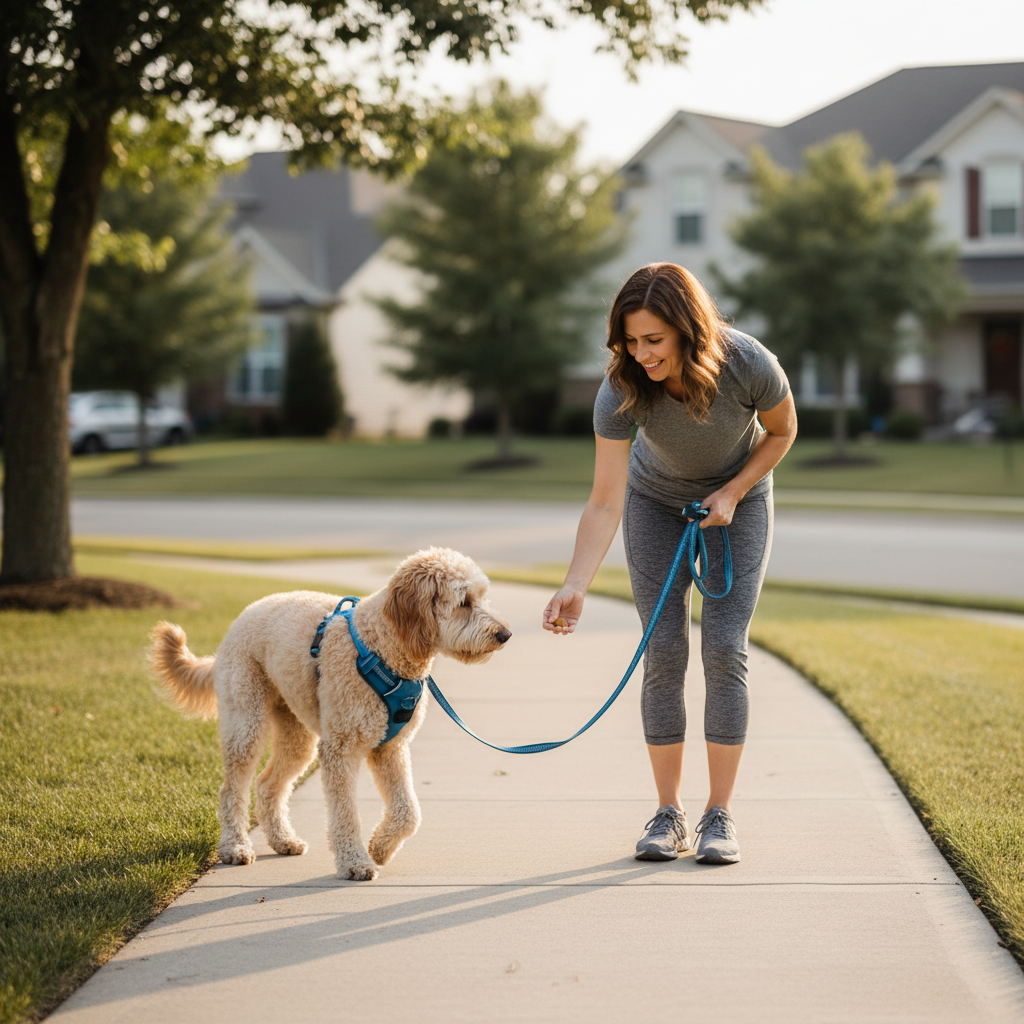
A simple 2-week training plan (plus a “bad day” backup)
If you’re wondering how to stop dog from pulling leash without overthinking it, this is a workable rhythm. You can adjust the pace, but keep the structure.
Week 1: rebuild the basics
- Daily: 5 minutes name response + 5 minutes loose-leash practice in low distraction.
- On walks: prioritize slack and calm over distance, turn around often if needed.
- One goal: reduce constant tension, even if you only make it half a block.
Week 2: add distractions on purpose
- Train near mild distractions: a quiet corner where people pass at a distance.
- Practice “go sniff” releases: make sniffing a reward you control.
- Add short heel bursts: 10–30 seconds near driveways, corners, and crossings.
Bad day backup (management walk)
- Use a front-clip harness, bring better treats, choose the easiest route.
- Keep expectations low, reward any slack you get, and head home before frustration spikes.
Progress is rarely linear. Dogs have “off” days, and so do humans, what matters is keeping the habit trend moving in the right direction.
Common mistakes that keep pulling alive
- Letting pulling work sometimes: intermittent rewards are powerful, the dog keeps trying.
- Only training on full walks: long, distracting walks are a tough classroom.
- Waiting too long to reward: pay when the leash is loose, not three steps later.
- Overusing verbal cues: repeating “heel, heel, heel” turns into background noise.
- Expecting calm without outlets: many dogs need sniff time, play, or enrichment to walk well.
Cheat sheet table: match the problem to the fix
| What you see on walks | Likely driver | What to do this week |
|---|---|---|
| Constant tight leash from the first step | Habit + excitement | Short sessions, stop when leash tightens, reward slack every few steps |
| Pulls to sniff, zig-zags | Environmental reward | Teach “go sniff,” use sniffing as reward only when leash stays loose |
| Lunges at dogs/people/bikes | Over-threshold reactivity or frustration | Create distance early, treat calm noticing, consider trainer support |
| Walks fine at home, falls apart outside | Distraction level too high | Train in quieter areas, upgrade rewards, increase difficulty slowly |
| Seems uncomfortable, scratches at gear | Poor fit or pain | Check harness fit, avoid neck pressure, consult a vet if discomfort persists |
When to bring in a professional (and when to talk to a vet)
If your dog’s pulling includes lunging, growling, snapping, or panic behaviors, it’s smart to get help sooner rather than later. Many owners wait until the pattern feels “big,” but early support is usually easier and safer.
- Consider a certified trainer if triggers (dogs, people, traffic) cause explosive pulling, or if you feel unsafe handling the leash.
- Consider a veterinary check if pulling suddenly worsens, your dog shows signs of pain, coughs with collar pressure, or avoids being touched around the neck/shoulders. Pain can change walking behavior, and a vet can help rule that out.
Look for professionals who emphasize reward-based methods and clear safety plans. If someone promises instant results or relies mainly on intimidation, it’s worth getting a second opinion.
Key takeaways to remember on your next walk
- Loose leash is a skill, not a personality trait, you can teach it in small reps.
- Stop rewarding pulling with forward motion, and pay heavily for slack early on.
- Use the environment as a reward, sniffing and access can be more powerful than food.
- Manage triggers with distance, don’t wait until your dog is already lunging.
If you want one action step today, pick a quiet spot and do five minutes of “stop when tight, treat when slack.” Do that consistently, then layer distractions slowly, that’s where most real progress comes from.
FAQ
- How long does it take to stop leash pulling?
Many dogs show improvement within a week or two if the rules stay consistent, but strong habits and high-distraction neighborhoods can take longer. The biggest predictor is whether pulling still “works” sometimes. - Is a front-clip harness enough to fix pulling?
It often helps reduce leverage, but it usually doesn’t teach the dog what to do instead. Pair it with loose-leash practice so the dog learns slack earns movement. - Should I stop every time my dog pulls?
For training sessions, yes, that clarity speeds learning. On busy days, it’s fine to do a management walk, just understand progress slows if pulling frequently gets rewarded. - What if my dog only pulls at the beginning of the walk?
That’s commonly excitement. Try a 60-second “warm-up” of name response and reward for slack right outside your door, then start the walk once your dog settles a bit. - How do I stop my dog from pulling toward other dogs?
Create distance before your dog gets over-excited, then reward calm noticing. If lunging is intense or includes barking and spinning, a trainer can help you build a plan specific to your dog’s threshold. - Are retractable leashes bad for pullers?
In many cases, yes, because they teach constant tension and don’t give clear feedback about slack. A standard leash is usually easier for both training and safety. - Can I use treats if my dog needs to lose weight?
Often yes, but use tiny pieces, reduce meal portions slightly, or use part of your dog’s kibble for low-distraction practice. If weight is a concern, it’s reasonable to ask your vet for guidance.
If you’re trying to solve pulling while juggling a busy schedule, it can help to treat walks like a series of repeatable mini-drills rather than one long test of willpower, set up the right gear, pick a calmer route for a couple weeks, and you’ll usually feel the leash get lighter before your dog is “perfect.”