
How to calm a nervous cat starts with one simple idea: stop trying to “fix” the fear in the moment, and instead make your cat feel safe enough to choose calm on their own.
If your cat bolts under the bed when the doorbell rings, freezes during carrier time, or swats when guests lean in, you are not alone. Nervous behavior is common, and it often gets mislabeled as “bad attitude” when it is really stress plus self-protection.
This guide walks you through what typically causes fear, how to tell whether you are dealing with mild nerves or something bigger, and what you can do today without forcing contact. I will also flag the spots where it’s smarter to loop in your veterinarian or a behavior professional.
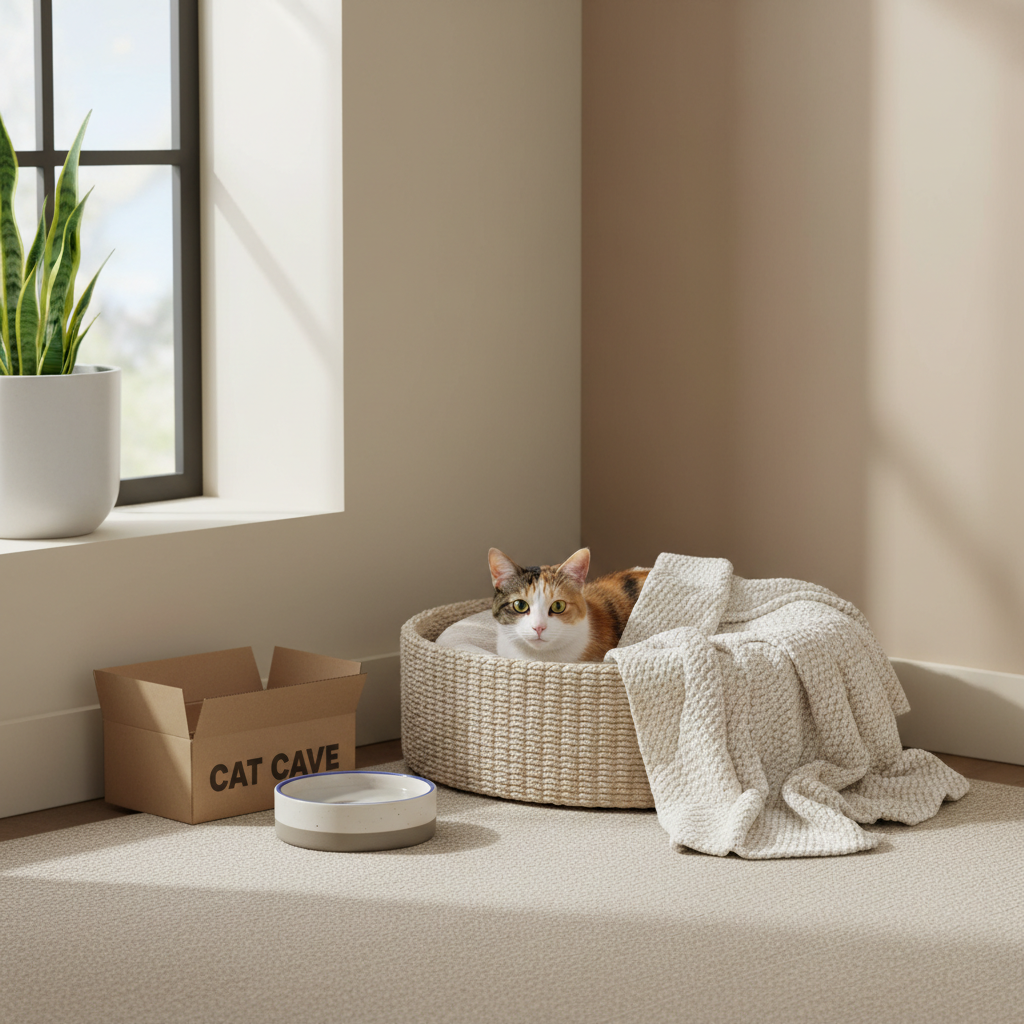
Why cats get nervous or scared (common real-life triggers)
Fear is not random, it’s usually a response to something your cat finds unpredictable, loud, or “too close.” Many cats also generalize, meaning one bad moment can make them wary of the whole setup, like the carrier, the vet, or even a specific room.
- Noise and vibration: fireworks, thunderstorms, construction, vacuum cleaners, bass-heavy music.
- New people or animals: visitors, a new baby, a roommate, neighborhood cats outside the window.
- Handling that feels unsafe: being grabbed, lifted unexpectedly, or restrained for grooming.
- Environment changes: moving, rearranging furniture, strong cleaners, new litter, renovations.
- Pain or medical discomfort: dental pain, arthritis, urinary issues, skin irritation can all lower tolerance.
According to the American Veterinary Medical Association (AVMA), behavior changes can be an early sign of illness, so if your cat suddenly becomes fearful or reactive, it’s worth taking that seriously instead of assuming it’s “just personality.”
Quick checklist: is this mild nervousness or a bigger problem?
You do not need a perfect label, you need a practical read on risk and urgency. Use this to decide what to try at home and what should move to “call the vet.”
- Mild/occasional: hides briefly, startles easily, avoids guests but still eats, plays, uses the litter box normally.
- Moderate: daily hiding, growling or swatting when approached, decreased play, picky eating around stressful events.
- High concern: not eating for 24 hours, panting, drooling, trembling, litter box accidents, sudden aggression, or prolonged shutdown.
Key point: if your cat’s baseline changed quickly, or you see physical symptoms, you are no longer only dealing with training or “calming tips.” A medical check is often the safest next step.
Set up calm: a “safe base” that actually works
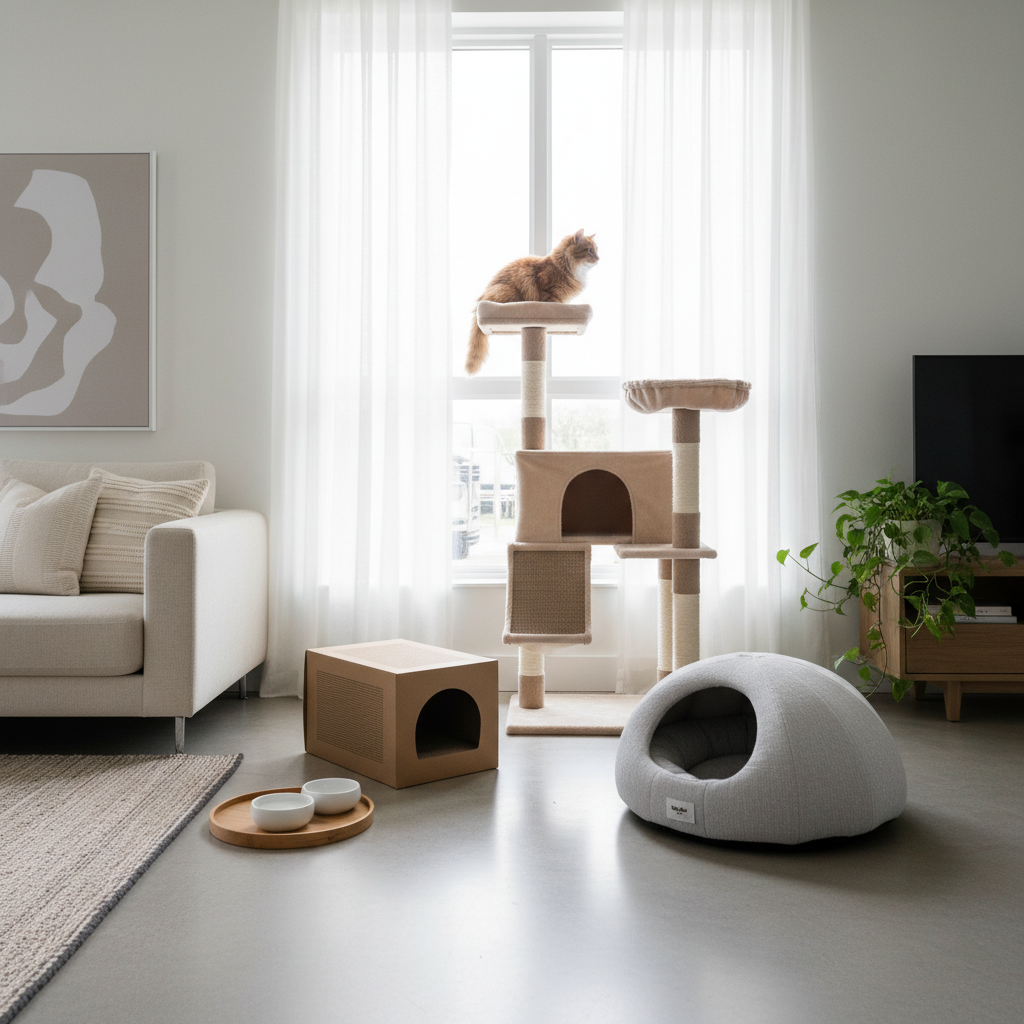
When people ask how to calm a nervous cat, they often start with petting, talking, or coaxing. That can backfire. A safer starting move is building a predictable home base where your cat can hide, observe, and come out on their own terms.
What a solid safe base includes
- One primary hiding spot (covered bed, carrier left open, box on its side) plus a higher perch if possible.
- Food, water, litter access without forcing a “walk of shame” past guests or barking dogs.
- Sound buffering: white noise, a fan, or calm music at low volume.
- Scent continuity: keep a familiar blanket or worn t-shirt nearby, avoid strong air fresheners.
According to the American Association of Feline Practitioners (AAFP), giving cats the ability to hide is a core welfare need, not “spoiling.” In many homes, adding a hide option reduces defensive aggression because the cat has an exit plan.
In-the-moment calming: what to do during a scare
When your cat is actively scared, your job is not to “convince” them, it’s to lower intensity and prevent rehearsal of panic. Quiet, boring, and predictable wins here.
- Reduce the trigger fast: close curtains, move the cat to a quieter room, turn down sound, ask guests to pause and give space.
- Stop reaching: let your cat choose distance. Cornering tends to increase swatting and biting risk.
- Use slow-blink and side-body posture: face slightly away, soften eyes, slow blink once or twice.
- Offer “support stations”: place treats a few feet away from the hiding spot, not at your hand.
- Keep your voice low and sparse: repeated shushing can become another stressor.
If your cat is shaking, panting, or cannot settle after the trigger ends, that’s a sign the fear load is high. In that case, your home plan may need to include veterinary support.
Step-by-step desensitization (calm training that sticks)
Long-term improvement usually comes from controlled exposure at a level your cat can tolerate, paired with something good. This is the backbone of most behavior plans, and it is more effective than “comforting” during peak fear.
A simple plan you can run at home
- Pick one trigger (doorbell, vacuum, carrier) instead of trying to fix everything at once.
- Start at a tiny dose your cat barely notices, like a doorbell sound played quietly from your phone.
- Pair with high-value rewards (Churu-style lickable treats, small tuna, favorite toy) and stop while your cat still looks relaxed.
- Increase intensity slowly over days or weeks: a little louder, a little closer, a little longer.
- Back up if you see stress (tail tucked, ears pinned, hard stare, freezing). Progress is not linear.
Practical rule: you want “curious and eating” during practice sessions. If your cat will not take treats, the session is too hard or your cat is already over threshold.
Tools that may help (and when they do not)
There is no single product that magically solves fear, but a few tools can make your plan easier. Think of these as supports, not substitutes for environment and handling changes.
| Tool | When it helps | Common mistakes |
|---|---|---|
| Pheromone diffusers/sprays | General household tension, mild stress during transitions | Expecting instant results, placing diffuser in a rarely used outlet |
| Calming treats/supplements | Mild to moderate stress, as part of a routine | Using without vet input for cats with medical conditions or on meds |
| Carrier training setup | Vet visits, travel fear, reducing capture stress | Only bringing out the carrier on “bad days” |
| Interactive play | Confidence building, stress relief, redirecting nervous energy | Playing too close to the trigger, overstimulating a fearful cat |
According to the ASPCA, punishment can increase fear and aggression in many pets. If a “training” tool relies on startling or scolding, it tends to teach your cat that unpredictable things happen near you, which is the opposite of what you want.
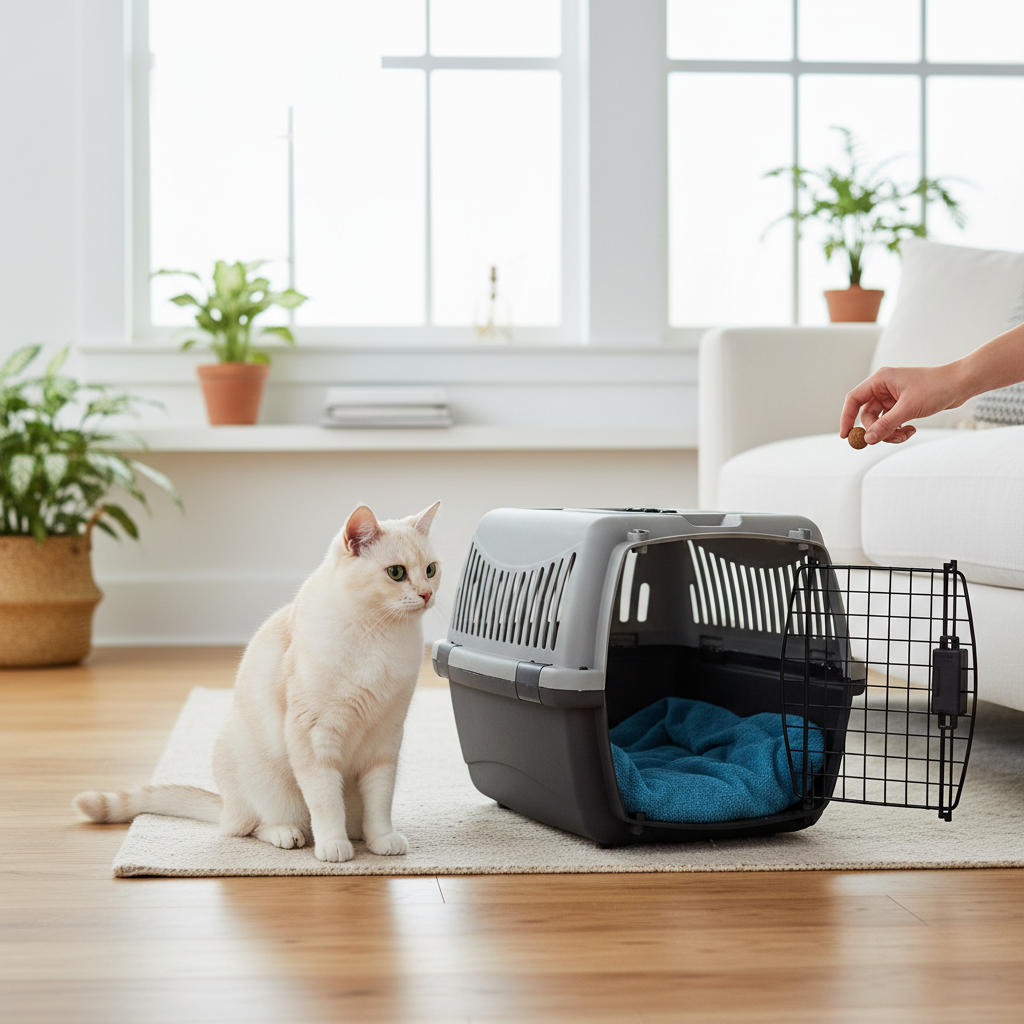
Handling and household habits that keep cats calmer
Most cats get calmer when life feels more predictable. That does not mean rigid schedules, it means fewer surprises and more choice.
- Let your cat initiate contact: offer a finger at nose level, pause, and respect a “no.”
- Lift less, support more: if you must pick up your cat, support chest and hindquarters, keep the movement slow.
- Use “passive presence”: sit nearby reading or working, toss treats occasionally, do not stare.
- Protect sleep: a tired, interrupted cat is often a twitchier cat.
- Visitor script: ask guests to ignore the cat, no reaching, no looming, no chasing for a selfie.
Key takeaways: the fastest way to learn how to calm a nervous cat is to stop taking fear personally, give more control over distance, and build calm associations in tiny steps that do not trigger panic.
When to talk to a veterinarian or behavior professional
Sometimes fear is so intense, or so tied to pain, that home changes stall out. That is not failure, it is information.
- Book a vet visit soon if fear shows up suddenly, your cat stops eating, or you see vomiting, diarrhea, straining to urinate, limping, or excessive grooming.
- Ask about fear-free handling and pre-visit strategies, many clinics can adjust scheduling, rooming, and approach.
- Consider a credentialed behavior pro if you have bites, repeated redirected aggression, or multi-cat conflict that keeps escalating.
- Medication can be appropriate in some cases, especially for panic-level responses, your veterinarian can guide options and safety.
According to the American Veterinary Society of Animal Behavior (AVSAB), early intervention improves outcomes for behavior problems. If you feel stuck, getting help sooner often saves time and stress for everyone.
Practical routines: a simple 7-day reset plan
If you want an easy starting point, this week-long reset focuses on safety, predictability, and confidence. Keep it boring on purpose.
- Day 1–2: set up the safe base, reduce noise, keep interactions optional, track triggers.
- Day 3–4: add two short play sessions, toss treats for calm behavior, start very mild trigger exposure if your cat is eating well.
- Day 5–6: increase enrichment: puzzle feeder, window perch, scent swaps, short grooming only if welcomed.
- Day 7: review what changed: which triggers matter most, which times of day are harder, what rewards actually work.
If your cat becomes less reactive but still avoids people, that can still be progress. Calm is not the same as cuddly, and many cats are happiest when you respect that boundary.
Conclusion: calm is a setup, not a lecture
How to calm a nervous cat usually comes down to three moves: lower the intensity in the moment, create a reliable safe base, and practice tiny exposures that keep your cat under threshold. When fear appears suddenly or comes with physical symptoms, a vet check is a smart part of the plan.
Pick one change you can do today, like setting up a better hiding spot or starting a two-minute carrier game with treats, and give it a week. If you want faster progress, write down triggers and patterns so your veterinarian or behavior professional can work with clear details.