
how to train a dog to walk on leash starts with one slightly boring truth, your dog can’t learn “nice walking” while practicing “dragging you down the street.” The goal is to make staying near you feel easy and rewarding, and make pulling stop working.
If walks feel stressful, you’re not alone. Leash frustration can build fast, for dogs and people, and it can turn a daily routine into something you avoid. The good news is this skill is usually trainable with timing, the right setup, and expectations that match your dog’s age and temperament.
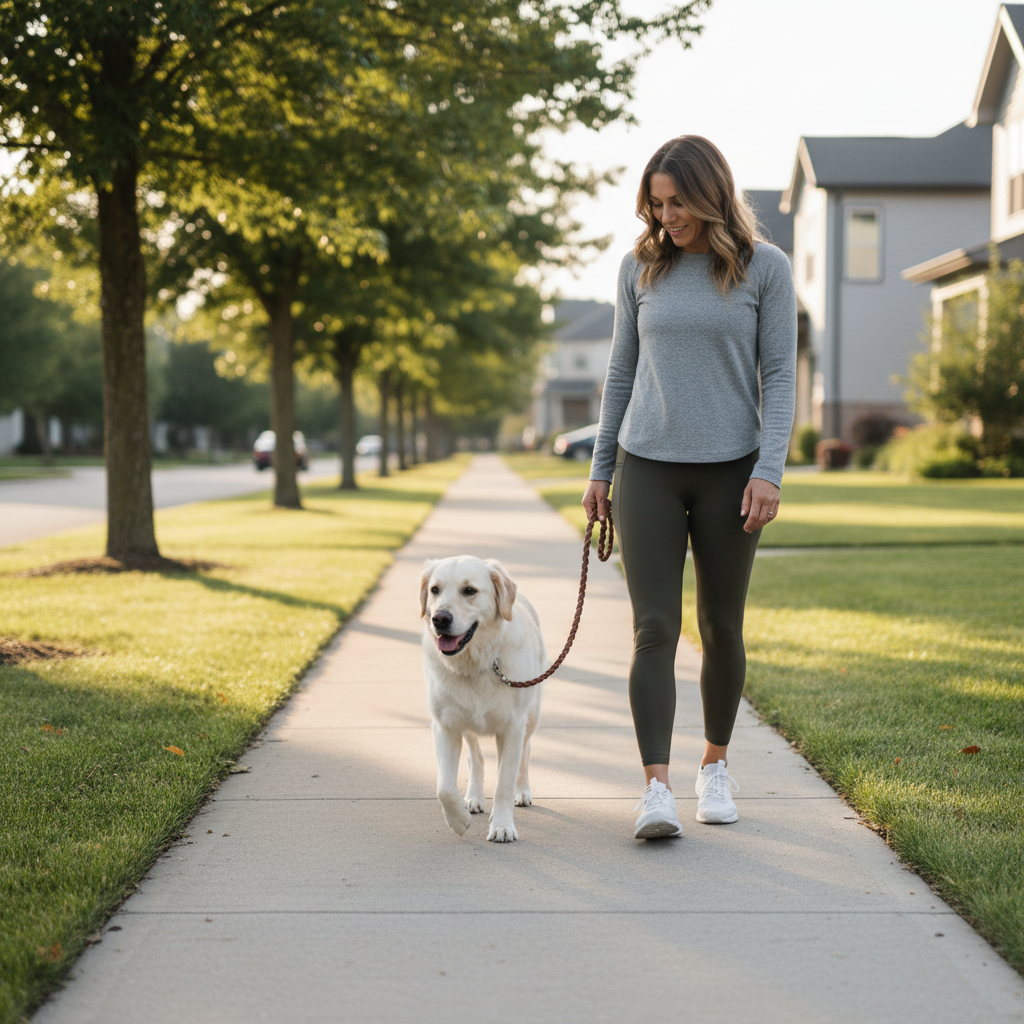
One common misconception, “my dog knows what I want, they’re just stubborn.” In many cases the dog simply hasn’t been taught what to do instead of pulling, or the environment is too hard too soon. This guide helps you pick gear, set a training plan, and troubleshoot the moments where it falls apart.
What loose-leash walking really means (and what it doesn’t)
Loose-leash walking means the leash stays slack most of the time, your dog can sniff and look around, and you can change direction without a tug-of-war. It does not mean your dog must heel perfectly for the entire walk.
If you aim for “no sniffing, no stopping, perfect position,” most pet dogs will fail, and you’ll both get frustrated. A more realistic target is a walking agreement: your dog gets freedom when the leash stays loose, and the walk pauses when it goes tight.
- Loose leash = dog has earned forward motion and sniff breaks.
- Tight leash = forward motion stops, you reset, then continue.
Why dogs pull on leash (real-world reasons)
Pulling is rarely “dominance.” It’s usually reinforcement: pulling gets them where they want to go. Once you see that, the fix becomes clearer, you change what gets rewarded.
- Speed mismatch: dogs naturally walk faster than most people.
- Excitement and overstimulation: squirrels, people, smells, other dogs.
- Practice history: if pulling has worked for months, it’s a habit.
- Gear issues: flat collars can cause discomfort, which can increase frantic movement, while some tools may suppress behavior without teaching new skills.
- Under-enrichment: many dogs have a lot to say with their noses, and the walk is their main outlet.
According to the American Veterinary Medical Association (AVMA), reward-based training methods are generally recommended because they reduce fear and anxiety compared with aversive techniques. If your walks include barking, lunging, or panic, that emotional piece matters as much as “obedience.”
Quick self-check: what kind of leash problem do you have?
Before you train, sort your situation. The same plan doesn’t fit every dog, and this is where many people waste weeks.
- Mainly pulling forward to get to smells or destinations
- Zig-zagging and circling like the dog can’t settle
- Freezing or refusing to move
- Reactivity toward dogs/people (barking, lunging, growling)
If your dog is freezing, panicking, or reacting intensely, focus first on comfort and distance from triggers, and consider professional help. Teaching leash manners on top of fear is a slow road.
Gear that helps (and what to avoid)
You don’t need fancy equipment, but the wrong setup can sabotage you. Start with something safe and simple, then adjust based on your dog’s body and behavior.
Recommended basics
- Front-clip harness for many pullers, it reduces leverage without choking.
- 6-foot standard leash (not retractable) for clear feedback and control.
- Treat pouch and small, soft treats your dog can swallow quickly.
Tools to be cautious with
- Retractable leashes: often teach constant tension and can be unsafe in busy areas.
- Prong or choke collars: can increase stress in some dogs; if you’re considering these, it’s wise to consult a qualified trainer.
According to the American Kennel Club (AKC), selecting humane, well-fitted equipment and pairing it with positive reinforcement supports reliable training over time. Fit matters, if a harness rubs, pinches, or restricts shoulder movement, your dog may fight it.
The core method: teach your dog that staying near you pays
This is the engine behind how to train a dog to walk on leash without turning every walk into a correction session. You reward position and attention, and you remove the reward of pulling.
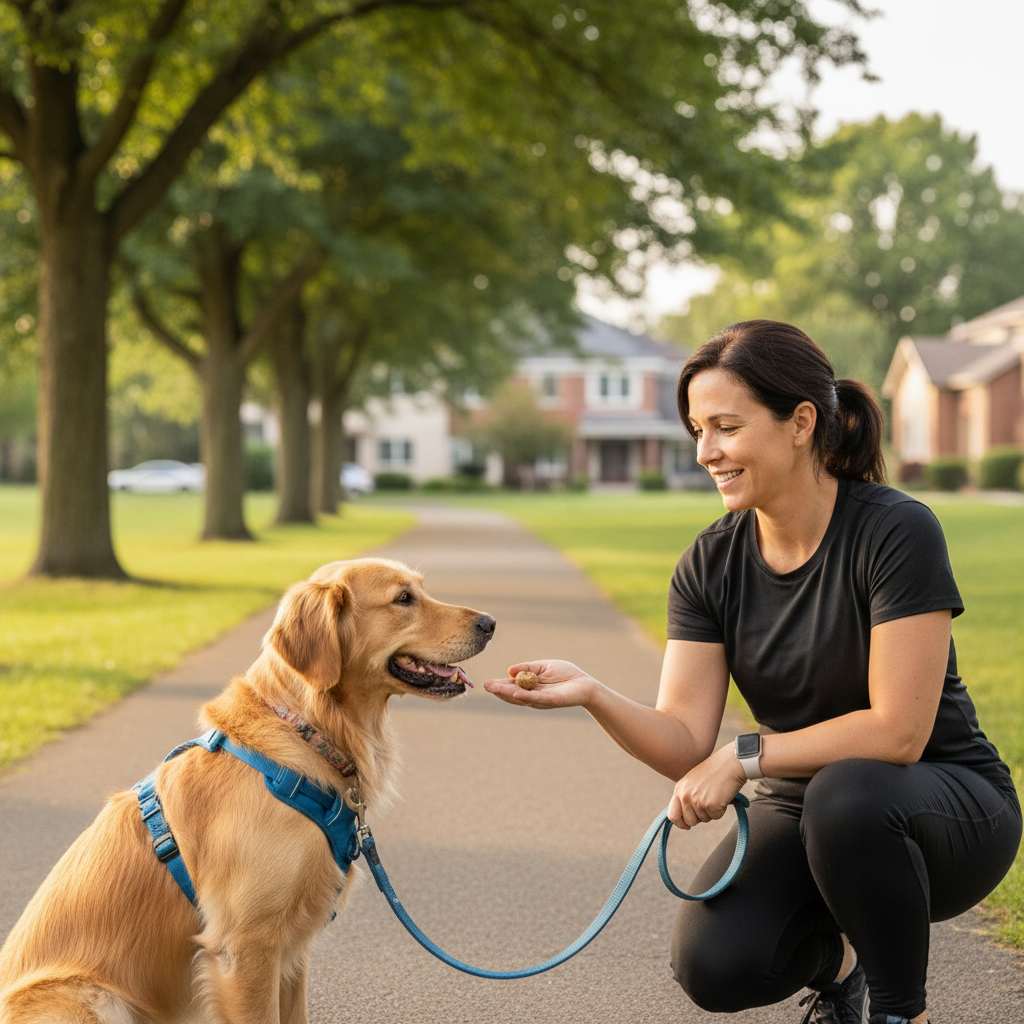
Step 1: Start inside (yes, really), clip the leash on, stand still, and reward your dog for being near your side with a slack leash. Take one step, reward again. Keep it simple for 2–3 minutes.
Step 2: Add a cue if you want, many people use “let’s go” to start moving. The cue is optional, the consistency is not.
Step 3: Make pulling stop working, the moment the leash tightens, stop. Don’t yank back. Wait for slack, then reward and continue, or calmly turn and walk the other way if your dog stays locked on forward motion.
Step 4: Pay frequently at first, especially outdoors. You’re competing with smells, movement, and adrenaline, so your paycheck needs to be worth it.
- Key point: reward what you like before your dog makes a mistake.
- Key point: tight leash means the environment got too hard or rewards came too late.
A practical 2-week plan (short sessions beat long battles)
Most dogs learn faster with multiple short reps than one “training walk” that turns into chaos. Use this as a flexible template, not a rigid calendar.
| Timeframe | Where to practice | Main focus | What success looks like |
|---|---|---|---|
| Days 1–3 | Living room, driveway | Reward slack leash, 1–5 steps at a time | Dog checks in and leash stays loose for short bursts |
| Days 4–7 | Quiet sidewalk | Stop when tight, reward when slack | Pulling decreases, recovery after stops becomes quicker |
| Days 8–14 | Busier routes, near mild distractions | Add “find it” treat scatters, planned sniff breaks | Dog can pass common distractions with manageable tension |
Planned sniff breaks are underrated. Pick a spot, say “go sniff,” walk over together, then say “let’s go” to leave. You’re not removing sniffing, you’re putting it on a predictable schedule.
Troubleshooting common leash-walking problems
This is where most people get stuck, because the dog does great at home and falls apart on the corner. That’s normal. Change the setup, not your mood.
If your dog pulls hardest at the start
- Do 60 seconds of easy cues indoors, then go out.
- Start with a boring loop near home before heading to exciting areas.
If your dog zig-zags and can’t focus
- Shorten the route and reward more often.
- Use a simple pattern, like “3 steps, treat,” to create rhythm.
If your dog freezes or seems scared
- Increase distance from the scary thing, and let your dog watch at a safer range.
- Bring high-value treats and reward calm observation, no dragging.
- If fear feels intense or persistent, consider speaking with your veterinarian or a credentialed trainer, pain or anxiety can play a role.
If your dog reacts to other dogs
Loose-leash skills help, but reactivity often needs its own plan. Create distance, reward for looking calmly, and avoid forcing close passes. According to the ASPCA, positive reinforcement and avoiding punishment are important when working through behavior challenges, especially when fear may be involved.
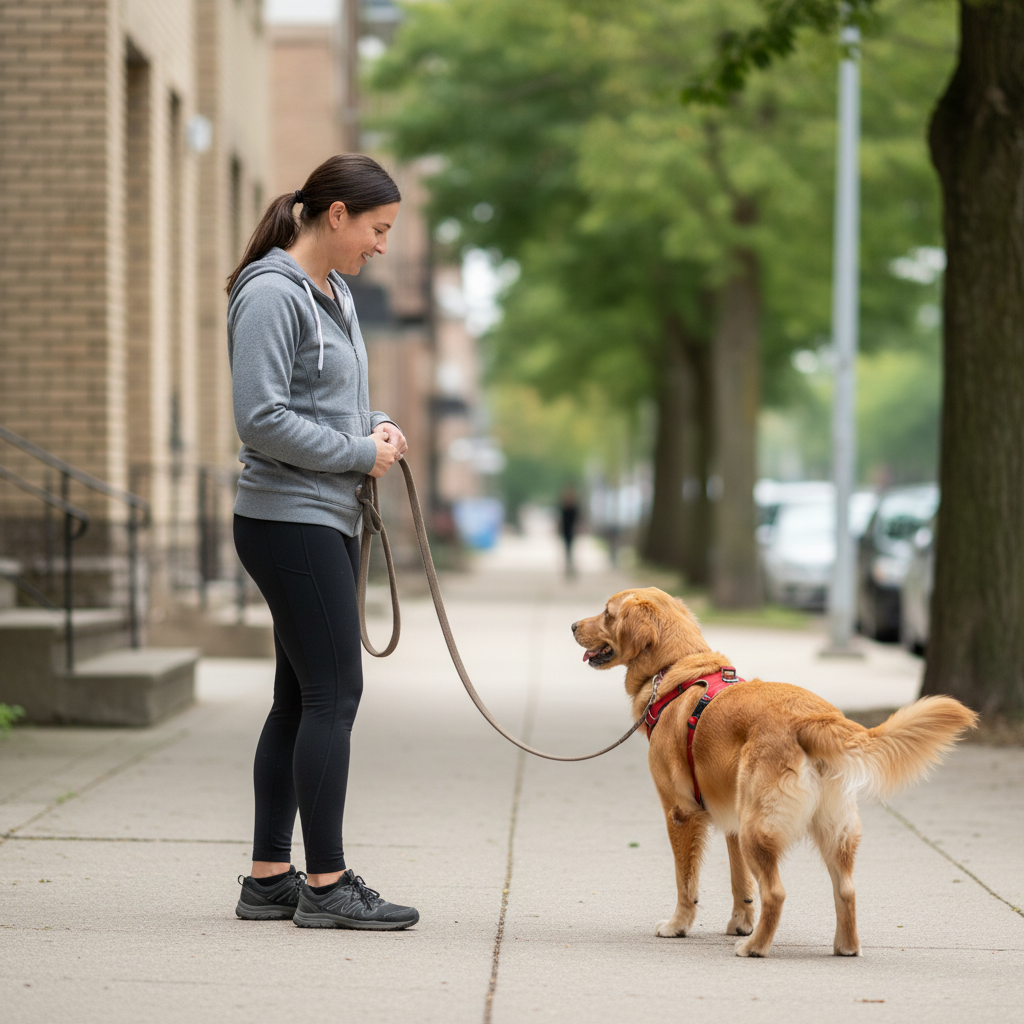
Mistakes that slow progress (even when you mean well)
A lot of “leash training” fails because the dog gets mixed messages. Not because you’re doing it wrong as a person, but because consistency is brutally important with habits.
- Letting pulling work sometimes: one successful drag to the tree can undo ten good reps.
- Training only on real walks: you need low-distraction reps to build the skill.
- Rewards that don’t matter: if your dog won’t eat them outside, upgrade the treat or increase distance from distractions.
- Expecting a straight-line walk: many dogs walk better with sniff breaks built in.
- Long sessions: fatigue makes behavior worse, keep sessions short and end on a win.
When to get professional help (and what to ask for)
If your dog lunges, growls, bites the leash, redirects onto you, or seems panicked on walks, it’s smart to involve a professional. You’re not “failing,” you’re dealing with a higher-arousal behavior set that can be risky.
- Look for a force-free trainer who uses reward-based methods and can explain their plan clearly.
- Ask how they handle reactivity, fear, and safety in public spaces.
- If pain might be involved, talk with your veterinarian, discomfort can show up as pulling, freezing, or sudden reactivity.
Key takeaways and your next walk
how to train a dog to walk on leash comes down to two levers, reward the position you want, and stop rewarding the tension you don’t. If you only change one thing this week, make it this, tight leash means stop and reset, every time you can.
Pick a quiet route, bring better treats than usual, and aim for five calm minutes rather than a perfect mile. That small win is what builds the habit you actually want.
FAQ
- How long does it take to leash train a dog?
Many dogs show improvement in a couple weeks with consistent practice, but the timeline varies by age, reinforcement history, and distraction level. If pulling has worked for a long time, expect more repetitions. - Should I stop walking when my dog pulls?
In most cases, yes, stopping removes the payoff of forward motion. The important part is what happens next, wait for slack, reward, then continue, rather than yanking back. - Is a front-clip harness good for leash training?
Often, yes, it can reduce pulling leverage and give you a cleaner training moment. Fit matters a lot, and it still needs to be paired with rewards and practice. - Can I teach loose-leash walking without treats?
You can, but it’s harder for many pet dogs because treats speed up learning and help compete with outdoor distractions. Some dogs work well for toys or sniff breaks as rewards. - Why does my dog walk nicely at home but not outside?
Outside has more stimulation, and dogs don’t generalize skills automatically. You usually need to practice in gradually harder environments, driveway, quiet street, then busier areas. - What if my dog is choking on the collar while pulling?
Consider switching to a well-fitted harness and discussing options with a trainer if pulling is intense. If coughing or breathing issues continue, consult a veterinarian to rule out medical factors. - Is it okay to let my dog sniff on walks while training?
Yes, in fact sniffing can lower arousal for many dogs. The trick is making sniffing a reward for a loose leash, rather than something the dog earns by pulling you to it.
If you’re trying to improve leash manners but your walks still feel like a daily negotiation, a structured plan and a second set of eyes can save time. If you want a more hands-off approach, look for a reward-based trainer who can watch one real walk and tailor the next steps to your dog’s triggers and your neighborhood.