
Ferret food high protein diets work best when “high protein” comes from the right animal sources, not just a big number on the bag. If your ferret has loose stools, itchy skin, or low energy after a food change, the issue is often protein quality, carb load, or a too-fast transition, not that you “didn’t pick high enough protein.”
This topic matters because ferrets are obligate carnivores, their digestive tract is short, and they do poorly with plant-heavy formulas that look fine on paper. A label can say “high protein” and still rely on peas, potato, or vague meat meals that don’t consistently agree with your pet.
I’ll walk you through what to aim for, how to judge a label in under a minute, and how to build a practical feeding plan (kibble-only, mix, or fresh). I’ll also flag common mistakes that show up in real homes, like overcorrecting with treats or switching foods every time stools change for a day.
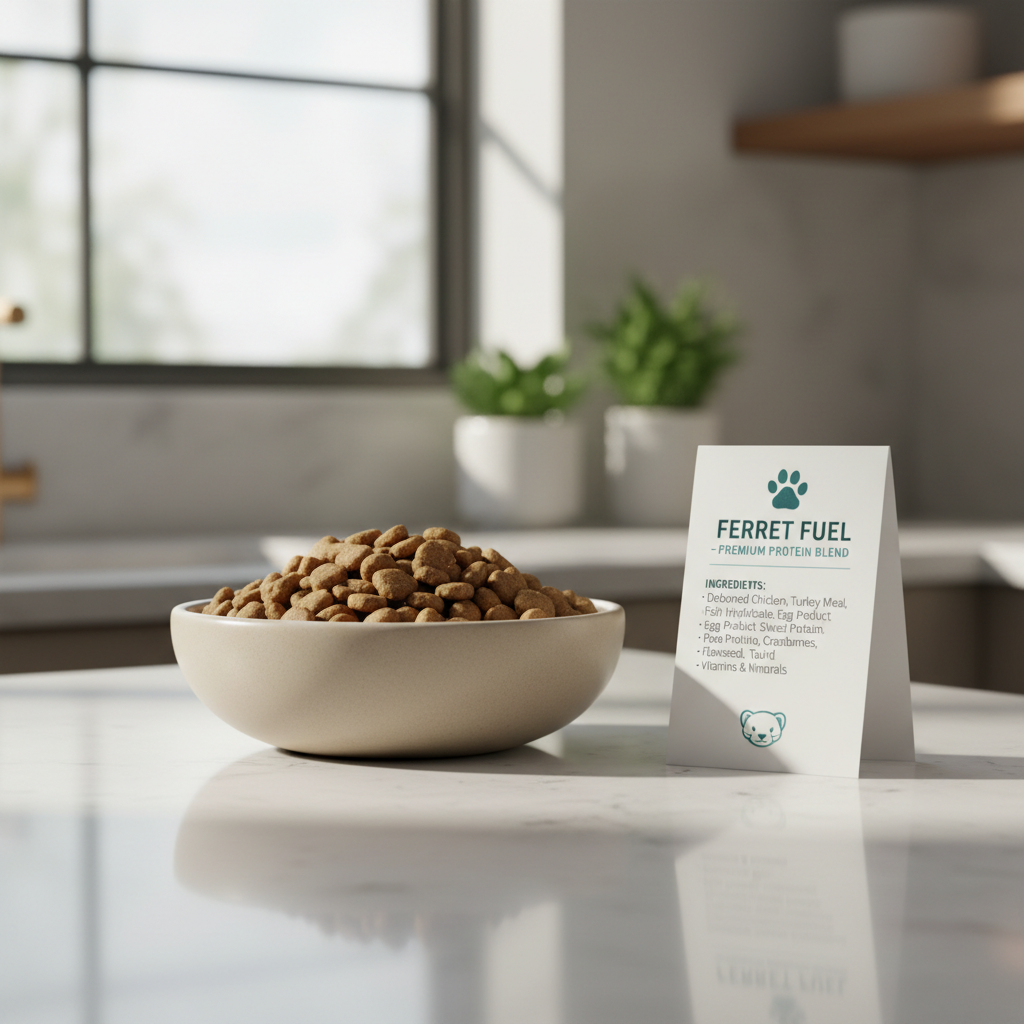
Why ferrets need high-protein food (and what “high” really means)
Ferrets are built for animal protein and fat, with minimal ability to use carbohydrates. According to the American Veterinary Medical Association (AVMA), pet nutrition should be appropriate for species and life stage, and carnivores typically require diets centered on animal-based nutrients.
In practice, “high protein” matters in three ways:
- Protein source: named animal ingredients and quality meals generally perform better than vague “meat by-products.”
- Carb displacement: if a formula leans on peas, potatoes, corn, or wheat, it may crowd out animal calories and trigger soft stools in some ferrets.
- Digestibility: a ferret can eat a lot and still not absorb much if the formula relies on harder-to-digest fillers.
Many owners fixate on a single percentage, but reality is messier. A food can list a strong crude protein number while still being plant-forward, and some ferrets react to specific proteins (chicken is common) even when the overall formula is “good.”
Common reasons “high protein” foods still don’t look healthy
If you’ve tried a high-protein option and it didn’t go smoothly, you’re not alone. These are patterns that show up a lot:
- Plant protein padding: pea protein, potato protein, and similar boosters raise protein on paper, but don’t always sit well with ferret digestion.
- Too much fiber: ferrets typically don’t benefit from high-fiber formulas; it can increase stool volume and looseness.
- Fat too low: some “lean” formulas are designed for dogs or cats worried about weight, but ferrets often do better with higher fat for steady energy.
- Rapid switching: a sudden change can create GI upset that looks like “this food is bad,” even when it might be fine.
- Treats sabotage: sugary treats, fruit, cereal-based bites, and “yogurt drops” can undermine the base diet.
Also worth saying out loud: a shiny coat can lag behind diet changes by weeks. Judging a food after two days is usually too fast, unless you see alarming symptoms.
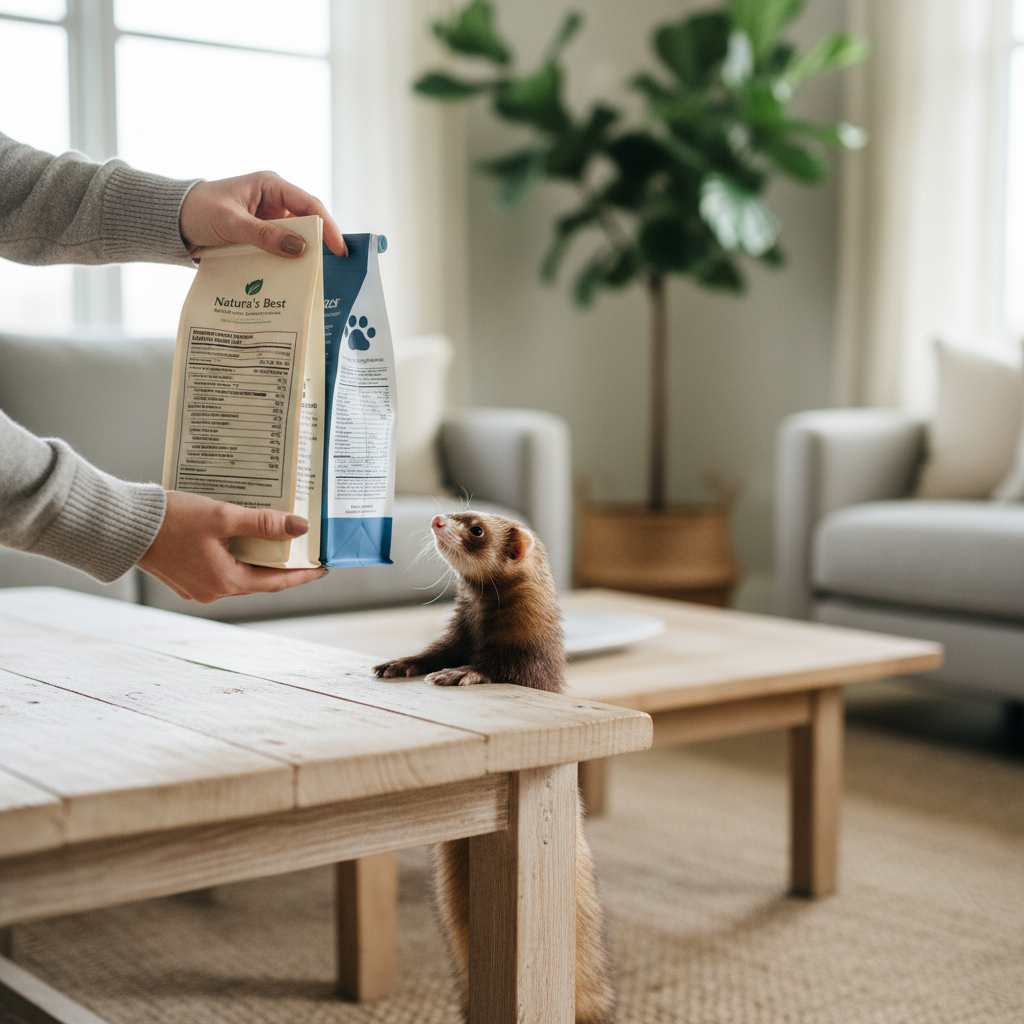
Quick label check: how to choose better ferret food high protein options
When you’re standing in a store or scrolling online, you want a fast filter. Here’s a checklist that tends to work in the real world.
Ingredients: what you want to see near the top
- Named animal protein (e.g., chicken, turkey, rabbit) and/or named meals (e.g., chicken meal) early in the list
- Animal fats (e.g., chicken fat, turkey fat) as primary fats
- Clear language: fewer vague terms like “meat meal” without species
Ingredients: what often causes trouble
- Peas/pea protein, lentils, chickpeas high in the ingredient list
- Potato, tapioca, corn, wheat, rice as major components
- Sugar, syrups, molasses, honey
- Excess plant oils (some are fine in small amounts, but they shouldn’t be doing the heavy lifting)
Key point: crude protein is not the whole story. A reasonable target is a formula that is animal-forward, low in carbs, with fat high enough to support energy. If your ferret has a medical condition (insulinoma, GI disease), your veterinarian should guide the specifics.
Targets that usually make sense (with a simple comparison table)
Exact “ideal” numbers vary by brand, ingredient quality, and individual tolerance, but these ranges are often used by experienced owners and many exotic vets as a starting point.
| What to check | Typical target range | Why it matters |
|---|---|---|
| Crude protein | ~35–45% | Supports muscle, coat, growth; quality matters as much as the number |
| Crude fat | ~15–25% | Primary energy source for many ferrets; too low can mean poor stamina |
| Fiber | As low as practical (often <4%) | High fiber can reduce digestibility and worsen stools |
| Carb-heavy ingredients | Minimal | Ferrets may struggle with carb load; can contribute to GI issues |
One caution: some very high-protein foods can still be “hot” for certain ferrets if the protein source doesn’t agree with them. That’s not a failure, it’s a compatibility problem.
Self-check: which situation are you in?
Before you change anything, figure out what you’re solving. This prevents the classic loop of switching foods repeatedly.
- New ferret, unknown history: you need a steady baseline diet first, then refine.
- Soft stools after switching: could be transition speed, treats, stress, or intolerance.
- Itchy skin / ear gunk: sometimes points to protein sensitivity, sometimes to environment or parasites, so don’t self-diagnose too confidently.
- Picky eater: ferrets imprint on food; they may resist a “better” option.
- Senior or medically complex: nutrition tweaks should be more conservative and often vet-guided.
If your ferret is lethargic, vomiting repeatedly, has black/tarry stool, or shows signs of dehydration, it’s safer to call an exotic vet quickly rather than troubleshoot diet at home.
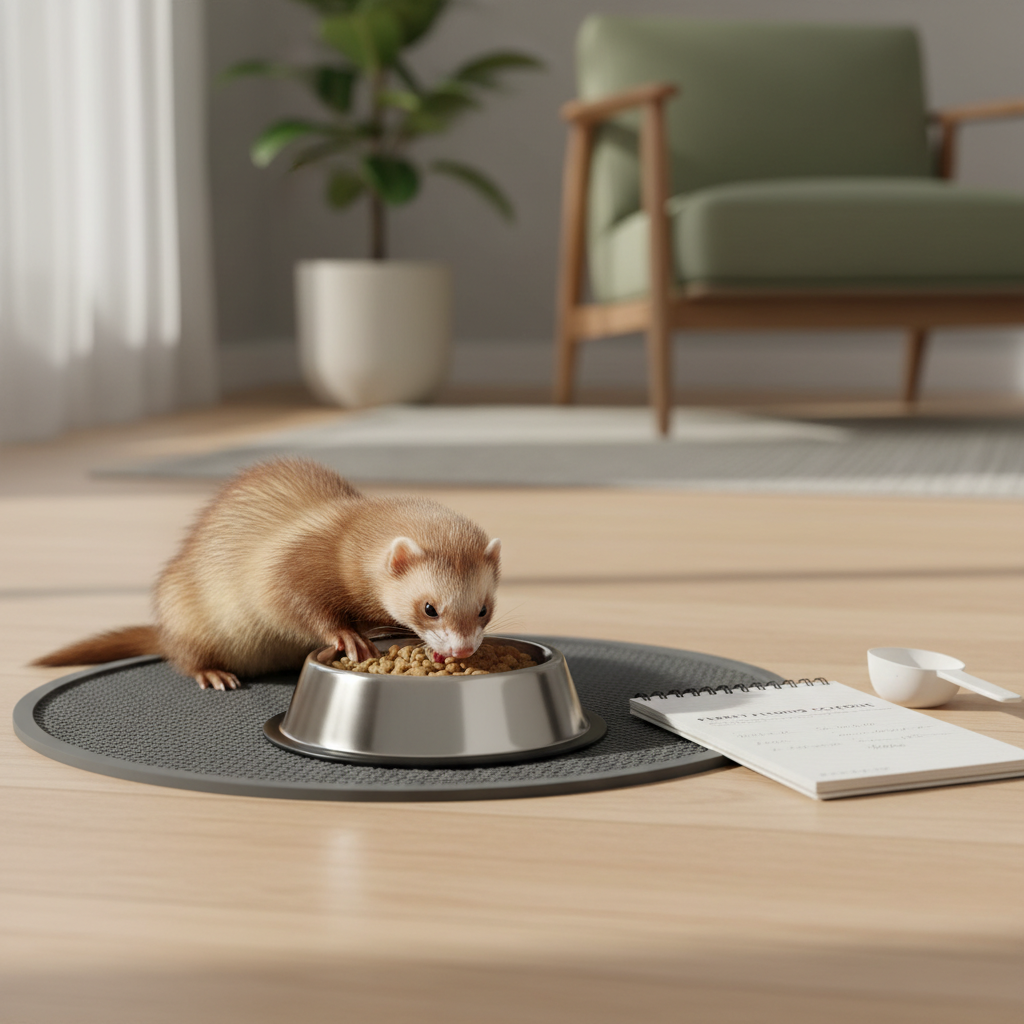
Practical feeding plans (kibble, mix, or fresh)
You can feed well in more than one way. The “best” plan is usually the one you can keep consistent, afford, and monitor.
Plan A: quality kibble-only (most common)
- Pick one strong animal-based formula, then consider mixing with a second compatible formula for resilience (availability changes happen).
- Keep fresh water available; some ferrets drink more from a bowl than a bottle.
- Limit treats to meat-based options, and keep them small.
Plan B: kibble + meat-based toppers (a gentle upgrade)
- Add freeze-dried raw or dehydrated meat pieces rehydrated with warm water.
- Use toppers as a bridge for picky eaters, but avoid turning meals into a negotiation.
Plan C: fresh/raw style feeding (higher effort)
This can work well for some households, but it’s easier to get unbalanced if you wing it. According to the U.S. Food & Drug Administration (FDA), raw pet food may carry pathogen risk; good handling and hygiene are important, and some homes may decide the risk-benefit tradeoff is not worth it.
- If you go this route, consider a vet nutrition consult for balance, especially for growing kits or seniors.
- Be strict about refrigeration, surface cleaning, and bowl hygiene.
How to transition safely (without creating “food drama”)
Most diet problems I see people describe online start with switching too fast, then chasing symptoms. A slower transition often clears confusion.
- Start small: mix in 10–20% new food.
- Hold steady for a few days, watching stool consistency and appetite.
- Increase gradually if things look stable.
- Keep everything else constant: treats, supplements, and “new chew” items can muddy the picture.
If your ferret refuses the new food, try grinding a small amount into powder and coating the old kibble, or using a tiny amount of meat-based topper as a scent cue. For many ferrets, texture matters as much as flavor.
Common mistakes and when to get professional help
These are the traps that waste time and sometimes make a ferret feel worse:
- Chasing the highest protein number while ignoring ingredient quality and carbs
- Overfeeding treats, especially anything sugary or dairy-based
- Switching foods weekly, so you never learn what actually works
- Assuming every symptom is “food allergy”; parasites, dental pain, and stress can look similar
It’s smart to involve an exotic veterinarian if symptoms persist beyond a transition window, if weight drops, or if you suspect insulinoma or chronic GI disease. According to the American Animal Hospital Association (AAHA), pets with ongoing digestive issues may need veterinary assessment to rule out underlying illness before diet changes are relied on as the only fix.
Conclusion: a simple way to pick your next bag (and stick with it)
If you want a calmer, healthier feeding routine, focus on animal-based ingredients, low plant load, and a slow transition, then judge results over weeks, not days. For most homes, a dependable ferret food high protein formula with good digestibility beats constantly rotating “top-rated” options.
Your next step can be simple: choose one candidate food, run the label checklist, and commit to a gradual transition while keeping treats boring and consistent. If something feels off beyond mild transition changes, bring your vet into the loop and treat diet as one part of the picture, not the entire diagnosis.
FAQ
What protein percentage counts as high-protein ferret food?
Many products marketed for ferrets land around 35–45% crude protein. More important than the number is whether the top ingredients are named animal proteins and meals, with minimal legumes or starches.
Is “grain-free” automatically better for ferrets?
Not always. Grain-free foods often replace grains with peas, lentils, or potatoes, and those can still be a heavy carb load. The ingredient list matters more than the grain-free label.
Can I feed a high-protein cat food instead of ferret food?
Sometimes a high-quality cat food can work better than a poor ferret-labeled product, but formulas vary a lot. Look for animal-forward ingredients, low fiber, and minimal plant protein boosters, and check with an exotic vet if your ferret has health issues.
Why did my ferret get soft stools after switching to a higher-protein food?
Fast transitions are a common reason, and so are rich fats or intolerance to a specific protein. If stools stay very loose, there’s vomiting, or appetite drops, it’s worth calling a veterinarian rather than pushing through.
Should I avoid chicken if my ferret is itchy?
Chicken sensitivity is possible, but itching also has non-diet causes. If you suspect a food reaction, a controlled trial with a different animal protein for several weeks is usually more informative than frequent switching.
Are treats like fruit or yogurt drops okay with high-protein diets?
They can disrupt a good diet fast because many are sugary or dairy-based. Meat-only treats tend to fit better with a ferret’s needs, and smaller portions reduce GI surprises.
How many foods should I mix together?
Two compatible foods is a practical sweet spot for many owners, mainly to reduce dependence on one supply chain. Mixing too many can make it harder to identify what causes a problem.
When is raw feeding a bad idea?
If your household has high-risk individuals (very young, elderly, immunocompromised) or if you can’t manage strict hygiene, raw may be a poor fit. A veterinarian can help you weigh risk and design a safer plan.
If you’re trying to choose a ferret food high protein option and you want a quicker, less stressful path, bring a short list of candidates (ingredient panels + guaranteed analysis) to your exotic vet or a qualified nutrition professional, it’s often the fastest way to avoid expensive trial-and-error.